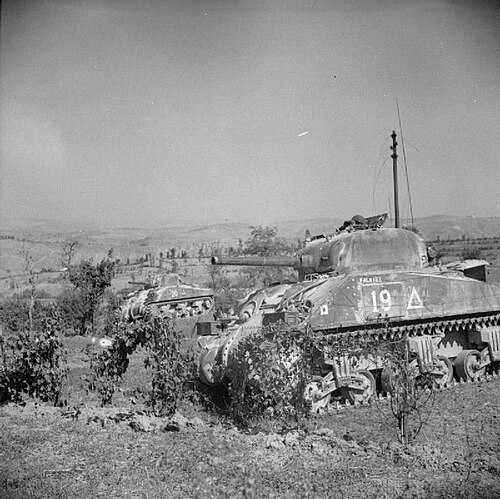
When most people think about the Italian Campaign of World War II, they picture massive tank battles rolling across the countryside. Sherman tanks clashing with German Panzers, artillery thundering across valleys, and mechanized warfare at its most dramatic. But sometimes, the biggest victories come from the smallest moments — and the most ordinary heroes.
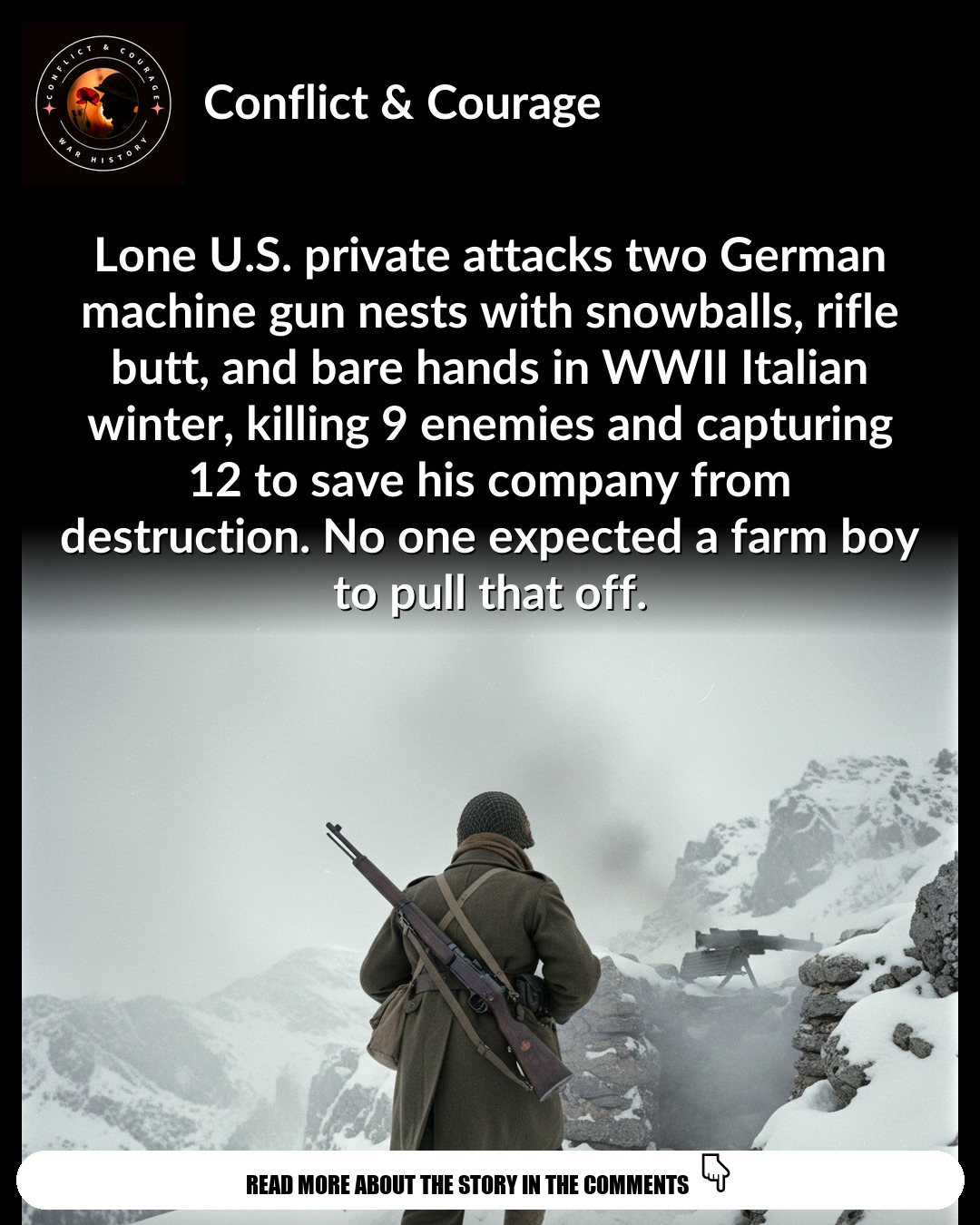
In the brutal winter of 1944-45, as Allied forces pushed through Italy's unforgiving mountains, one 22-year-old private would prove that courage doesn't always come with tank armor. His weapon of choice? Snowballs. His battlefield? A frozen hillside where two German machine gun nests had his entire unit pinned down.
The Tank Battles Everyone Remembers
Italy's reputation as a theater of armored warfare is well-deserved. From Sicily to the Gothic Line, massive formations of tanks and mechanized infantry slugged it out across the peninsula. The media loved these stories — they were dramatic, visual, and easy to understand.
But winter warfare in the Italian mountains was a different beast entirely. Snow turned roads into treacherous ice sheets. Tanks bogged down in mud and slush. Supply lines stretched thin across impossible terrain.
It was in this frozen hell that individual acts of heroism often mattered more than all the armor in the world. While historians focused on the big picture, smaller engagements — fought by ordinary soldiers in extraordinary circumstances — changed the course of battles just as decisively.
Meet Private Dunham: An Ordinary Soldier
Private Dunham was just 22 years old when he found himself facing the most important decision of his life. Like so many young Americans, he'd been drafted into a war he barely understood, trained for a few months, and shipped overseas to fight an enemy he'd never seen.
His regiment had been slogging through the Italian mountains for weeks, taking casualties from German defensive positions that seemed to spring from every ridge and valley. The weather was brutal — temperatures dropping below freezing, snow falling constantly, and visibility often reduced to mere yards.
Nothing in his training back in the States had prepared him for this kind of warfare. This wasn't the tank battles they'd read about in the newspapers. This was personal, intimate, and deadly.
The Desperate Crawl Under Fire
Two German machine gun nests had his unit completely pinned down. Every time someone moved, the deadly chatter of MG-42s would erupt, sending bullets whistling through the air. Men were dying in the snow, and the advance had ground to a complete halt.
While his comrades hugged the frozen ground, Dunham made a decision that would have seemed insane to anyone watching. He was going to take out those machine gun nests. Alone.
The crawl through the snow was a nightmare of its own. German bullets kicked up sprays of ice and dirt around him. The cold bit through his uniform, numbing his fingers and making every movement agony. But the same snow that made him miserable also provided crucial camouflage against the white landscape.
When Grenades Fail: Fighting With Snowballs
Dunham had started his one-man assault with a handful of grenades — standard equipment for taking out machine gun positions. But as he closed on the first nest, he realized with growing horror that he was running out of explosives faster than expected.
With the second machine gun nest still operational and Germans closing in, desperation sparked an idea that would have been laughable in any other circumstance. If he was out of grenades, maybe snowballs would have to do.
It sounds absurd, but packed snow hurled at close range can be surprisingly effective — especially when it catches enemy soldiers off guard. The psychological impact alone was worth something. Here was an American soldier so determined that he was literally throwing snow at armed Germans.
Hand-to-Hand Combat in the Snow
What happened next was the kind of close-quarters combat that military training could only partially prepare you for. Surrounded by German soldiers in the confined space of their defensive position, Dunham found himself fighting for his life with nothing but his rifle.
When ammunition ran dry, the rifle became a club. Bayonet training kicked in. Everything became a weapon — elbows, knees, even his helmet. The snow turned red beneath struggling bodies as men fought with a desperation that only comes when death is seconds away.
This wasn't the clean warfare of the movies. This was brutal, exhausting, and terrifying. But somehow, incredibly, Dunham emerged victorious. Like other young heroes of war, he'd found reserves of courage he never knew existed.
Victory Against All Odds
Dunham's single-handed assault broke the German position completely. With both machine gun nests neutralized, his unit could finally advance. Lives that would have been lost in frontal assaults were saved by one man's impossible courage.
His commanding officers were stunned. Here was a 22-year-old private who had accomplished what an entire platoon might have struggled to achieve — and he'd done it with snowballs and sheer determination.
The immediate tactical victory was significant, but the psychological impact on his unit was even greater. If Dunham could do the impossible, maybe they all could.
A Street Named in His Honor
Decades after the war ended, something remarkable happened in the Italian town that Dunham's actions had helped liberate. Local officials decided to name a street in his honor — a gesture that speaks volumes about how communities remember their liberators.
The street naming ceremony drew crowds of locals who still remembered the young American soldier's sacrifice. Children who had been toddlers during the war, now grandparents themselves, came to pay their respects to the man who had risked everything for people he'd never met.
This is how real heroism works — not with fanfare and headlines, but with quiet recognition that grows stronger over time. Like so many unsung heroes of war, Dunham's story reminds us that courage often comes from the most unexpected places, in the most impossible circumstances.
Have you heard stories of extraordinary heroism from ordinary soldiers? Share them in the comments below — every veteran's story deserves to be remembered and honored.