In the chaos of Vietnam combat, split-second decisions often meant the difference between life and death. But few moments in military history capture the raw courage of command like 2nd Lieutenant John Bobo's final radio transmission — words so powerful they remain classified by the U.S. Army nearly six decades later.
What we know is this: facing overwhelming enemy forces, Bobo made the ultimate sacrifice to save his men. What we don't know are the exact words he spoke in those final moments, and the Army's continued silence only deepens the mystery.
A Split-Second Decision Under Fire
On March 30, 1967, near Quang Tri Province, South Vietnam, 2nd Lieutenant John Bobo's 3rd Platoon found themselves in a nightmare scenario. North Vietnamese forces had surrounded their position, using the dense jungle terrain to close in from multiple directions.
The enemy had numerical superiority and knew the ground. Bobo's men were pinned down, taking heavy casualties with no viable escape route. Conventional wisdom said calling artillery on your own position was suicide — the margin for error was virtually nonexistent.
But conventional wisdom hadn't accounted for John Bobo's determination to bring his men home alive.
The First Barrage: When Help Nearly Became Disaster
Under intense enemy fire, the forward observer's first coordinate calculation went horribly wrong. The artillery shells screamed in dangerously close to Bobo's own position, sending shrapnel and debris cascading over his men.
For terrifying seconds, it seemed the cure might be worse than the disease. The blast was so close that several Marines were knocked unconscious by the concussion alone.
In that moment, many commanders might have called off the artillery strike entirely. Bobo made a different choice — one that would define his legacy and cost him his life.
Staying Exposed: Bobo's Deadly Radio Adjustments
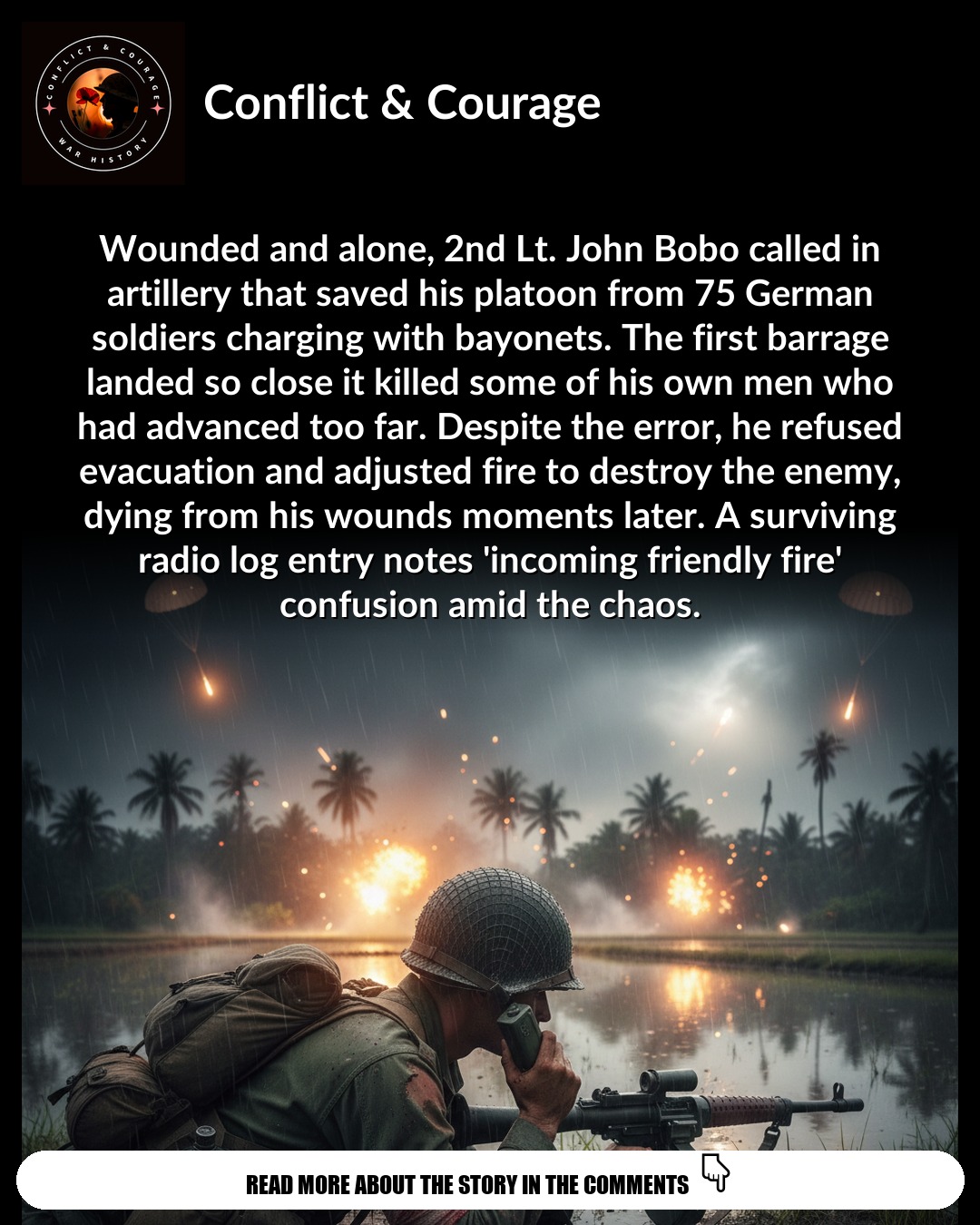
To properly direct the artillery corrections, Bobo had to maintain visual contact with both the enemy positions and the impact points. That meant staying exposed while North Vietnamese forces advanced with fixed bayonets, some coming within mere yards of his position.
Machine gun fire kicked up dirt around him as he worked the radio, calmly relaying coordinate adjustments. His platoon members later recalled the eerie calm in his voice even as enemy soldiers charged directly toward him.
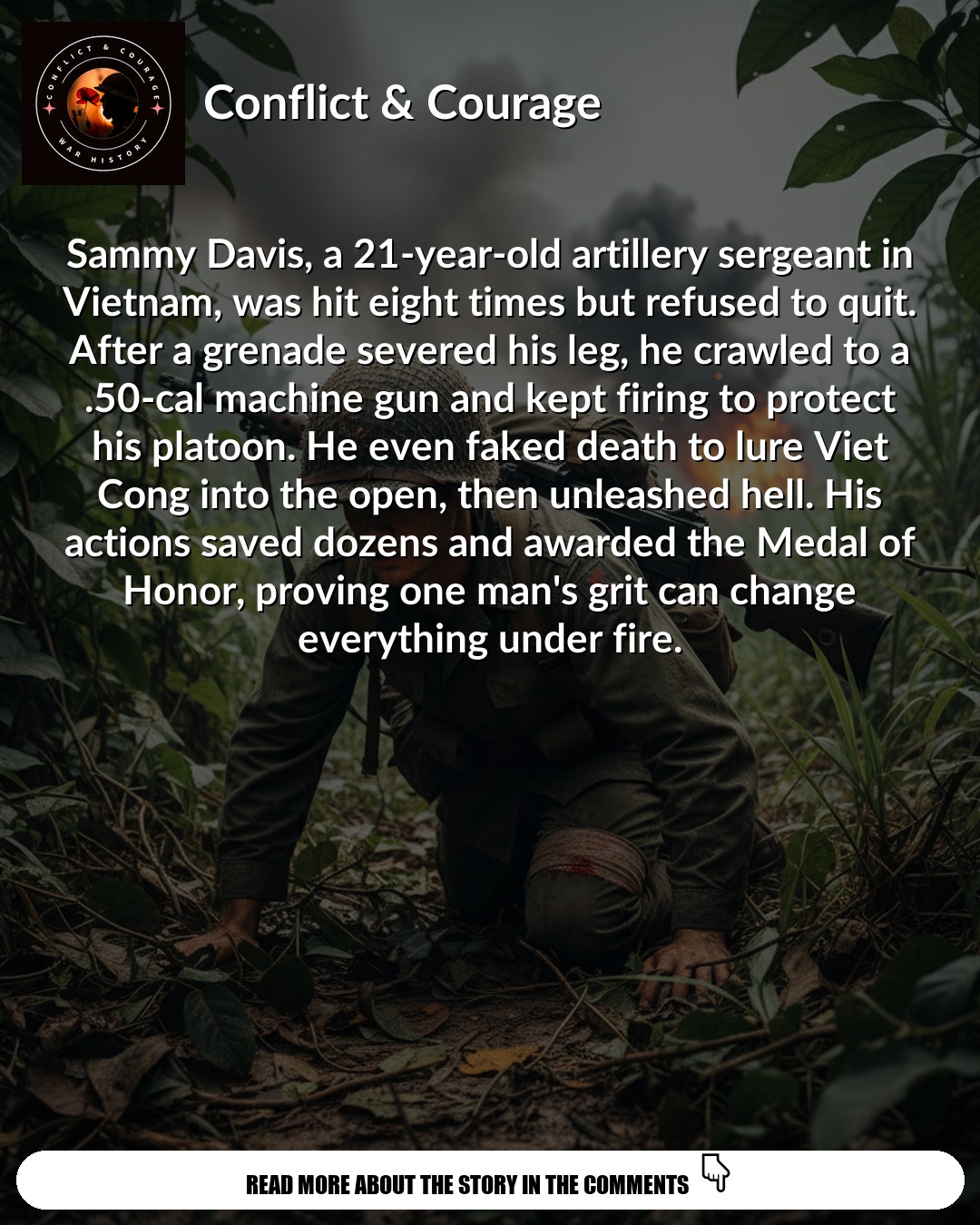
Like Sammy Davis, the Vietnam artilleryman who also earned the Medal of Honor for his courage under fire, Bobo understood that leadership sometimes meant putting yourself directly in harm's way to protect those under your command.
The Final Transmission: Words That Turned the Tide
Bobo's last radio call brought the second artillery barrage exactly where it needed to be. The shells landed with devastating precision on the advancing North Vietnamese forces, breaking their assault and giving the surviving Marines precious time to regroup.
Witnesses reported that Bobo remained on the radio until the very last second, continuing to adjust fire even as enemy soldiers reached his position. His final words to the fire direction center changed the entire tactical situation.
Within minutes, the enemy assault had collapsed. The position was saved, but John Bobo paid the ultimate price for that victory.
The Mystery: Why His Last Words Remain Classified
Here's where the story takes an intriguing turn: the U.S. Army has never released the transcript of Bobo's final radio transmission. Military historians have requested the documents through Freedom of Information Act filings, but the Army continues to classify them as sensitive.
Some theorists believe the transmission contained tactical information that could still compromise artillery procedures. Others suggest Bobo's final words were so personally powerful that the Army deemed them too sensitive for public release.
The ongoing classification has only added to Bobo's mystique, turning his final moments into one of military history's most enduring mysteries.
Medal of Honor: Recognition of Ultimate Sacrifice
2nd Lieutenant John Bobo was posthumously awarded the Medal of Honor for his actions that day. His citation reads in part: "By his inspiring leadership, valor, and selfless devotion to duty, he was directly instrumental in saving the lives of several of his men."
The surviving members of his platoon testified that without Bobo's courageous artillery direction, none of them would have made it home. His sacrifice allowed multiple Marines to return to their families — a trade he made without hesitation.
His story joins the ranks of other Vietnam heroes like Captain Donald Keith at Duc Pho, who similarly put their lives on the line for their men.
Legacy of a Hero's Final Stand
Bobo's actions that day influenced how the military trains officers to handle close-support artillery situations. His courage under fire became a case study in leadership schools, teaching future officers about the weight of command decisions.
But beyond tactical lessons, John Bobo's story reminds us of the human cost of leadership. In those final moments on the radio, he embodied the military principle that leaders eat last — and sometimes, they don't eat at all.
His classified final words may remain a mystery, but his legacy speaks volumes about courage, sacrifice, and the bonds between soldiers that transcend life itself.
What do you think those final classified words contained? Have you heard similar stories of battlefield courage that shaped military tactics? Share your thoughts in the comments below, and help us honor the memory of heroes like John Bobo who made the ultimate sacrifice for their fellow soldiers.