In the pitch-black darkness of France's Argonne Forest, two American soldiers crouched in their listening post, ears straining for any sound that didn't belong. It was May 15, 1918, and Private Henry Johnson and Private Needham Roberts of the 369th Infantry Regiment were pulling guard duty on what should have been a quiet night.
But war has a way of shattering quiet moments without warning.
The Night That Changed Everything
The 369th Infantry Regiment—soon to be known as the legendary Harlem Hellfighters—had been assigned to this sector of the Western Front under French command. American military leaders, bound by the prejudices of their time, refused to fight alongside Black soldiers, so they handed them over to the French.
Johnson, a former railroad porter from Albany, New York, had volunteered for service despite knowing he'd face discrimination at every turn. At just 5'4" and weighing barely 130 pounds, he didn't look like anyone's idea of a warrior.
That was about to change forever.
Around 2 AM, Johnson heard the distinctive snip-snip-snip of wire cutters. German raiders were trying to breach their perimeter, moving like shadows through No Man's Land. He nudged Roberts awake and reached for the alarm.
When Hell Broke Loose
The Germans struck fast and hard—a raiding party of at least two dozen elite troops looking to capture prisoners for intelligence. Grenades exploded around the tiny outpost, and rifle fire erupted from multiple directions.
Roberts took a bullet early in the fight, crying out as he hit the ground. Johnson found himself essentially alone, facing overwhelming odds in the darkness.
Then his rifle jammed.
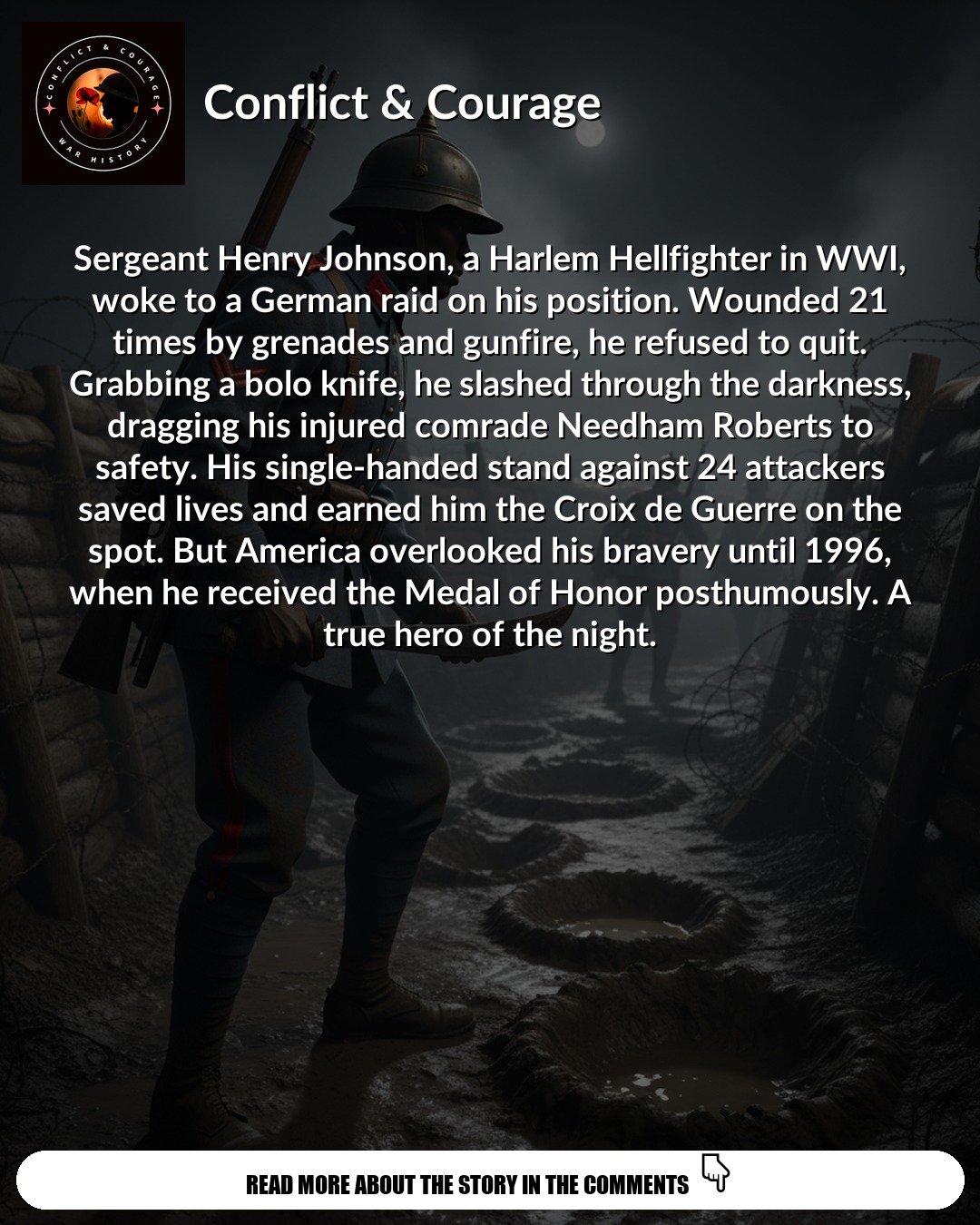
With Roberts wounded and unable to fight effectively, Johnson grabbed his grenades and started hurling them at muzzle flashes in the night. When those ran out, he was down to his last weapon: a bolo knife—a long, heavy blade designed for cutting through jungle vegetation.
The Harlem Hellfighters' Forgotten Hero
Before the war, Henry Johnson had lived a quiet life working for the railroad. Born in North Carolina in 1892, he'd moved north looking for better opportunities, like so many Black Americans of his generation.
When America entered World War I, Johnson saw military service as a chance to prove his patriotism and perhaps earn the respect that had been denied to him and his community. The 369th Infantry Regiment, made up primarily of Black soldiers from Harlem, shared that hope.
Instead, they found themselves fighting under French commanders because American officers refused to integrate their units. Ironically, this rejection led them to serve with an army that judged them by their courage, not their color.

A Bolo Knife Against the Kaiser's Best
As German soldiers closed in on his position, Johnson did something that defied all logic: he went on the attack. Swinging his bolo knife like a man possessed, he carved through the enemy raiders in brutal hand-to-hand combat.
The Germans had come expecting easy prisoners. Instead, they found a warrior who refused to yield an inch of ground.
When some of the raiders tried to drag the wounded Roberts away as a prisoner, Johnson fought his way over and drove them off with his blade. He suffered 21 wounds in the process—bullet holes, bayonet thrusts, and grenade fragments—but he never stopped fighting.
When reinforcements finally arrived, they found Johnson barely conscious but still gripping his bloodied knife. Around him lay the evidence of his incredible stand: dead and wounded German soldiers, and Roberts, saved from capture.
French Honor, American Silence
France recognized Johnson's extraordinary heroism immediately. He became the first American soldier to receive the Croix de Guerre, France's highest military honor. French newspapers celebrated him as a hero, and crowds cheered him in the streets of Paris.
Back home in America, the story was different. Johnson returned to a country still gripped by segregation and racial prejudice. Despite his wounds and his proven courage, he struggled to find steady work and receive proper medical care for his injuries.
He did eventually receive a Purple Heart, but it came in 1996—54 years after his death in 1929. He had died poor, largely forgotten, and denied the recognition he deserved.
The 97-Year Fight for Recognition
For nearly a century, Johnson's family and military historians fought to get him the Medal of Honor he had clearly earned that night in the Argonne Forest. The evidence was overwhelming, but institutional prejudice and bureaucratic inertia kept delaying justice.
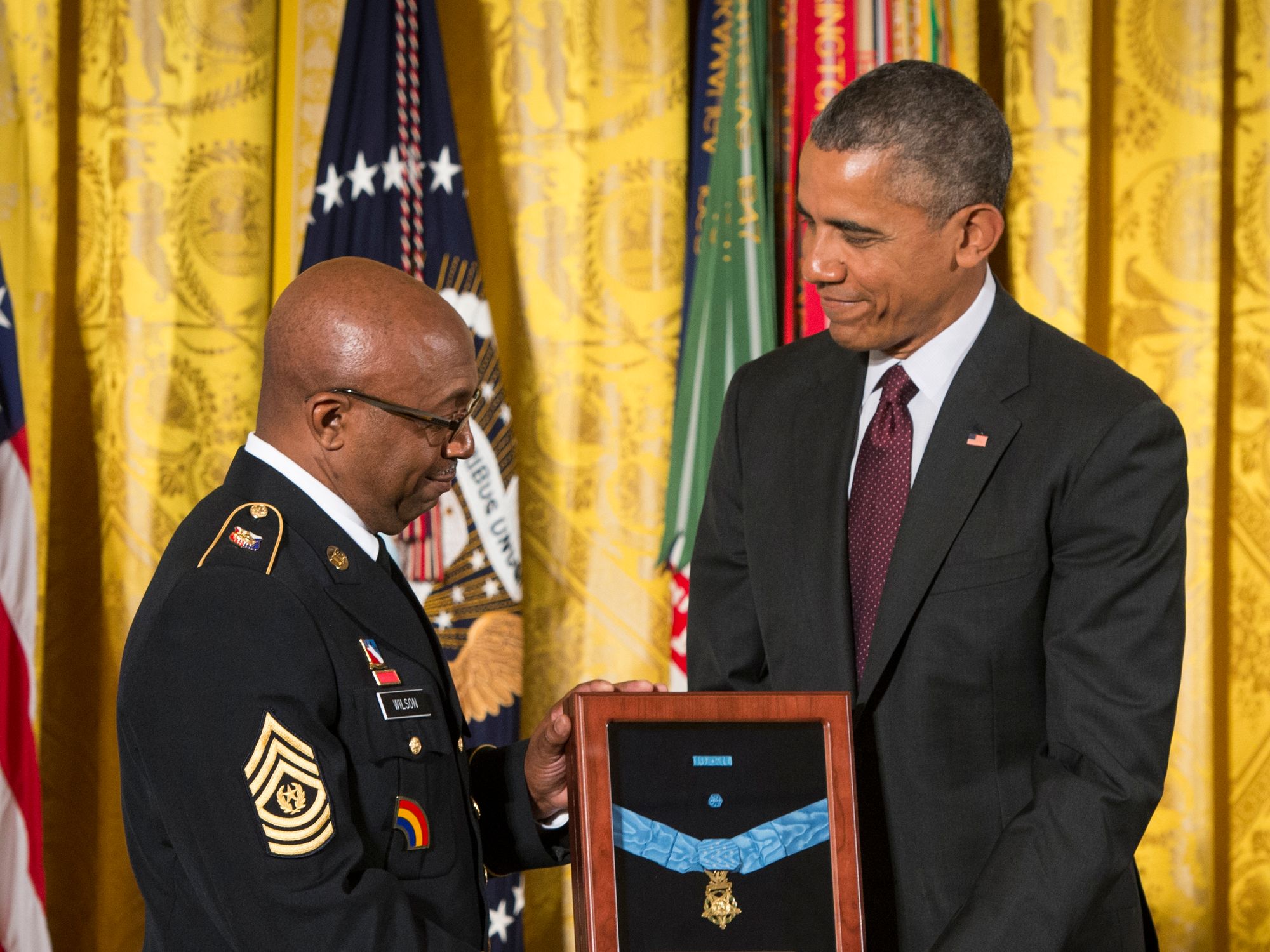
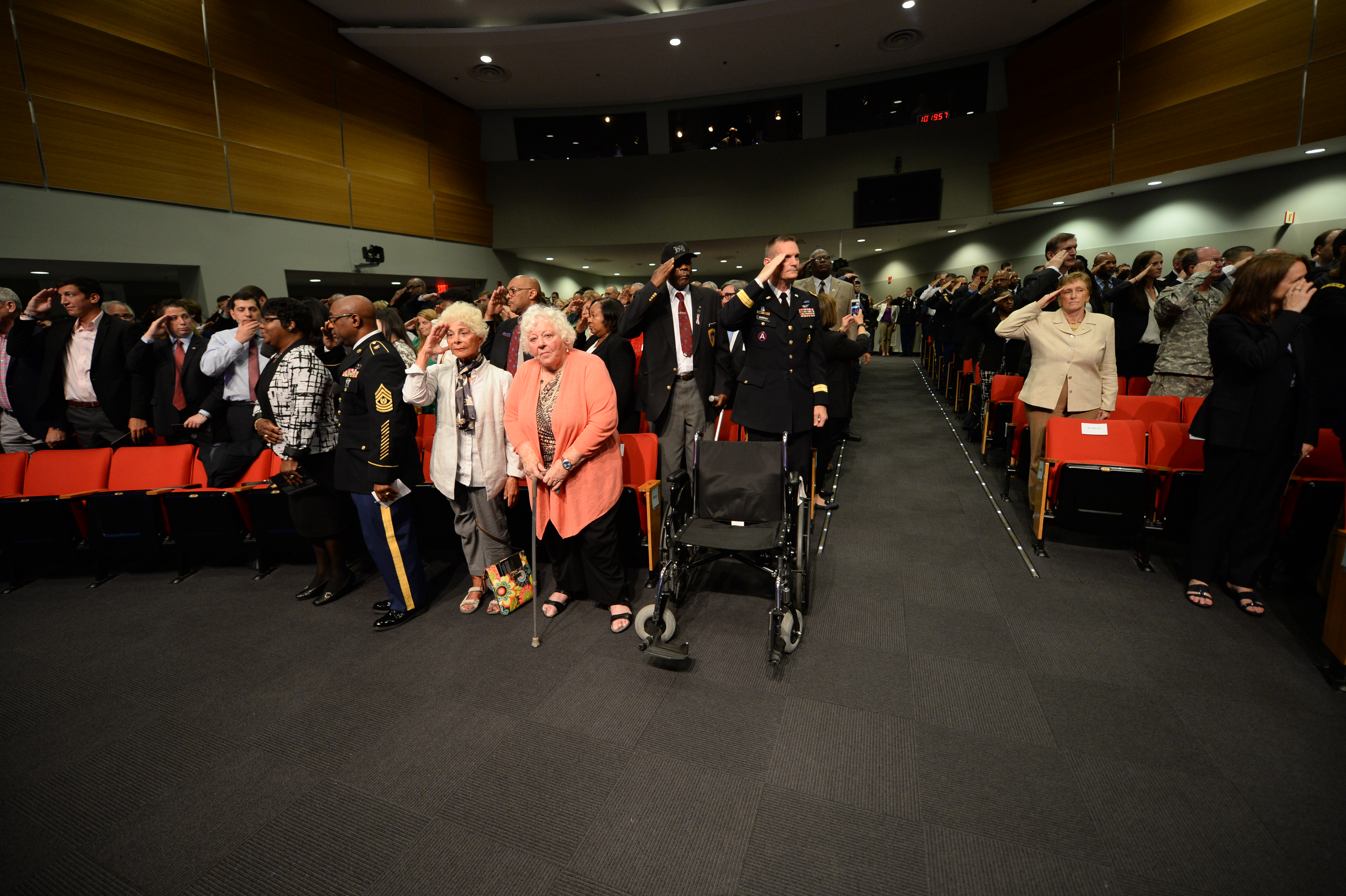
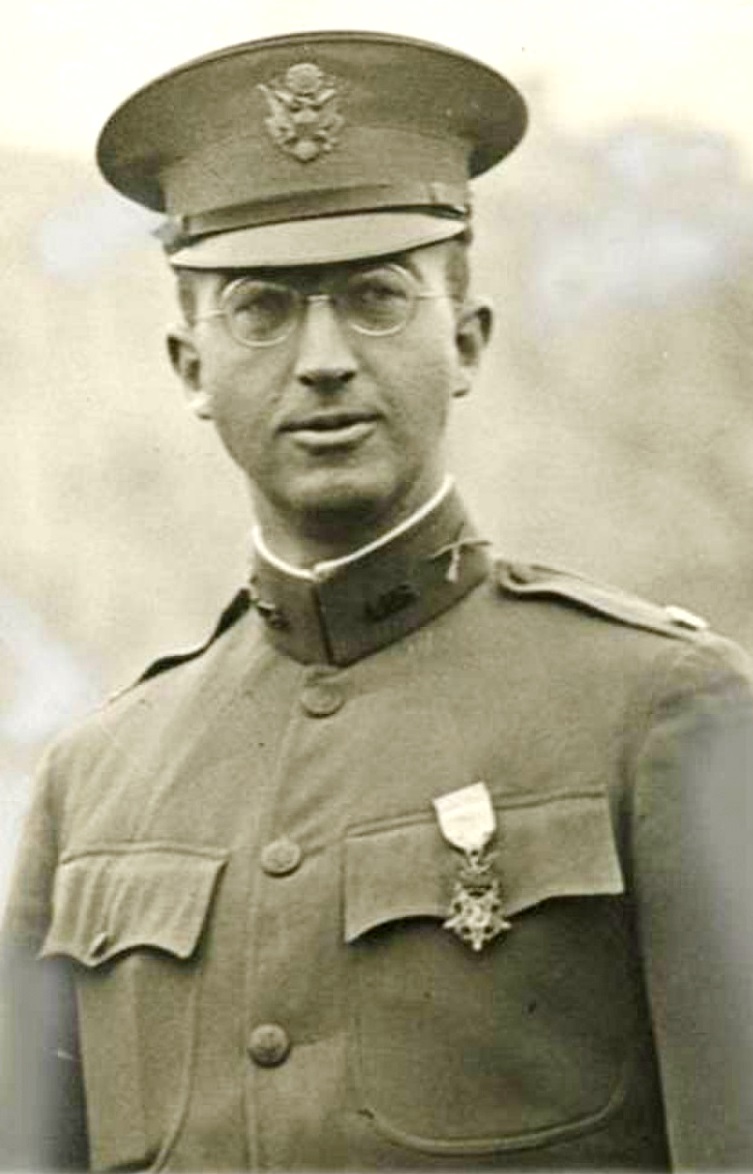
New research uncovered the full extent of Johnson's heroism, and changing attitudes about America's racial past finally created an opening. In 2015, President Barack Obama awarded Johnson the Medal of Honor posthumously, calling it long overdue.
Johnson's family members wept as they accepted the nation's highest military honor—97 years after he had earned it in combat.
Legacy of an Unbreakable Warrior
Henry Johnson's story represents both the best of American military heroism and the worst of our historical blind spots. His courage that night in France was absolute and uncompromising. A small man armed with nothing but a knife faced impossible odds and refused to break.
His long wait for recognition also tells the story of countless other Black veterans whose service was minimized or forgotten entirely. The Harlem Hellfighters spent more time in combat than any other American unit in WWI, but came home to a country that barely acknowledged their sacrifice.
Today, Johnson's Medal of Honor sits in the New York State Capitol, a reminder that courage knows no color and heroism deserves recognition regardless of how long it takes.
What does Henry Johnson's incredible story of courage and persistence mean to you? Have you heard of other forgotten heroes whose recognition came far too late?