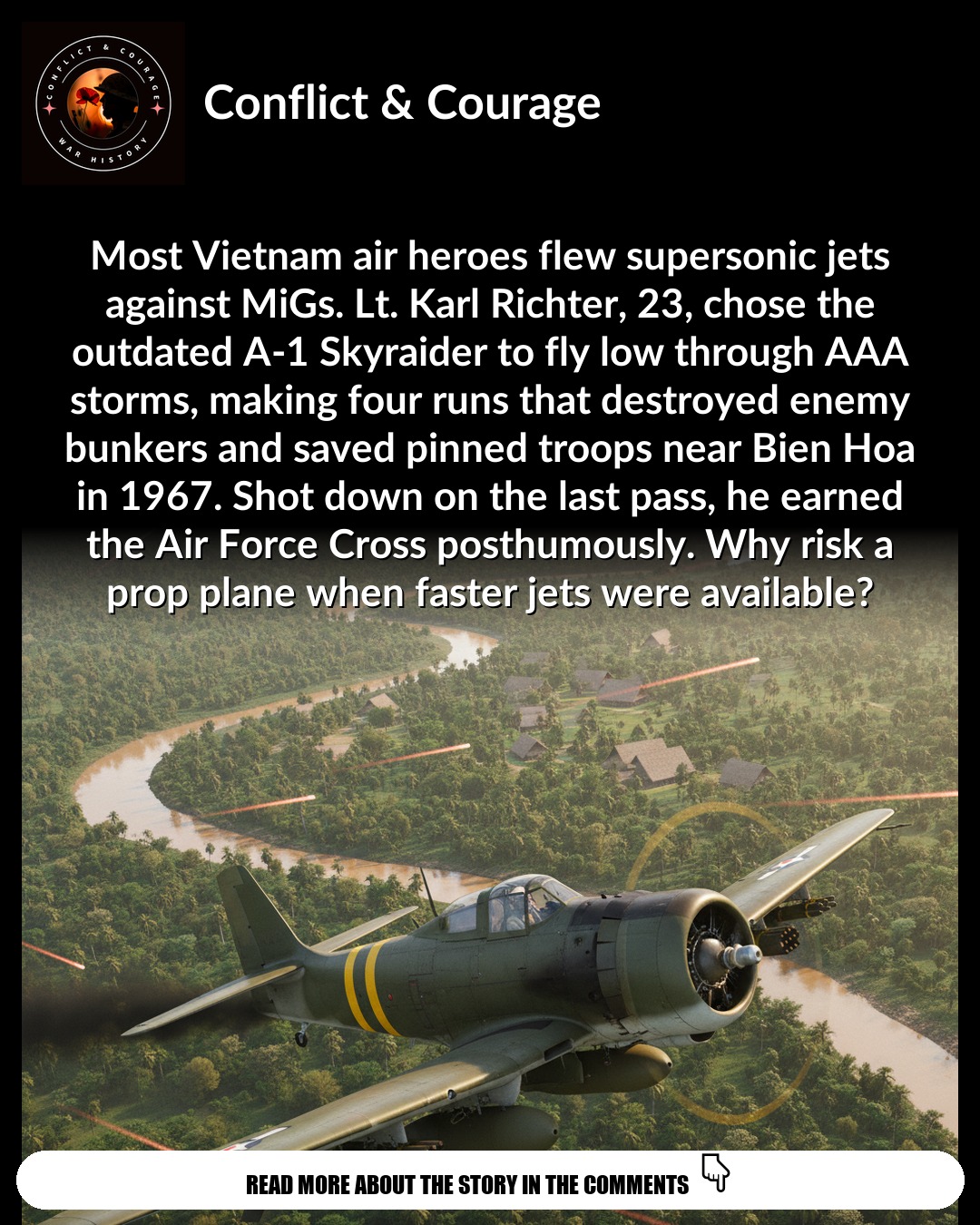
While the sleek F-4 Phantoms and F-105 Thunderchiefs captured headlines during the Vietnam War, some of the most heroic missions were flown by pilots in aging propeller-driven aircraft. The Douglas A-1 Skyraider, nicknamed "Spad" by its pilots, proved that in the deadly world of close air support, slow and steady could literally mean the difference between life and death for troops on the ground.
The Forgotten Warriors of Vietnam's Skies
The jet aces like Robin Olds became household names, their air-to-air victories making front-page news. But deep in the jungle canopy and rice paddies of Vietnam, a different kind of aerial warfare was taking place. Young lieutenants, many barely out of flight school, were climbing into World War II-era aircraft to provide the most dangerous mission in military aviation: close air support.
These weren't glamorous dogfights at 30,000 feet. This was down-and-dirty combat, flying at treetop level through walls of anti-aircraft fire to save fellow Americans pinned down by enemy forces. The pilots who flew these missions faced impossible odds in aircraft that were already considered obsolete when the war began.
Meet the A-1 Skyraider: The 'Flying Dump Truck'
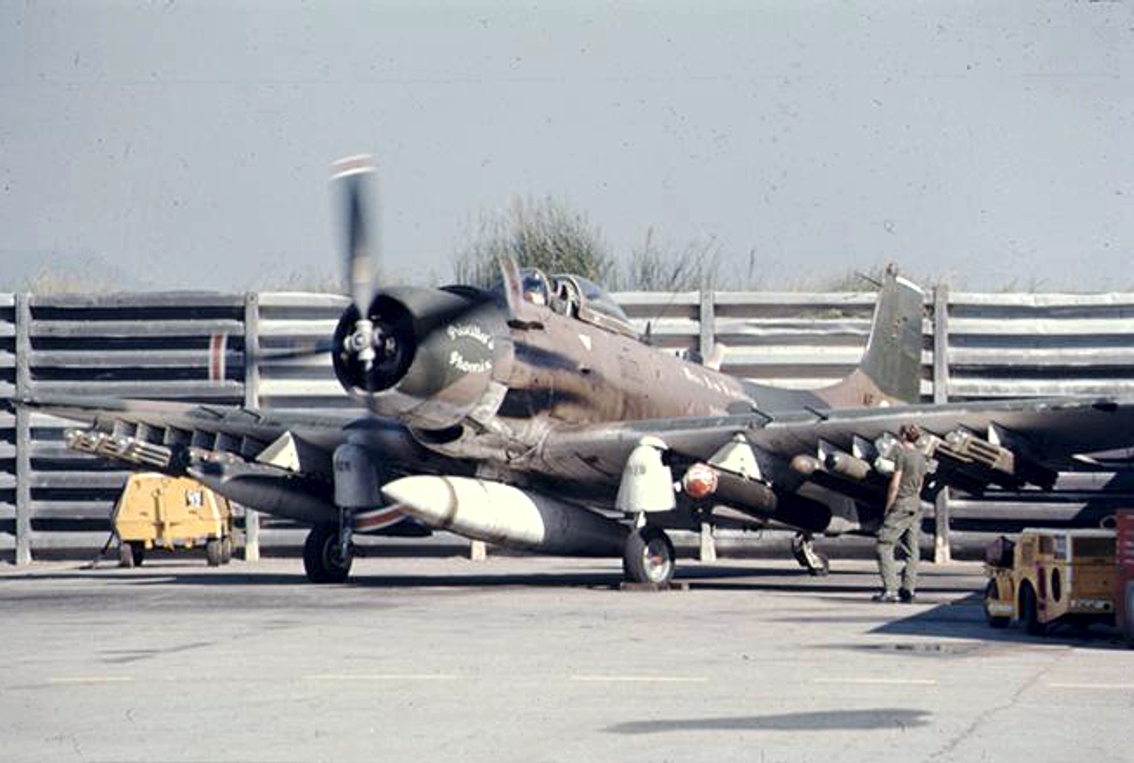
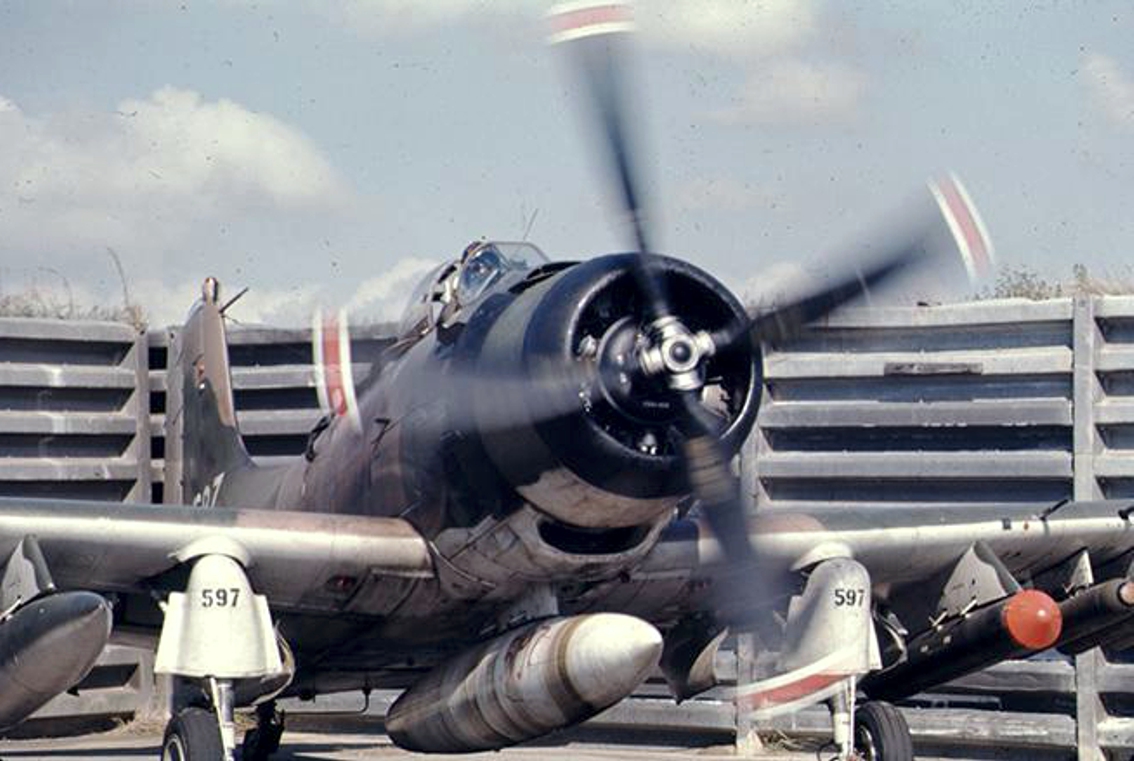
The Douglas A-1 Skyraider was an anachronism in the jet age – a single-engine propeller aircraft designed during World War II but still fighting two decades later. What kept this "flying dump truck" relevant was its incredible ability to carry massive payloads and deliver them with pinpoint accuracy.
While jets screamed overhead at hundreds of miles per hour, the Skyraider could loiter over a target area for hours. Its 15 hardpoints could carry an astounding 8,000 pounds of ordnance – everything from 500-pound bombs to napalm canisters, rockets, and even psychological warfare leaflets.
The aircraft's rugged construction, originally designed to survive carrier landings, made it incredibly resilient to ground fire. Stories abounded of Skyraiders returning to base with hundreds of bullet holes, their pilots somehow still alive.
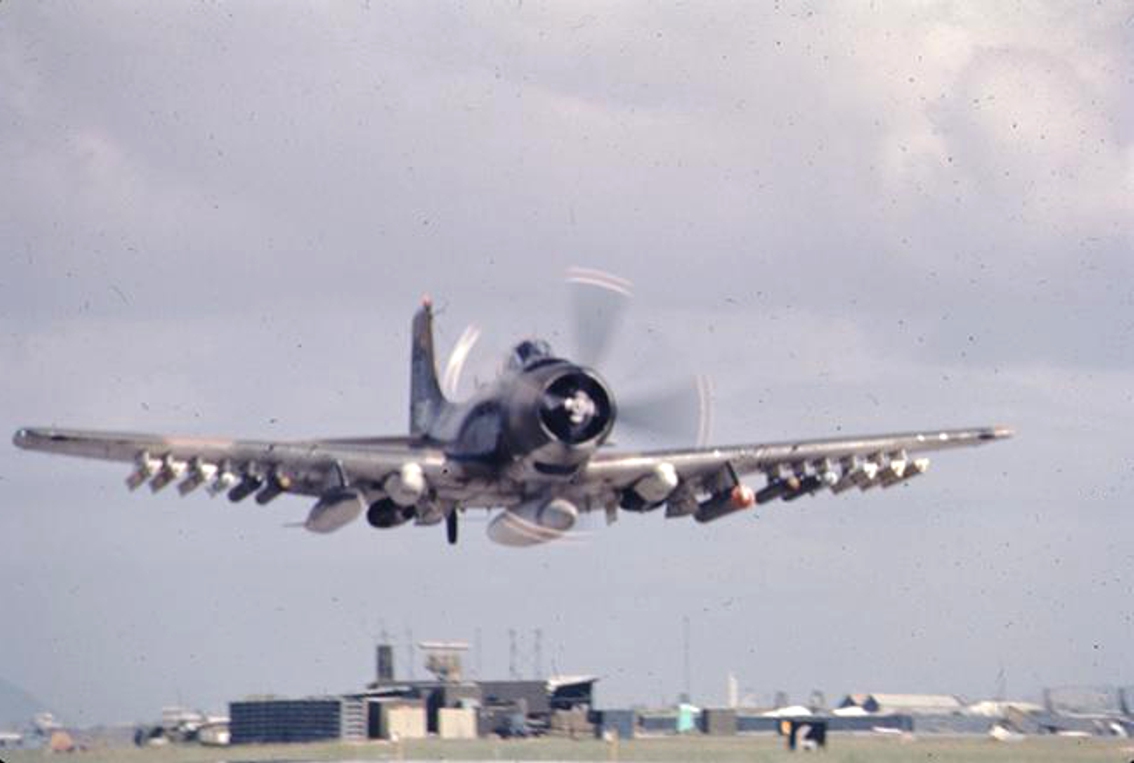
That Fateful Day Near Bien Hoa
The call came in over the radio like so many others during the war: American ground forces were pinned down by heavily entrenched North Vietnamese Army positions near Bien Hoa. The enemy had dug in deep, their bunkers providing excellent protection while they poured devastating fire onto the exposed Americans.
Fast-moving jets had already made passes at the target, but their high speed made precision strikes nearly impossible in such close quarters. What was needed was an aircraft that could fly low, slow, and deliver surgical strikes without hitting friendly forces just yards away.
A 23-year-old lieutenant volunteered for the mission. He knew the risks – flying at low altitude and slow speed made him an easy target for every enemy rifle and machine gun in the area. But he also knew that without immediate air support, the soldiers on the ground would likely die.
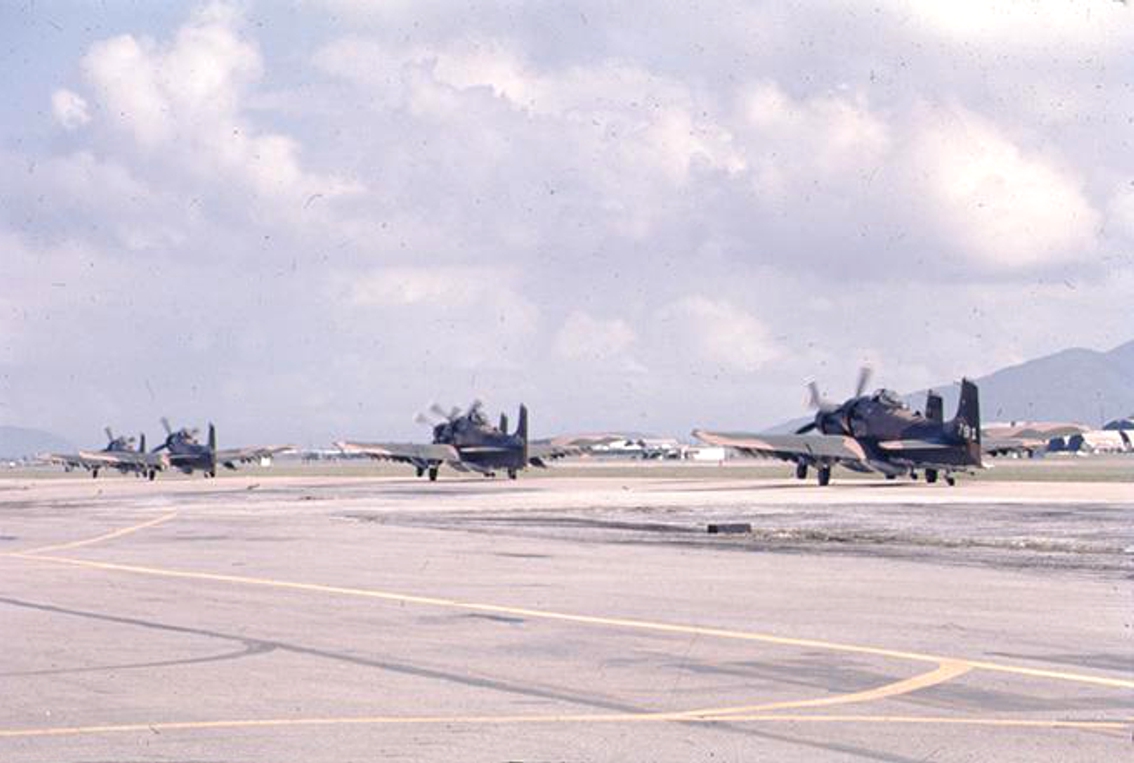
Heroism in the Face of Certain Death
The young pilot led four devastating low-level attack runs through a storm of anti-aircraft fire. On each pass, he delivered precision strikes against the entrenched bunkers, his Skyraider's massive payload methodically destroying enemy positions one by one.
With each run, the enemy fire intensified. His aircraft absorbed hit after hit, the distinctive sound of bullets punching through aluminum becoming a constant companion. By the third pass, his plane was riddled with holes, but he pressed on.
The ground troops watched in awe as this lone pilot repeatedly dove through walls of tracers and exploding shells. His accuracy was phenomenal – bunkers disappeared in fireballs while American positions remained untouched just meters away.
On the final pass, the inevitable happened. The lieutenant's courage had saved dozens of American lives, but it cost him his own. He was shot down and killed in action, another forgotten hero whose sacrifice would be remembered by the men he saved but largely unknown to history.
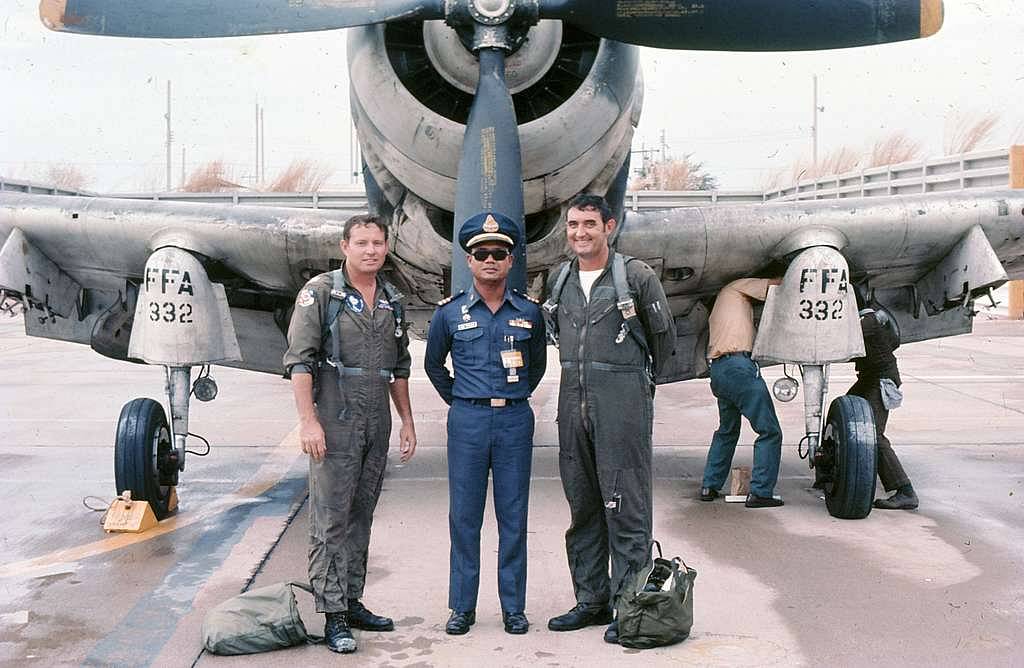
The Skyraider's Secret Weapons
What made the A-1 so effective in Vietnam wasn't just its massive payload or rugged construction – it was its ability to loiter. While jets burned through fuel at tremendous rates, forcing quick hit-and-run attacks, the Skyraider could circle a target area for hours.
This endurance allowed pilots to study the battlefield, identify targets with precision, and coordinate closely with ground forces. The aircraft's relatively low speed – a liability in air-to-air combat – became an asset when delivering close air support.
The psychological impact was equally important. Enemy forces knew that when they heard the distinctive sound of a Skyraider's radial engine, they were in for a long, punishing battle. The aircraft could carry almost any type of ordnance imaginable, from conventional bombs to exotic psychological warfare weapons.
Legacy of the 'Sandy' Pilots
The tactics developed by A-1 pilots in Vietnam revolutionized close air support doctrine. The Air Force still teaches methods pioneered by these prop plane heroes in contemporary training manuals. Their techniques for coordinating with ground forces, marking targets, and delivering precision strikes became the foundation for modern combat aviation.
The Skyraider pilots, known by the call sign "Sandy," served as the bridge between World War II-era aviation and the high-tech warfare of today. They proved that in certain situations, older technology combined with pilot skill and courage could outperform the most advanced aircraft of their time.
Honoring the Forgotten Aces
These stories matter now more than ever. In an age of drone warfare and precision-guided munitions, it's important to remember the human element of combat aviation. Young men like that 23-year-old lieutenant near Bien Hoa represent the courage and sacrifice that have always been at the heart of military service.
The A-1 Skyraider pilots may not have achieved the fame of jet aces, but their contribution to American military history is immeasurable. They flew aging aircraft into impossible situations and saved countless lives through their skill and bravery.
Do you have stories of unsung military heroes from Vietnam or other conflicts? Share them in the comments below – these forgotten warriors deserve to have their courage remembered and their sacrifices honored by future generations.