Picture this: You're drifting down through the dark French countryside on D-Day morning, your parachute carrying you toward what should be a strategic drop zone. Instead, you find yourself tangled on a church steeple, dangling helplessly as the most important battle of World War II rages beneath your boots. This was Private First Class John Steele's reality on June 6, 1944.
What happened next would transform an ordinary soldier from Oklahoma into one of D-Day's most enduring symbols of courage and survival.
The Moment Everything Went Wrong
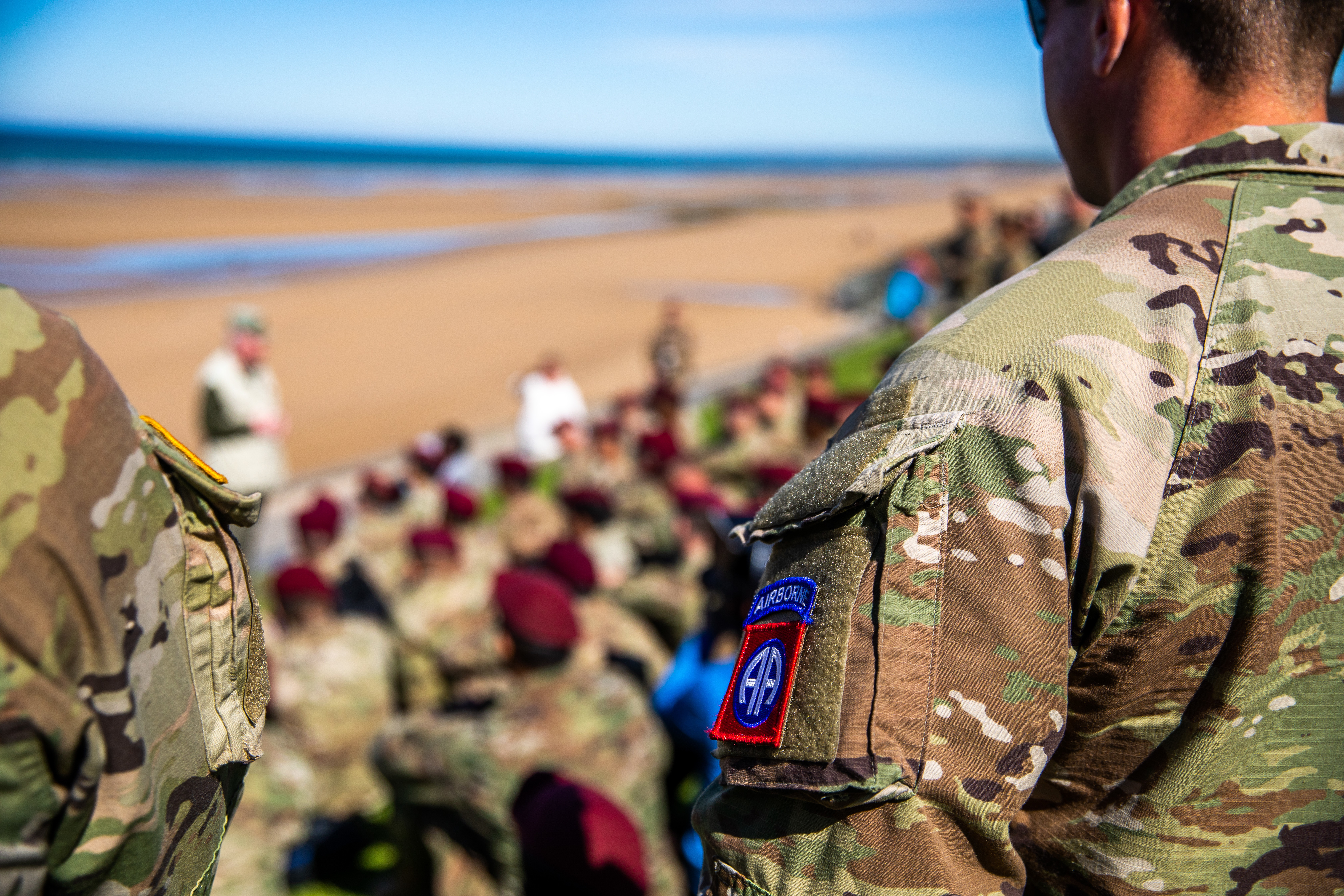
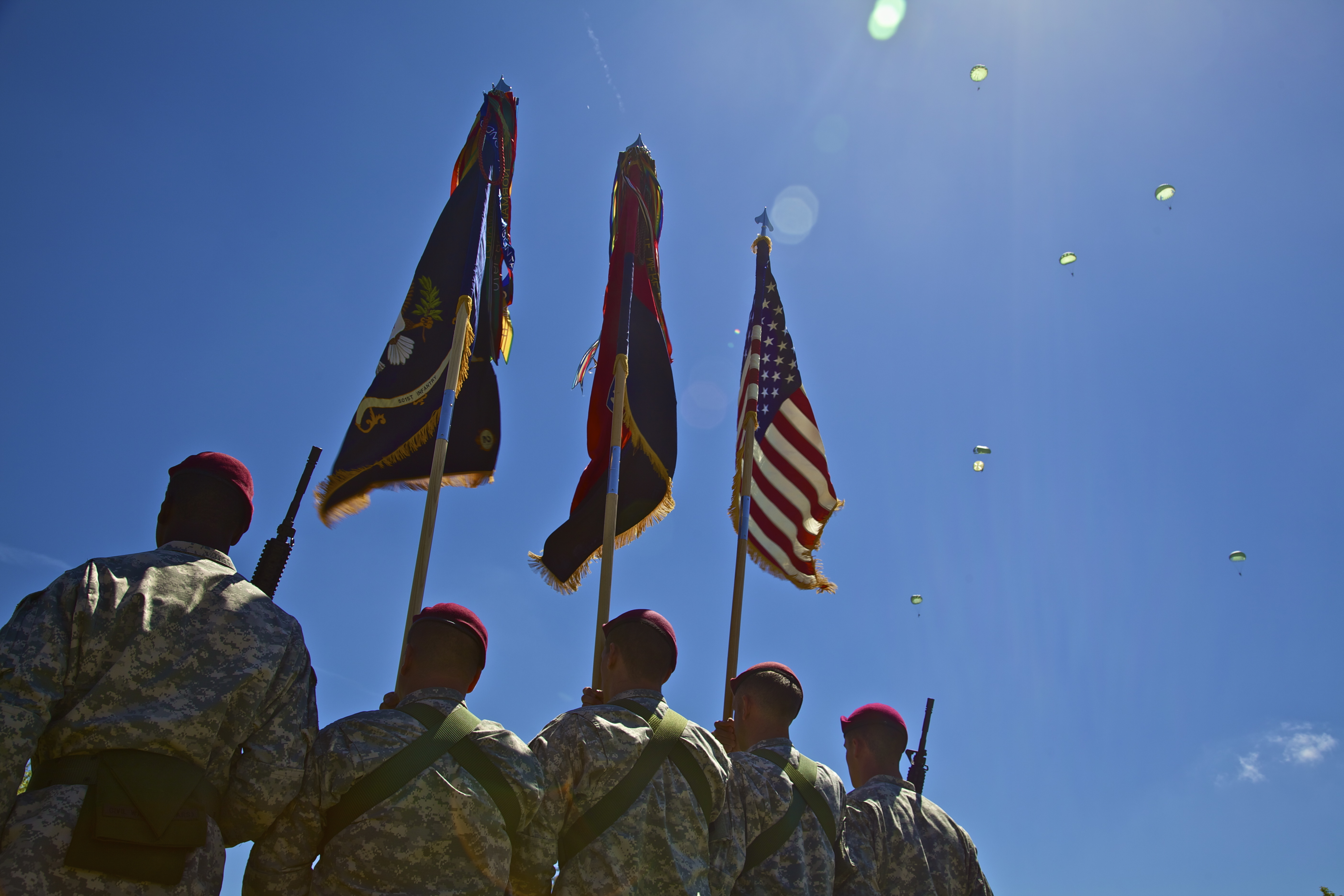
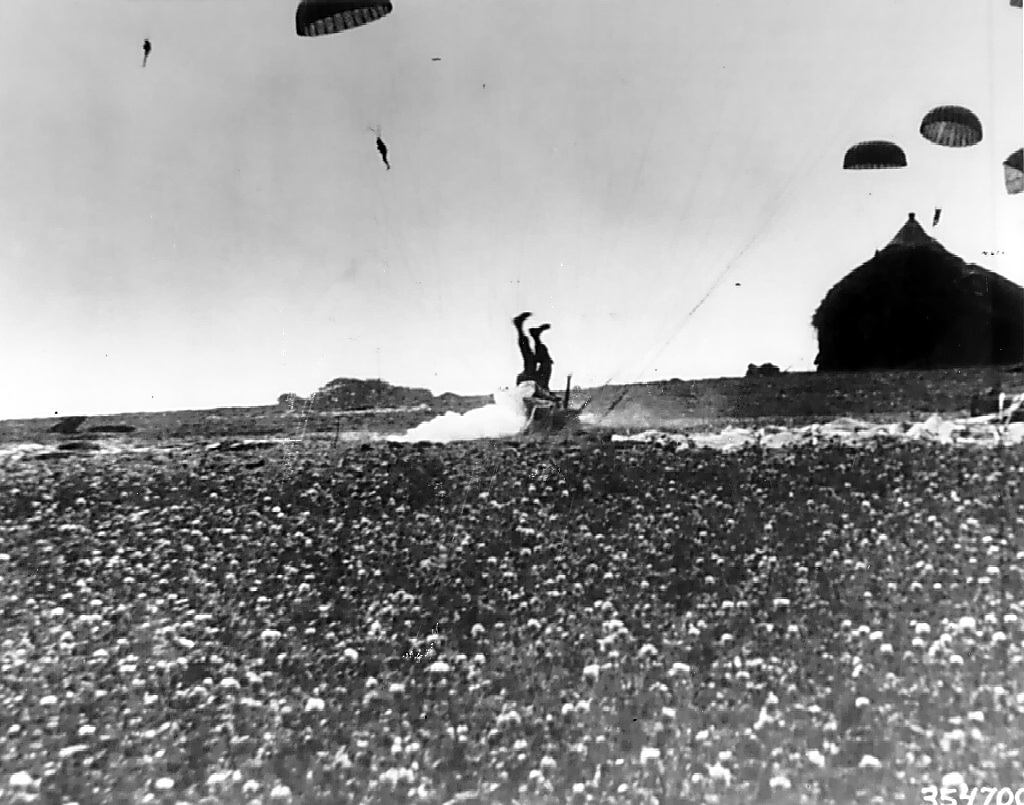
The 82nd Airborne Division's nighttime drop behind German lines was supposed to be precise. Reality proved far messier. Strong winds and enemy anti-aircraft fire scattered paratroopers across the Norman countryside like leaves in a storm.
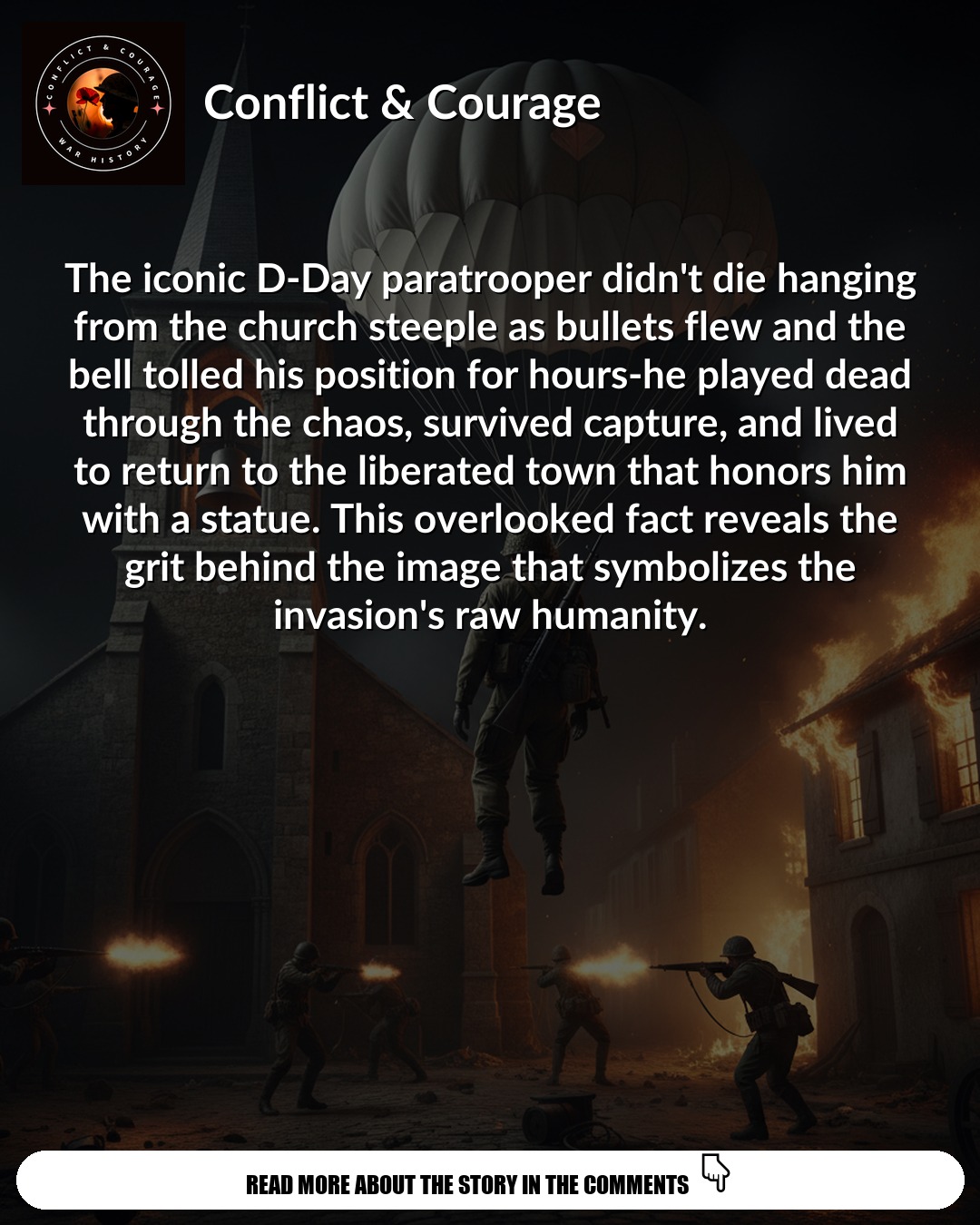
John Steele found himself descending not into his designated drop zone, but directly toward the town square of Sainte-Mère-Église. His parachute caught on the church steeple, leaving him suspended forty feet above the cobblestones where German soldiers were already engaging scattered American paratroopers.
The German garrison had been alerted by the sound of aircraft overhead. As Steele hung helplessly, bullets began flying from all directions. German defenders fired at the dangling American, while his fellow paratroopers, unaware of his predicament, returned fire from the square below.
Hanging Between Life and Death
With a wounded foot and enemy fire all around him, Steele made a split-second decision that saved his life: he would play dead. For two agonizing hours, he hung motionless from his parachute harness, enduring physical pain and psychological torture.
The church bell tolled relentlessly, each chime announcing his position to Germans and Americans alike. Every muscle in his body screamed for movement, but Steele forced himself to remain perfectly still. One twitch, one cry of pain, and the enemy would know he was alive.
Below him, the battle for Sainte-Mère-Église raged. He watched helplessly as fellow paratroopers fought and died in the town square, unable to help or even acknowledge their sacrifice. The psychological strain of witnessing combat while playing dead pushed him to his breaking point.
The German Discovery
After what felt like an eternity, German soldiers finally approached the church to investigate the motionless figure hanging from the steeple. They had initially assumed he was dead, but battlefield experience taught them to verify such assumptions.
When they cut Steele down, they discovered he was very much alive. Surprisingly, rather than executing him on the spot as many captured paratroopers faced, the Germans took him prisoner. Perhaps his courage in playing dead for so long impressed his captors, or maybe they simply followed proper procedure for wounded prisoners.
The moment marked the end of one ordeal and the beginning of another. Steele's war was far from over.
Behind Enemy Lines as a POW
German captivity brought new challenges for the wounded paratrooper. Like many Allied prisoners, Steele endured harsh conditions and limited medical care for his injured foot. The Germans moved him between different camps as Allied forces advanced across France.
Steele attempted to escape, demonstrating the same courage that kept him silent on the church steeple. Unfortunately, his recapture meant even harsher treatment and closer surveillance. Many prisoners faced execution for escape attempts, but Steele's luck held.
When advancing Allied forces finally liberated him, Steele's full story remained largely untold. The chaos of war, combined with his natural modesty, meant his remarkable ordeal didn't immediately become public knowledge. It would take time for the world to learn about the paratrooper who hung between heaven and earth on D-Day morning.
The Strategic Importance of Sainte-Mère-Église
Steele's ordeal unfolded at one of D-Day's most crucial locations. Sainte-Mère-Église sat at the intersection of key roads leading inland from the beaches. Controlling this Norman town meant controlling German reinforcement routes to the invasion beaches.
The 82nd Airborne's mission was to secure these vital crossroads and establish the first Allied foothold in occupied Europe. Despite the scattered drop and fierce German resistance, paratroopers like Steele's comrades managed to capture the town in the early hours of June 6th.
This tactical victory prevented German armored units from reaching Omaha and Utah beaches during the critical first hours of the invasion. In many ways, the success at Sainte-Mère-Église helped ensure D-Day's overall triumph.
The Man Behind the Legend
Before becoming a symbol of D-Day courage, John Steele was simply a young man from Foyil, Oklahoma, who answered his country's call. He trained with the elite 82nd Airborne Division, earning his paratrooper wings and preparing for the most important mission of the war.
After liberation and recovery, Steele returned home to a quiet life. Unlike some veterans who struggled to process their wartime experiences, he seemed to find peace with his ordeal. He rarely spoke publicly about his time hanging from the church steeple.
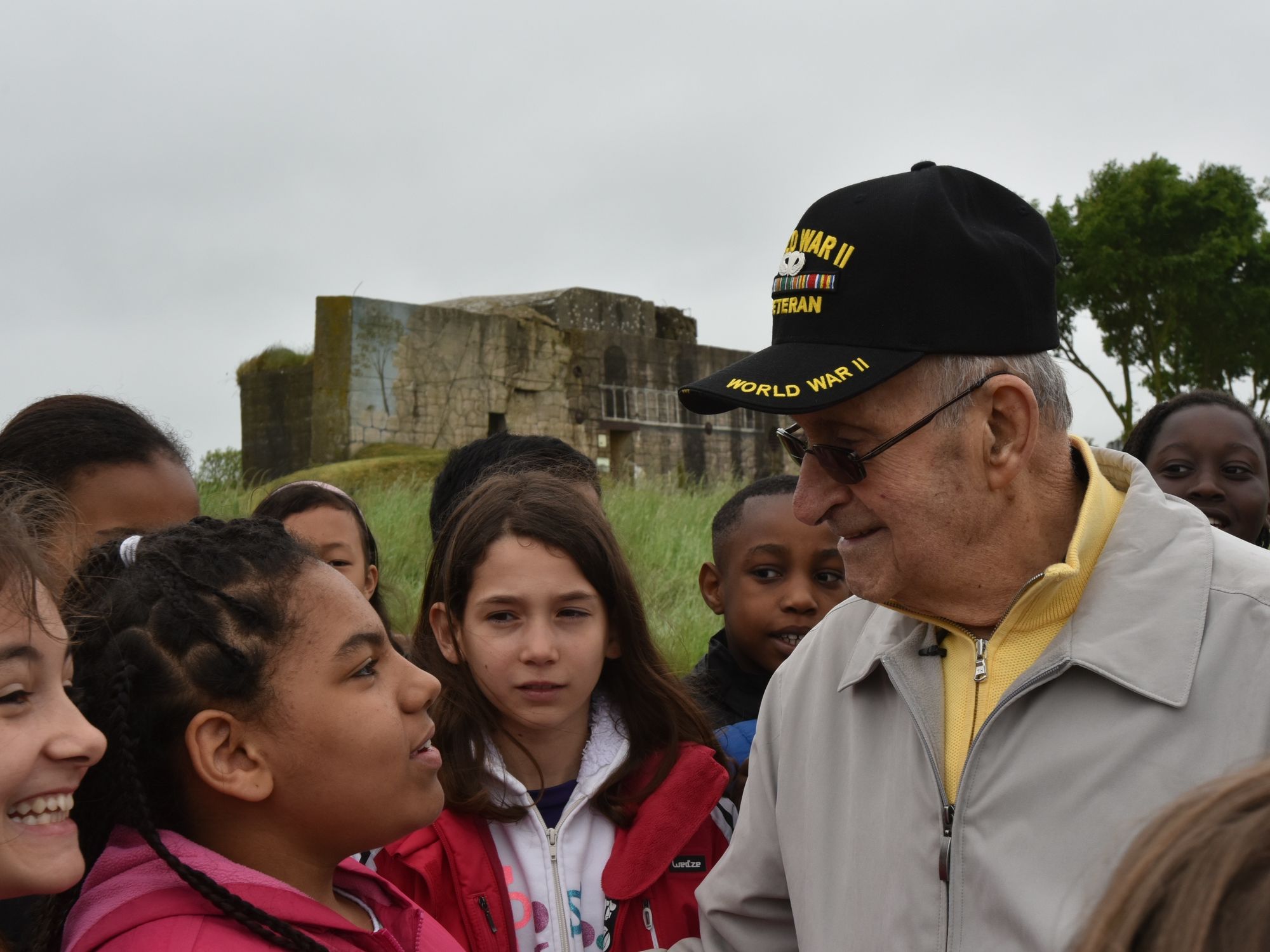
In later years, Steele made several visits back to Sainte-Mère-Église, where the townspeople welcomed him as a hero. These return journeys helped him connect with the French families who had witnessed his ordeal and celebrated their liberation.
Legacy of the Church Steeple Hero
John Steele's story became one of D-Day's most enduring images of individual heroism within the massive invasion. While thousands of soldiers stormed the beaches, his solitary struggle on the church steeple represented something uniquely personal and relatable.
The famous photograph of a paratrooper dummy hanging from the church steeple (installed as a memorial) has become synonymous with D-Day courage. Modern visitors to Sainte-Mère-Église can see this tribute and imagine Steele's two-hour ordeal above the battle.
His story resonates because it captures the individual human drama within history's largest military operation. Like other forgotten heroes we've celebrated, Steele's courage reminds us that extraordinary bravery often comes from ordinary people facing impossible circumstances.