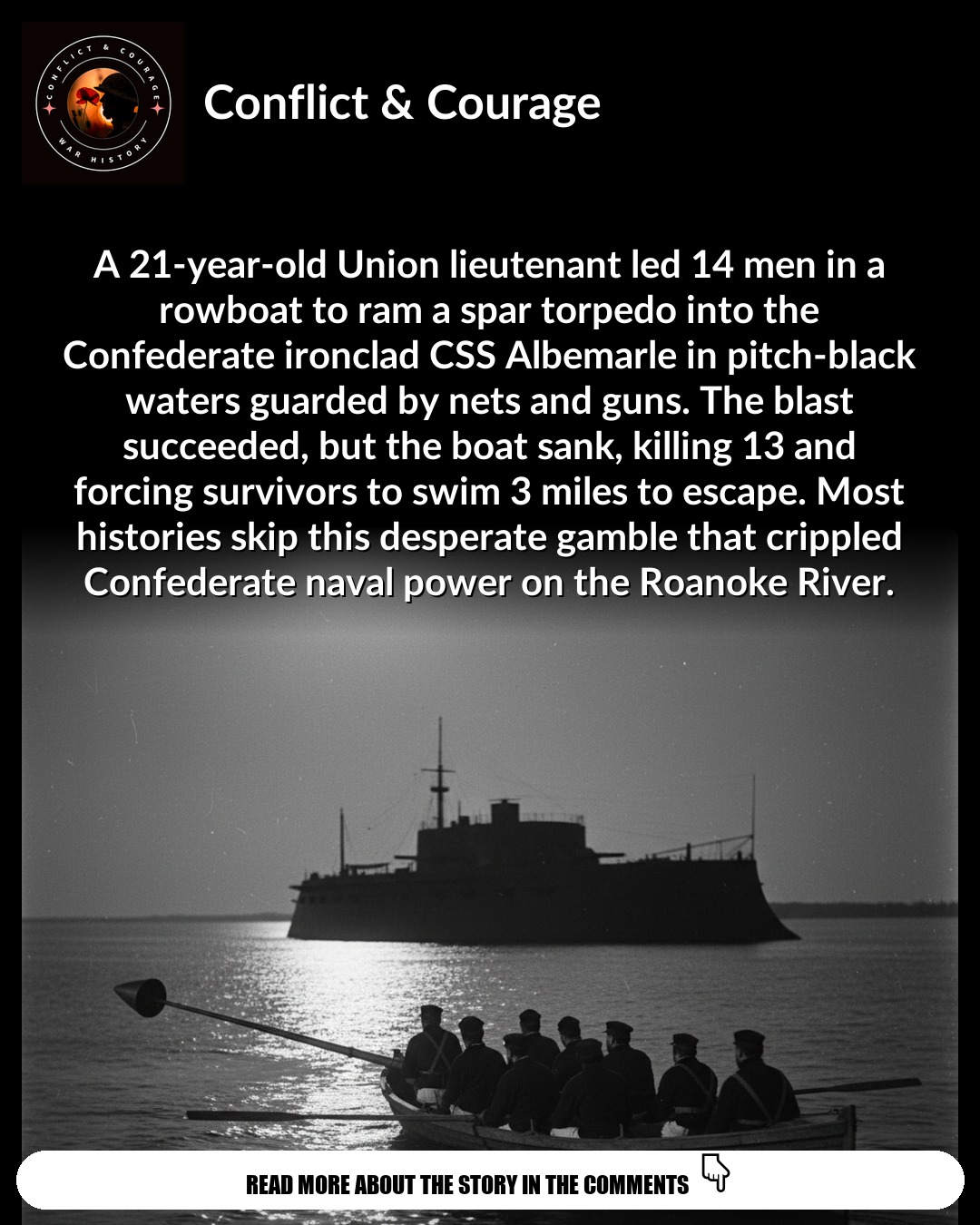
Picture a 21-year-old naval officer rowing silently through enemy waters in the dead of night, carrying a homemade bomb that could either sink a Confederate ironclad or blow him to pieces. This wasn't Hollywood fiction — this was Lieutenant William Cushing's audacious mission that changed the course of Civil War naval warfare forever.
The Terror of Roanoke River
The CSS Albemarle had become the Union Navy's worst nightmare by October 1864. This Confederate ironclad controlled the Roanoke River like a steel fortress, choking off crucial supply lines and sinking Union vessels with devastating efficiency.
Previous attempts to neutralize the Albemarle had failed spectacularly. Conventional naval bombardments bounced harmlessly off her iron armor. Union commanders watched helplessly as this single ship disrupted their entire North Carolina operations.
The strategic situation was growing desperate. Every day the Albemarle remained operational meant more Union supply ships couldn't reach their destinations. Something had to be done, even if it meant attempting the impossible.
Enter Lieutenant William Cushing
At just 21 years old, William Cushing had already earned a reputation as the Navy's most daring officer. His previous exploits behind Confederate lines read like adventure novels — capturing enemy vessels, conducting reconnaissance missions, and leading raids that seasoned veterans wouldn't attempt.
The Navy brass chose Cushing precisely because conventional thinking had failed. They needed someone willing to risk everything on a plan that defied military logic. Like other Civil War heroes who took extraordinary risks, Cushing possessed the psychological makeup of someone who saw opportunity where others saw certain death.
His youth might have been a liability in peacetime, but in 1864, the Union needed officers who hadn't learned that some missions were impossible.
The Impossible Plan
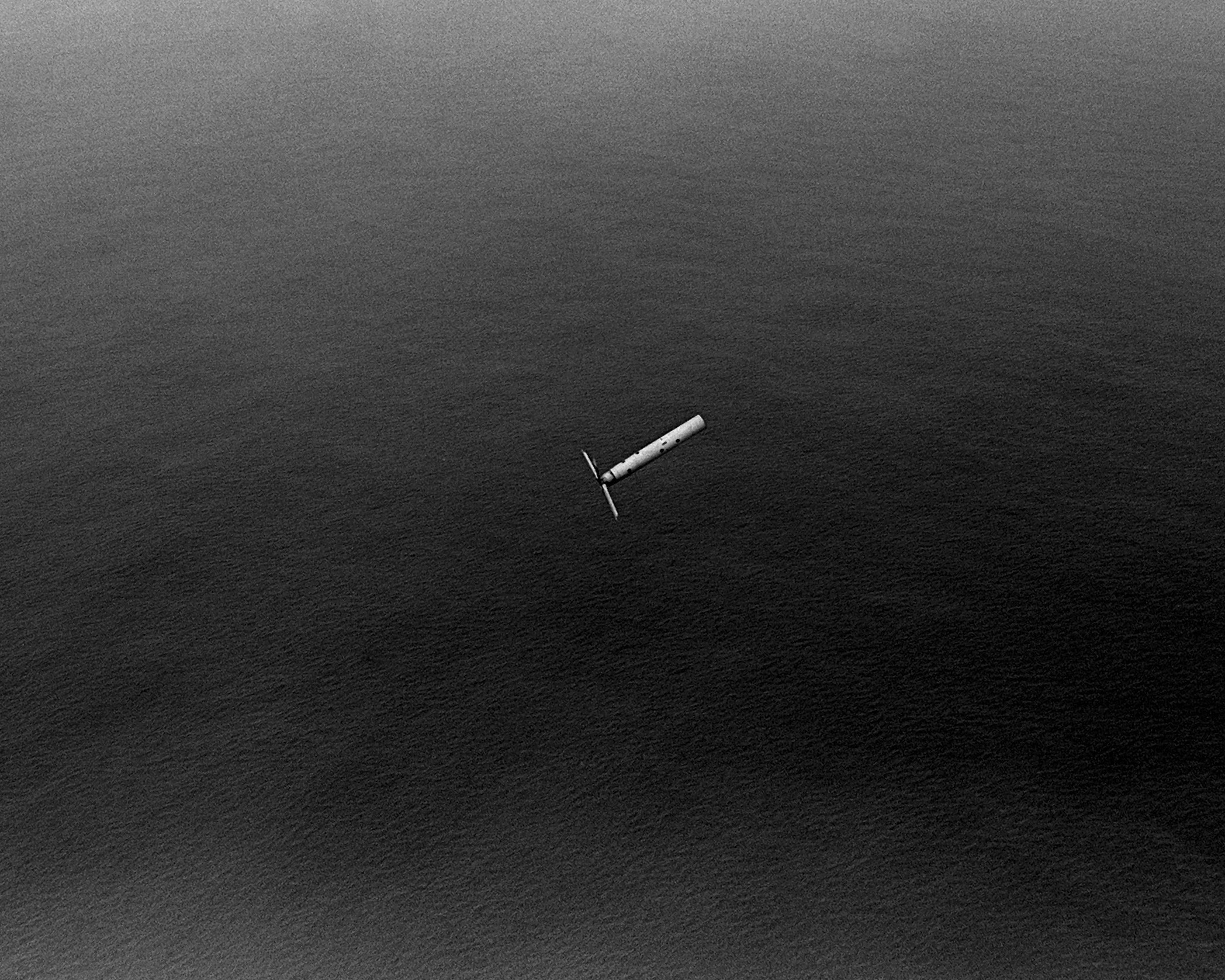
Cushing's weapon was a spar torpedo — essentially a bomb attached to a long pole mounted on a small steam launch. The device was crude by any standard, cobbled together from available materials with no guarantee it would function when needed.
The boat selected for the mission was laughably inadequate — a tiny vessel that could barely hold Cushing's handpicked crew of volunteers. Against a heavily armored ironclad surrounded by Confederate defenses, it seemed like sending a canoe to sink a battleship.
Why did the Navy approve such a desperate plan? Because every conventional option had been exhausted. The Albemarle's destruction was worth almost any risk, even one that bordered on suicidal.
Night of Terror: October 27, 1864
Under cover of complete darkness, Cushing's small launch crept toward the Albemarle's anchorage. Confederate sentries patrolled the area, but the young lieutenant had studied every detail of the approach for weeks.
The moment of contact came suddenly. Cushing's torpedo struck the ironclad's hull just as Confederate defenders opened fire. The explosion that followed lit up the night sky, sending shockwaves through both the Union boat and the mighty Albemarle.
Chaos erupted instantly. The Albemarle began taking on water while Confederate soldiers poured gunfire into the darkness, trying to hit targets they could barely see.
Swimming for Their Lives
With their boat destroyed in the explosion, Cushing and his crew found themselves in the freezing Roanoke River. Most of his men didn't make it — captured, wounded, or drowned in the confusion.
Only Cushing and one other sailor managed to escape, swimming miles through enemy territory while Confederate searchlights swept the water and rifle bullets splashed around them. The cold October water nearly claimed them both.
For hours, they struggled through swamps and enemy patrols, driven by the knowledge that capture meant certain execution as raiders. Their survival depended entirely on endurance and luck.
Victory's Hidden Cost
The Albemarle sank, ending Confederate control of the Roanoke River. Union supply lines reopened, and the strategic situation in North Carolina shifted dramatically. From a military perspective, the mission was a complete success.
But questions lingered about the Navy's decision to approve such a high-risk operation. Had safer alternatives been adequately explored? Was sacrificing most of the crew an acceptable price for victory?
The human cost weighed heavily. Young men died carrying out a plan that senior officers knew was essentially a suicide mission from the start.
Legacy of a Daring Raid
Cushing's torpedo attack influenced naval warfare for decades afterward. It demonstrated that small, fast boats with explosive weapons could threaten even the most heavily armored ships — a concept that would revolutionize naval combat.
The broader lesson transcended tactics: individual courage could change the course of entire campaigns. Sometimes desperate times truly do call for desperate measures, even when the human price seems too high to pay.
The spirit of Cushing's raid echoed through later conflicts, inspiring similar small-boat attacks in both World Wars. Innovation born from desperation became standard military doctrine.