The Quiz Question
Which May 1943 battle to retake an Aleutian island from Japanese occupation is remembered as the only land battle of World War 2 fought in North America?
- A. Battle of Attu
- B. Battle of Kiska
- C. Battle of Midway
- D. Battle of Wake Island
The answer is A. Battle of Attu. Here is the full story.
Most Americans who think about World War 2 picture the beaches of Normandy, the jungles of the Pacific, or the deserts of North Africa. Very few think of Alaska. Yet in May 1943, some of the most savage fighting of the entire war unfolded on a windswept, fog-smothered island at the far western edge of the Aleutian chain — on American soil, against a Japanese garrison that refused to yield a single yard without a fight.
The Battle of Attu lasted nineteen days. It cost thousands of American casualties, produced one of the most extraordinary last stands of the Pacific War, and remains to this day the only land battle of World War 2 fought in North America. Remarkably, most people have never heard of it.
A War Most Americans Never Knew Was on Their Doorstep
By the spring of 1943, public attention in the United States was split between the grinding campaigns in North Africa and the bloody island-hopping war in the Pacific. Newspaper headlines were full of Rommel and Guadalcanal. Almost nothing was said about the Aleutians.
Yet American and Japanese soldiers were preparing to kill each other just off the coast of Alaska, on territory that legally belonged to the United States. Attu Island sits at the outermost tip of the Aleutian chain, closer to Tokyo than to Seattle — a geographic reality that made it strategically significant to both powers.
The casualties alone tell the story of how brutal this forgotten battle was. From a landing force of roughly 15,000 men, the US suffered over 3,800 casualties including 549 killed in action. The campaign has never found its place in the popular memory of the war, but its soldiers deserve far better than obscurity.
How Japan Came to Occupy American Territory
On 7 June 1942 — just six months after Pearl Harbor — Japanese forces landed on both Attu and Kiska, making them the first foreign power to occupy US territory since the War of 1812. The occupation was partly a strategic feint connected to the Battle of Midway, designed to draw American naval resources northward while the main assault unfolded in the Central Pacific.
Attu had almost no military presence when the Japanese arrived. Its only permanent residents were a small Unangan (Aleut) community of around 40 people and a US weather station staffed by Charles Foster Jones, who was killed during the invasion. His wife, Etta Jones, was taken prisoner along with the Unangan community.
Japan's foothold in the Aleutians offered a potential staging post to threaten Alaska and Canada's Pacific coast, and it cut uncomfortably close to American supply lines. More immediately alarming to Washington was the propaganda value of enemy soldiers standing on American ground. The decision was made to retake the islands — and planners chose to strike Attu first, despite its garrison being smaller than the one at Kiska, because its remoteness made it logistically more vulnerable to isolation.
The Island Itself: An Enemy Before the Fighting Began
Attu is roughly 35 miles long and 15 miles wide. There are no trees. The landscape is a wilderness of jagged mountain ridges, deep valleys, and seemingly endless bog — what Alaskans call muskeg — that swallows men up to their knees and renders heavy equipment almost useless.
In May 1943, temperatures hovered around freezing. Sudden blizzards were routine. The Aleutians are notorious for williwaw winds — violent, unpredictable gusts that can reach hurricane force within minutes, with no warning whatsoever. The fog was so persistent that pilots sometimes couldn't fly for days at a stretch.
American planners had significantly underestimated what the terrain would do to their forces. Many soldiers from the 7th Infantry Division had trained in the California desert and arrived without adequate cold-weather boots. The result was a catastrophe of frostbite and trench foot that would account for more casualties than Japanese bullets on many individual days of the battle.
For Colonel Yasuyo Yamasaki and his approximately 2,900 defenders, the terrain was a force multiplier. The narrow valleys and commanding ridgelines meant that small, determined groups of Japanese soldiers could hold off attacking forces many times their number. They had months to dig in, and they used every minute of that time.
The American Plan and the Landings of 11 May 1943
Operation Landcrab was the codename for the American assault. Major General Albert E. Brown commanded the operation, leading the reinforced 7th Infantry Division — approximately 15,000 men — in an amphibious assault on a heavily fortified island in Arctic conditions. It was an extraordinarily difficult task on every level.
The plan called for a two-pronged attack: one landing at Massacre Bay on the south coast, another at Holtz Bay in the north. Both forces would push inland, link up in the middle of the island, and trap the Japanese garrison between them. On paper, it was sound. On the ground, it unravelled almost immediately.
The landings on 11 May initially met little resistance, which should have been a warning sign. Yamasaki had deliberately pulled his men back from the beaches, choosing instead to fight from prepared positions in the high ground. Within hours of landing, American troops were struggling through knee-deep muskeg under fire from defenders they could barely see, on terrain that maps had failed to capture.
General Brown's cautious advance frustrated his superiors. On 16 May he was relieved of command and replaced by Major General Eugene Landrum. The change in leadership made little immediate difference — the conditions were the conditions, and no amount of command energy could drain the muskeg or lift the fog.
Nineteen Days of Brutal Mountain Fighting
What followed was nearly three weeks of the hardest infantry fighting Americans had experienced in the Pacific theatre to that point. The 7th Division clawed its way up fog-shrouded ridges with names that would become darkly familiar to the men who fought there: Clevesy Pass, Jarmin Pass, and the bitterly contested Fish Hook Ridge.
Japanese defensive doctrine on Attu was a masterpiece of economy. Small groups of soldiers used pre-dug tunnels, concealed bunkers, and intimate knowledge of the ground to ambush advancing Americans, then melt back into the terrain before artillery could be called in. Every ridge taken cost lives. Every valley crossed invited fire from the next ridge.
The 11th Air Force flew missions in support when the weather permitted, and US Navy warships provided offshore gunfire, but the persistent fog and low cloud grounded aircraft for days at a time and made naval spotting nearly impossible. The burden fell squarely on the infantry. Young draftees with little combat experience, physically exhausted and suffering from cold injuries, kept advancing because there was nothing else to do.
By the final days of May, the two American forces had finally linked up and compressed the surviving Japanese — perhaps fewer than 1,000 effective fighters — into the Chichagof Valley near the island's north shore. Yamasaki had no resupply, no air cover, and no realistic hope of rescue. What he did next astonished everyone.
The Last Banzai: Yamasaki's Final Charge, 29 May 1943
On the night of 28–29 May, Colonel Yamasaki assembled his remaining men — estimates suggest around 800, many of them wounded — and led them in a final, all-or-nothing charge through American lines. The objective was to break through, capture American artillery, and use it to fight on.
The charge succeeded in its initial penetration far beyond what anyone thought possible. The Japanese force pushed nearly two miles through American rear areas, reaching a stunned engineer battalion and overrunning a medical station near Massacre Bay. Soldiers who had believed the battle essentially won suddenly found themselves in desperate close-quarters combat.
The fighting on the morning of 29 May was hand-to-hand in places, chaotic and terrifying. American rear-echelon troops — engineers, medics, support staff — had to fight for their lives against an enemy that had no intention of being taken alive. Yamasaki himself was killed leading the charge, reportedly with sword in hand.
By the time it was over, roughly 500 Japanese soldiers had died in the final assault. Only 28 survivors were taken prisoner across the entire campaign — some wounded and unconscious, others too weak to carry out the act of self-destruction that bushido demanded. The rest had died fighting or taken their own lives. Of approximately 2,900 defenders, 28 survived. It is one of the most complete last stands in the recorded history of modern warfare.
The Human Cost and the Men Who Fought
American losses on Attu totalled approximately 3,829 casualties: 549 killed in action, 1,148 wounded, and over 2,100 incapacitated by disease, frostbite, and other non-combat injuries. That final number is the one that lingers — a brutal measure of what the environment alone could do to an unprepared force.
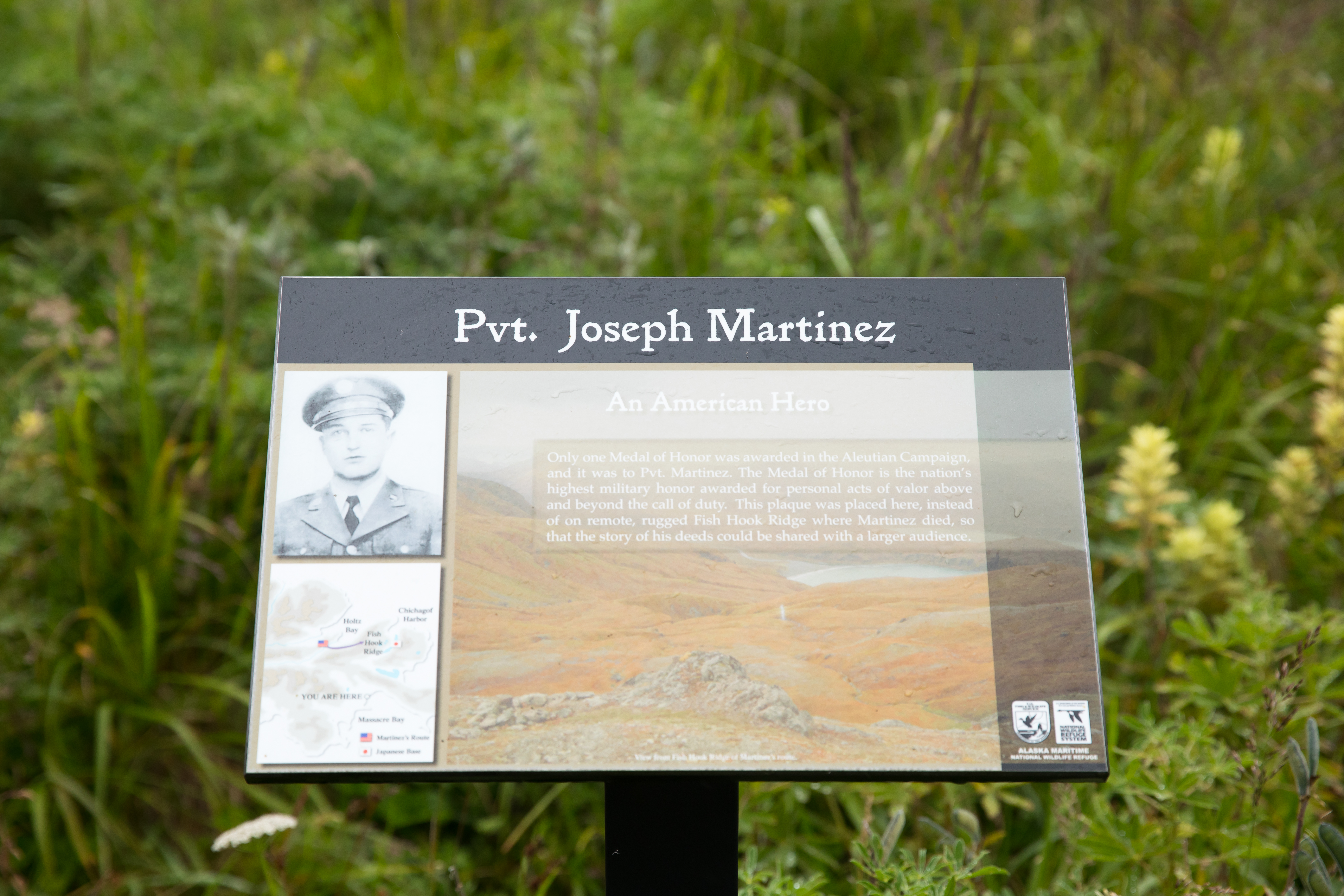
Private Joe P. Martinez of the 32nd Infantry Regiment gave his life on 26 May in an act of extraordinary courage, charging and silencing multiple Japanese machine-gun positions on a fortified ridge. He was posthumously awarded the Medal of Honor — recognised by his citation as the first draftee of World War 2 to receive that honour.
The medics and stretcher-bearers of the 7th Division deserve particular recognition. They treated frostbite, gangrene, and gunshot wounds in open tundra, in sub-freezing temperatures, often under fire. Many worked for days without sleep. Their contribution is almost entirely absent from the popular history of the battle.
The Ghost Island of Kiska — and What Came Next
Flushed with the hard-won victory at Attu, American planners assembled a massive force of 34,000 US and Canadian troops to assault Kiska, where an estimated 10,000 Japanese soldiers were believed to be waiting. The operation was meticulously planned and reflected genuine respect for the fighting quality the Japanese had shown on Attu.
When Allied forces landed on Kiska on 15 August 1943, they found an empty island. The Japanese had secretly evacuated all 5,183 men under cover of dense fog on 28 July, slipping through the US naval blockade in a logistical feat that remains remarkable. The largest amphibious operation in the North Pacific had landed against no one.
The bloodless landing was nonetheless costly in its own grim way — 313 Allied casualties resulted from friendly fire incidents, booby traps left behind by the Japanese, and a submarine attack on ships offshore. The Aleutian campaign as a whole consumed vast naval and air resources, directly shaped American cold-weather doctrine, and forced a complete rethink of Arctic warfare preparation.
Why the Battle of Attu Still Matters — and Why It's Forgotten
The Battle of Attu holds a distinction unlike any other engagement in North American military history: it is the only place on this continent where a modern land battle was fought against a foreign invader. Most Americans and Canadians remain entirely unaware of it.
Part of the reason is deliberate. US wartime censors suppressed detailed reporting on the Aleutian campaign, fearing the propaganda damage of publicising enemy soldiers occupying American territory so close to the mainland. Veterans returned home to silence rather than recognition.
For the Unangan people of the Aleutian Islands, the war brought consequences that lasted generations. Those captured by the Japanese were transported to Hokkaido as forced labourers; many died there and never came home. Even those rescued by the Americans were displaced and relocated, their communities shattered by a war that had descended on them without warning or consent.
Today, Attu is completely uninhabited. Accessible only by sea or air, the island's battlefield is largely unchanged — rusting equipment, crumbling bunkers, and the remnants of field positions still visible in the tundra. The men who fought there left their mark on the land, even if history has been slower to mark them in return.
If the Battle of Attu speaks to you — whether as a story of extraordinary courage, forgotten sacrifice, or the strange geography of the Second World War — we'd love to hear your thoughts. Share this article with someone who thinks they know WW2, and let us know in the comments: had you ever heard of this battle before today?
Further Reading
- National World War II Museum, New Orleans — holds extensive collections on the Pacific War including the Aleutian campaign
- US National Archives and Records Administration — holds official military records, unit histories, and after-action reports from the Aleutian Islands campaign
- Smithsonian National Museum of American History — has documented the Aleutian campaign and its impact on Unangan communities
- Alaska State Library and Historical Collections — primary source material on the Aleutian Islands during World War 2, including Unangan oral histories
- The Medal of Honor Society — official records and citations for Private Joe P. Martinez and other recipients from the Aleutian campaign