The Quiz Question
Which May 1918 engagement in France was the first major offensive operation carried out by an American division, the 1st Infantry Division, in World War 1?
- A. Battle of Cantigny
- B. Battle of Belleau Wood
- C. Battle of Chateau-Thierry
- D. St. Mihiel Offensive
The answer is A. Battle of Cantigny. Here is the full story.
On the morning of 28 May 1918, a small and unremarkable French village in the Somme region became the site of something extraordinary. American soldiers — most of them barely out of training — stepped off into open ground under fire, and in doing so changed the course of the First World War. This is the story of the Battle of Cantigny.
A Village Nobody Had Heard Of — Until America Arrived
Cantigny was barely a dot on the map before May 1918. A quiet farming settlement in the Picardy region of northern France, it had been occupied by German forces and sat on a low ridge that gave its defenders excellent observation over the surrounding countryside.
By late May 1918, it had become a symbol of American resolve — and a genuine proving ground for the entire US war effort. The battle lasted just one day in its initial assault phase — 28 May 1918 — but the fighting to hold the village continued for three brutal days, and its significance echoed for the remainder of the war.
It was the first time an American division had planned, prepared, and executed a full offensive operation entirely under its own command. The eyes of Allied generals, sceptical French and British officers, and a watching German Army were all fixed on what these new arrivals could do.
America Enters the War — But Can They Fight?
The United States declared war on Germany on 6 April 1917, but American troops were agonisingly slow to arrive in strength. Training, organisation, and the sheer logistical challenge of crossing the Atlantic meant that by early 1918, the American Expeditionary Forces (AEF) remained largely untested in offensive combat.
Allied commanders were desperate. France's General Philippe Pétain had watched his army bleed through years of catastrophic loss — including the mutinies that followed the Nivelle Offensive in 1917. Fresh American manpower was urgently needed, but the question haunting Allied headquarters was whether these men could actually fight.
General John 'Black Jack' Pershing, commanding the AEF, faced relentless pressure from British and French commanders to break up American units and feed individual soldiers into their own depleted formations as replacements. Pershing refused, insisting the AEF would fight as an independent army under American command. Cantigny was his chance to prove that decision was right.
The 1st Infantry Division: The Big Red One Takes the Stage
The US 1st Infantry Division — nicknamed 'The Big Red One' for its distinctive shoulder patch — had been the first American division to arrive in France, landing in June 1917. By May 1918, it had spent months in training and trench familiarisation alongside French forces in the Picardy sector, learning the brutal grammar of Western Front warfare.
The division was commanded by Major General Robert Lee Bullard, a tough, experienced regular Army officer who was utterly determined to prove American fighting quality. Bullard understood that failure at Cantigny would hand Pershing's critics the ammunition they needed to dismantle the AEF's independent command structure.
The 28th Infantry Regiment was selected to lead the assault, with Colonel Hanson Ely commanding the attacking force. The regiment's men were a mix of regular Army veterans and newly drafted civilians — workers from industrial cities and farmers from the American heartland — many of whom had never experienced combat on anything like this scale.
Planning the Attack: Nothing Left to Chance
The planning for Cantigny was unusually meticulous by the standards of Western Front operations. American officers trained their men on a full-scale replica of the village and its trench systems constructed behind the lines — a technique borrowed from the French and British, who had learned through bitter experience that rehearsal saved lives.
French support was substantial and critical. Twelve Schneider CA1 tanks were assigned to accompany the infantry. Heavy French artillery batteries provided fire support, and French flamethrower teams were integrated into the assault force to clear German bunkers and strongpoints. Air cover was arranged to suppress enemy observation.
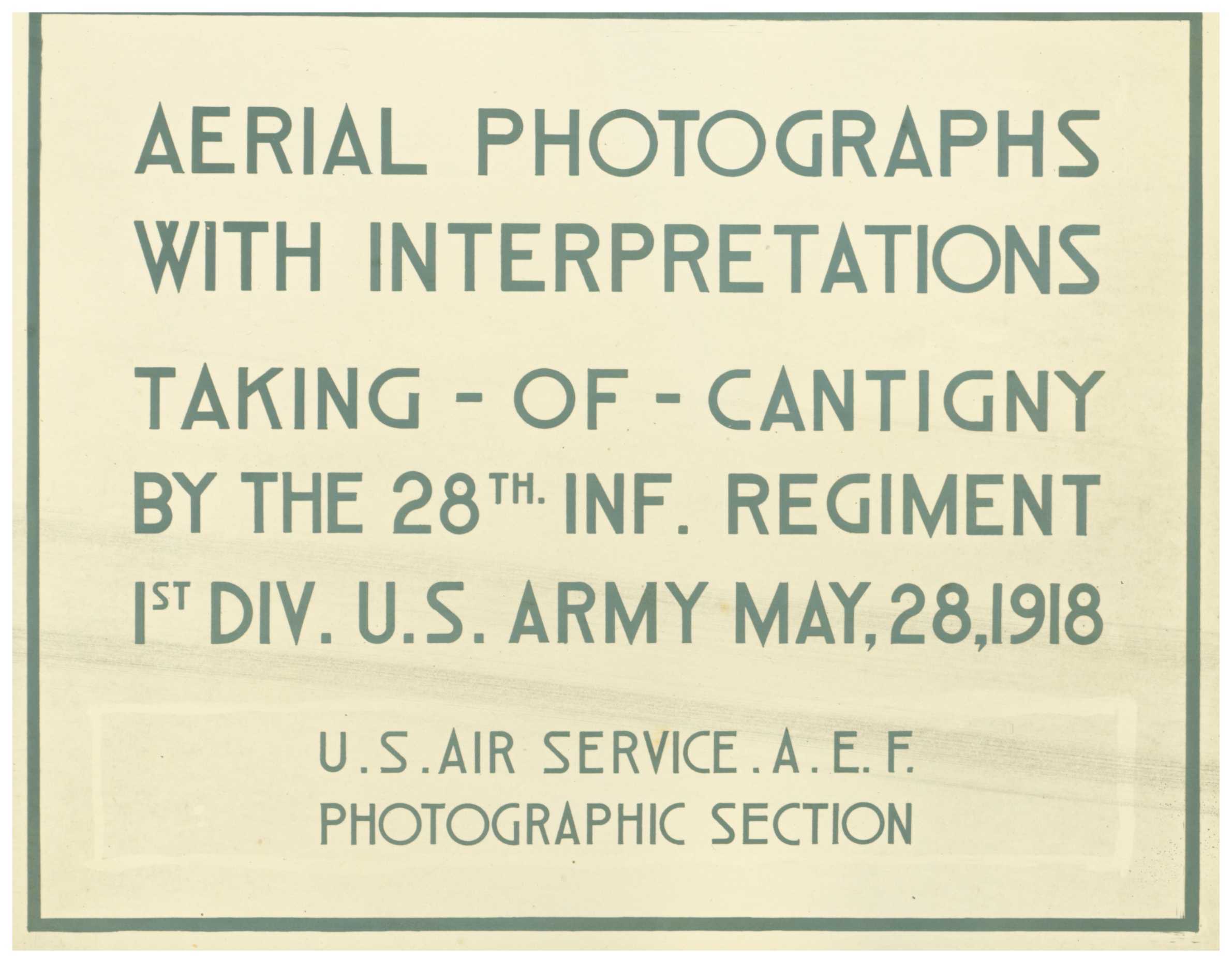
Intelligence was gathered through aerial reconnaissance and carefully planned trench raids, helping map German positions with an unusual degree of precision for the period. The attack was to be preceded by a concentrated one-hour artillery bombardment, opening at 5:45 a.m. on 28 May. Three assault battalions of the 28th Infantry were tasked with taking the village and consolidating a new defensive line on its far side.
28 May 1918: Over the Top at Cantigny
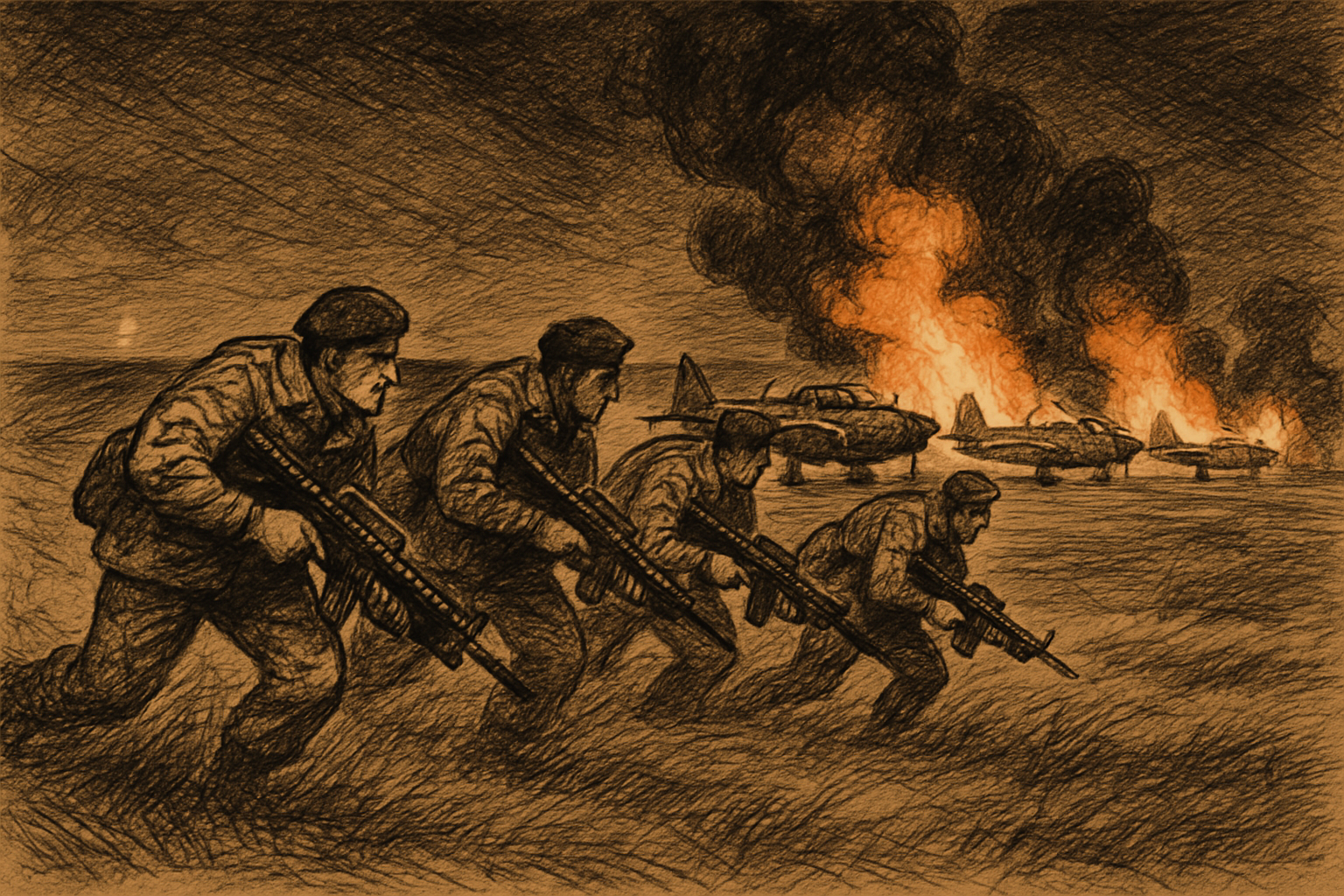
At 6:45 a.m., American infantry rose and advanced behind a rolling artillery barrage — a technique they had studied carefully from their French allies. The barrage crept forward at a set pace, and the infantry followed as closely as they dared, keeping the German defenders pinned in their dugouts until the Americans were almost on top of them.
The assault troops crossed roughly 1,600 metres of open ground and entered the village within 45 minutes of jumping off — a remarkable pace for a debut offensive operation. German defenders, troops of the 272nd Reserve Infantry Regiment, were caught badly off-guard by the speed and coordination of the American advance.
By mid-morning, Cantigny was in American hands. The village had been taken largely as planned. For Pershing, for Bullard, and for every Allied commander watching the reports come in, it was a moment of genuine relief and pride. But the harder test was only just beginning.
The Fight to Hold On: German Counterattacks and Heavy Losses
The Germans were not prepared to accept the loss of Cantigny. Over the next 72 hours, they launched at least seven counterattacks against the American positions, supported by intense artillery bombardment and gas attacks designed to break the defenders' nerve and strength.
The situation was made significantly worse by events elsewhere. Germany had launched a massive new offensive — the Third Battle of the Aisne — against the French on the Chemin des Dames ridge to the south. French artillery batteries that had been supporting the Americans at Cantigny were urgently redeployed to meet this new crisis, leaving the 1st Division's infantry with markedly reduced fire support at the worst possible moment.
American troops endured close-quarters infantry assaults, relentless shellfire, and mustard gas with limited armoured support and stretched supply lines. US casualties at Cantigny totalled approximately 1,067 men killed, wounded, or missing — heavy losses for a localised operation of this size.
Despite everything thrown at them, the 1st Division held its ground. When the fighting finally died down on 31 May 1918, Cantigny remained firmly in American hands. The Big Red One had not given an inch.
The Men Who Made History: Faces Behind the Battle
Colonel Hanson Ely, commanding the 28th Infantry, was described by contemporaries as ferociously aggressive — a commander who led from the front and communicated his confidence directly to his men under fire. His personal presence throughout the fighting was credited by officers of the division as a key factor in maintaining cohesion during the worst of the German counterattacks.
General Pershing visited the 1st Division before the attack, telling officers plainly that the credibility of the entire American war effort rested on the outcome at Cantigny. The weight of that expectation fell on young shoulders with almost no combat experience.
Floyd Gibbons, a prominent American war correspondent, was seriously wounded covering the fighting near Cantigny — losing his left eye to German machine-gun fire. His vivid dispatches brought the battle to American audiences at home and helped shape public understanding of what the AEF was facing in France.
French liaison officers who fought alongside the Americans at Cantigny sent back genuinely enthusiastic reports of US fighting quality to General Pétain's headquarters. For an Allied command that had harboured deep doubts, these reports carried real weight.
What Cantigny Meant: Consequences for the War
Cantigny proved, in the clearest possible terms, that American forces could plan and execute an offensive operation independently — a direct and undeniable answer to Allied doubts about US military capability. It was not a large battle by Western Front standards, but its symbolic importance was enormous.
It strengthened Pershing's hand considerably in his ongoing struggle to resist Allied demands to amalgamate American troops into French and British formations. With Cantigny on the record, it became far harder to argue that the AEF needed to be absorbed into more experienced armies.
The battle came at a pivotal moment. Germany's Spring Offensives — beginning with Operation Michael in March 1918 — had achieved dramatic initial breakthroughs but were beginning to exhaust themselves against stiffening Allied resistance. American confidence, demonstrated concretely at Cantigny, arrived when the Allies needed it most.
Allied Supreme Commander Ferdinand Foch cited Cantigny as evidence that the Americans were ready to play a major combat role in the war's final phase. Within months, the AEF would be fighting in far larger operations — the reduction of the Saint-Mihiel salient in September 1918 and the grinding Meuse-Argonne Offensive that followed. But Cantigny was where the path to those victories began.
Legacy: Why Cantigny Still Matters
The 1st Infantry Division went on to forge one of the most distinguished records in American military history — fighting in the Second World War from North Africa to the Hürtgen Forest, and serving in Korea, Vietnam, and beyond. Cantigny is the cornerstone of that proud institutional history, the moment the Big Red One first proved what it was made of.
The Cantigny battlefield in Picardy is today a preserved memorial site. Robert R. McCormick, who served as an officer with the 1st Division at Cantigny and later became the powerful publisher of the Chicago Tribune, dedicated significant personal resources to preserving the memory of the battle. The First Division Museum at Cantigny Park in Wheaton, Illinois — established through McCormick's legacy — tells the full story of the division from 1917 to the present day and remains a remarkable resource for anyone wanting to understand what happened in that Picardy village.
Military historians consistently regard Cantigny as the moment the United States became a genuine fighting power in the First World War — not simply a supplier of men and materials, but an army capable of independent offensive action at the sharp end of the Western Front.
For the more than 53,000 Americans who died in the war, Cantigny represents the opening chapter — the day the US Army stepped forward, held its ground under fire, and showed the world it had truly arrived.
If this story moved you, share it with a fellow history lover — and let us know in the comments: had you heard of Cantigny before today? It's one of those battles that deserves to be far better known than it is.
Further Reading
- The National Archives (United States) — holds AEF operational records, unit diaries, and official correspondence from the 1st Infantry Division's service in France
- The Imperial War Museum (London) — maintains extensive collections on the Western Front in 1918, including Allied coalition operations and the American entry into combat
- The United States Army Center of Military History — the official US Army institution for historical research, with published studies on AEF operations including Cantigny
- The First Division Museum at Cantigny Park, Wheaton, Illinois — dedicated to the history of the Big Red One, with collections directly related to the 28 May 1918 assault
- The National WWI Museum and Memorial, Kansas City, Missouri — America's official museum of the First World War, with research resources covering the AEF's full combat record