The Quiz Question
Across the whole Battle of the Somme from July to November 1916, roughly how many casualties did British Empire forces suffer?
- A. About 60,000
- B. About 150,000
- C. About 420,000
- D. About 1,000,000
The answer is C. About 420,000. Here is the full story.
When people think of the Battle of the Somme, they usually think of one day: 1 July 1916, and the staggering 57,000 British casualties suffered before dusk. That single date has burned itself into national memory with an intensity that few events in any country's history can match. But the Somme was not one terrible day. It was 141 days of grinding, attritional battle — and by the time it ended on 18 November 1916, British Empire forces had suffered approximately 420,000 casualties. That is the number history owes us the honesty to remember.
The Bloodiest Campaign in British Military History
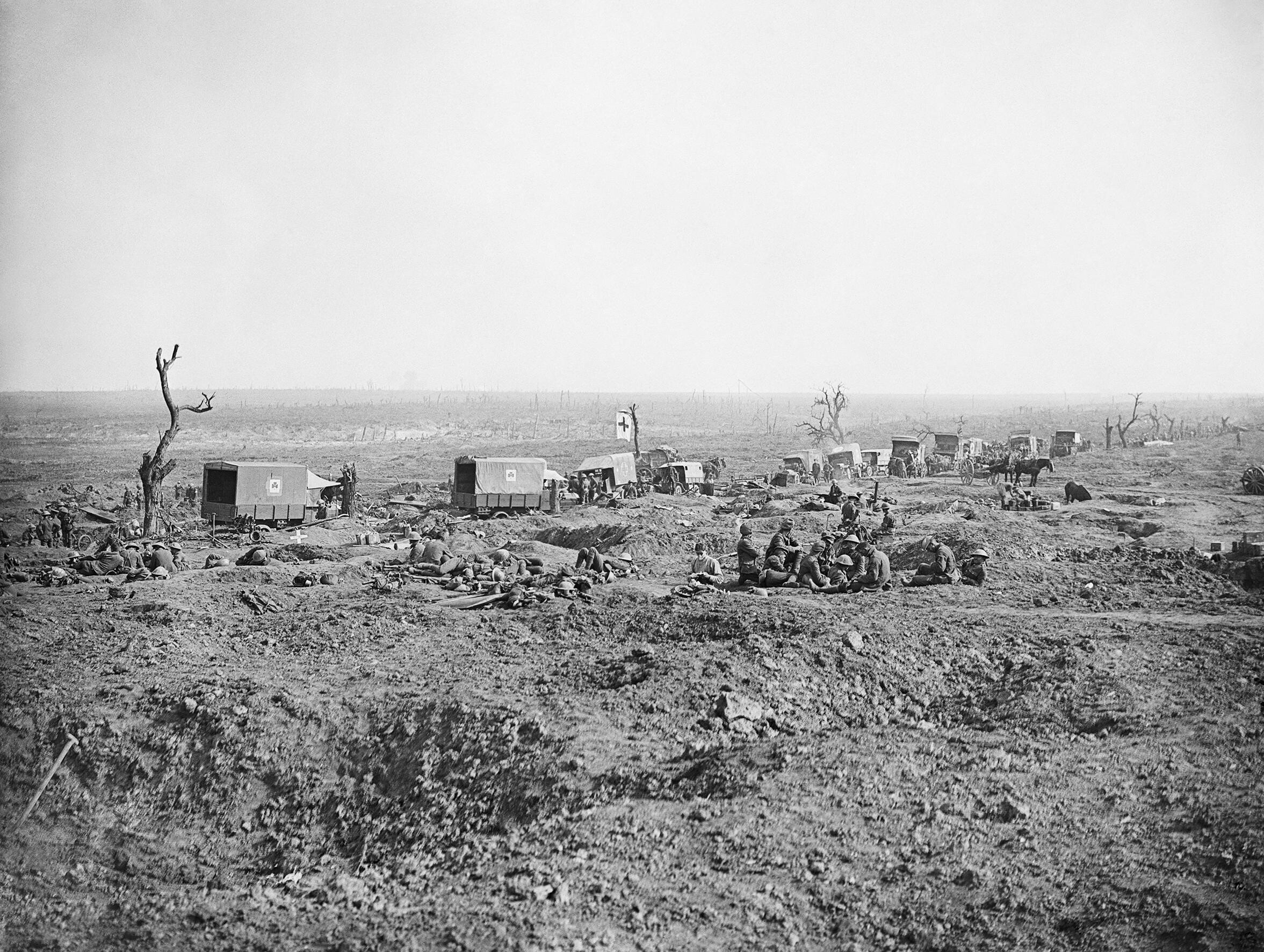
The Battle of the Somme ran along a 25-mile front in the Picardy region of northern France, from the first day of July to the third week of November 1916. It remains the costliest campaign ever fought by the British Army — not simply in a single day's terms, but across the full arc of five exhausting months.
Those 420,000 casualties encompass everyone killed in action, who died of wounds, were wounded, went missing, or were taken prisoner. The word "casualty" does not mean death alone — a point worth stressing, because it is often misunderstood. Estimated British Empire dead from the Somme number somewhere between 95,000 and 125,000. The rest were wounded or unaccounted for, but every one of those men represents a life upended, a family shattered, a community altered.
Understanding the full five-month toll, not just the famous first day, is essential to grasping what the Somme actually was: the moment an entire generation of volunteers met the full weight of industrial warfare.
Why the Somme? The Strategic Context of 1916
By early 1916, the Western Front had been locked in stalemate for eighteen months. Both sides occupied heavily fortified trench systems stretching from the English Channel to the Swiss border, and neither had found a way to break through decisively.
The crisis that forced Britain's hand came not on the Somme but 150 miles to the south. From February 1916, the German Army launched a massive assault on the French fortress city of Verdun, designed explicitly to bleed the French Army white. It was working. France's commanders pleaded with their British allies to launch an offensive that would draw German reserves away from Verdun.
Field Marshal Sir Douglas Haig, Commander-in-Chief of the British Expeditionary Force, and General Sir Henry Rawlinson selected the Somme valley as the location partly for a simple practical reason: it was where the British and French lines met. The tactical ground was not ideal. But strategic need outweighed topographical preference.
What made the German position so formidable was not just its length but its depth. German forces had spent nearly two years fortifying the Somme chalk, carving dugouts up to 30 feet underground — deep enough to shelter men safely from even the heaviest British artillery. That fact would prove decisive on 1 July.
Kitchener's New Army: Who Were the Men Who Fought?
The men who went over the top on the Somme were largely not professional soldiers. They were volunteers — civilian men who had answered Lord Kitchener's call to arms in 1914 and 1915, trained up and ready now for their first major battle. This was Kitchener's New Army, and the Somme would be its defining and devastating test.
Among its most distinctive features were the Pals Battalions: units formed from men of the same town, workplace, or social club who had enlisted together, on the understanding they would serve together. It seemed like a humane policy. It would prove catastrophic for individual communities when the casualties came in.
The Accrington Pals — the 11th Battalion, East Lancashire Regiment — went into action on 1 July with around 720 men. By the end of the day, 585 of them were casualties. The town of Accrington in Lancashire learned of the losses within days. Entire streets were in mourning simultaneously.
The Somme was also a British Empire battle in the fullest sense. Canadians, Australians, New Zealanders, and South Africans all served and died on the Somme. The 1st Newfoundland Regiment — Newfoundland was then a separate Dominion — was virtually annihilated at Beaumont-Hamel on 1 July, suffering over 700 casualties from a battalion of around 800 men. It remains Newfoundland's national day of mourning.
The Week-Long Bombardment and Why It Failed
British planners were not reckless optimists without reason. Before the assault, British artillery fired approximately 1.5 million shells over seven days — the largest bombardment the British Army had ever mounted. The expectation was that it would cut German barbed wire, demolish their trenches, and kill or demoralise the defenders so thoroughly that infantry could cross No Man's Land at a walking pace.
The plan failed for several compounding reasons. A significant proportion of shells — estimates suggest as many as 30% — were duds that never exploded. The artillery lacked sufficient numbers of the heavy shells needed to collapse deep dugouts. And crucially, many of the guns were directed at cutting wire and suppressing trenches rather than destroying the underground shelters where German soldiers were waiting.
When the guns lifted at 7:30 a.m. on 1 July 1916, German soldiers emerged from their deep chalk bunkers within minutes and manned their machine guns. British infantry, advancing in waves across open ground, were cut down in enormous numbers. In some sectors the Germans suffered almost no effective artillery damage at all.
The bombardment was not a total failure — it devastated some stretches of the German line, and where it worked, British troops made gains. But the patchwork of results created a first day of startling contrasts: catastrophe in the north, modest success in the south. The overall toll of 57,000 casualties made it the single worst day in the history of the British Army.
Five Months of Attritional Battle: July to November 1916
Despite the catastrophic opening, Haig pressed on. The strategic logic had not changed: France needed relief at Verdun, and Germany needed to be forced to consume its reserves on the Somme. Through July, August, September, October, and into November, the battle continued.
The Battle of Pozières, fought between 23 July and 3 September, saw Australian divisions of the Anzac Corps suffer around 23,000 casualties capturing and then holding a single village and the ridge behind it. The Australians fought with extraordinary tenacity under conditions of relentless German shellfire. The ridge at Pozières cost Australia more casualties per square metre, some historians have argued, than almost any other engagement of the war.
15 September 1916 brought one of the war's most significant technological moments. At the Battle of Flers-Courcelette, 49 Mark I tanks went into action for the first time in history. Many broke down or became stuck in the shell-cratered ground, but those that worked caused genuine shock among German defenders. The tank's combat debut on the Somme pointed toward a revolution in warfare that would fully mature by 1918.
By October, autumn rains had transformed the battlefield into a morass of glutinous mud. Movement became agonising; supply lines became unreliable; the suffering of the men was compounded by exposure and exhaustion. These conditions foreshadowed the later horrors of Passchendaele in 1917.
The final British attack of the campaign came between 13 and 18 November at the Battle of the Ancre. Among the objectives captured was Beaumont-Hamel — the very village that had been an objective on 1 July. It had taken 141 days and hundreds of thousands of casualties to take a position that had been planned for the first morning.
The Human Cost: Breaking Down the 420,000
German casualties on the Somme are genuinely difficult to pin down. Estimates range between 400,000 and 650,000 — a wide margin that reflects the incomplete and sometimes contradictory nature of surviving German records, a subject of ongoing debate among historians at institutions including the Imperial War Museum. French forces on the southern flank of the offensive suffered an additional estimated 200,000 casualties.
Adding all sides together, total casualties across the Somme campaign — Allied and German — are generally estimated at well over one million men. It is a number that resists easy comprehension. The Somme was not simply a British catastrophe; it was a catastrophe shared by every nation that sent men to that scarred stretch of Picardy.
Key Commanders: The Men Who Led — and the Debates That Followed
No figure associated with the Somme has attracted more controversy than Field Marshal Sir Douglas Haig. In the decades after the war, he was portrayed in some quarters as callous and unimaginative — the archetypal "donkey" leading "lions." Defenders of his reputation argue that he was fighting an attritional war with no clean alternatives, and that the tactical lessons learned on the Somme contributed directly to eventual Allied victory in 1918. The debate has never been fully settled.
General Sir Henry Rawlinson, who commanded the British Fourth Army — the main attacking force — has faced specific criticism for the planning assumptions behind 1 July, particularly the underestimation of German resilience and the overly rigid attack formations. General Sir Hubert Gough commanded the Reserve Army in the northern sector and later led the autumn exploitation battles.
On the German side, General Fritz von Below commanded the defence for much of the campaign. From late August, the arrival of Field Marshal Paul von Hindenburg and General Erich Ludendorff at German supreme command — they took over on 29 August 1916 — brought a harder-edged strategic assessment of Germany's ability to sustain losses at the current rate. The Somme, alongside Verdun, had shaken German confidence in a way that was not immediately visible to Allied commanders.
The Somme Back Home: Impact on British Society
The Pals Battalion system, which had seemed such a good idea in 1914, meant that casualty lists landed on communities with concentrated, devastating force. In some streets, every family received a telegram in the same week. The grief was collective and immediate in a way that differed from anything Britain had experienced before.
The British government commissioned an official documentary film simply titled The Battle of the Somme, released in August 1916. An estimated 20 million people saw it within the first six weeks of release — an extraordinary proportion of the British population. It showed, for the first time, footage of men going over the top and of the dead lying in No Man's Land. For many families it was the closest thing to seeing where their loved ones had fought and died.
Conscription had already arrived by the time the Somme began. The Military Service Act of January 1916 had ended the volunteer system, reflecting the reality that the war could not be sustained on goodwill alone. The losses on the Somme confirmed it. Communities across Britain and the wider Empire erected memorials; the campaign shaped national identities — particularly in Canada, Australia, and Newfoundland — in ways that resonated for generations.
Legacy: What Did the Somme Achieve — and Why Does It Still Matter?
The Somme did not achieve the breakthrough its planners had originally hoped for. No decisive rupture of the German line occurred. But it did achieve its core strategic purpose: it relieved pressure on the French at Verdun, and it forced Germany into a sustained attritional battle that slowly exhausted its reserves of men and material.
The tactical evolution that took place over those 141 days was also significant. Infantry-artillery coordination improved dramatically. The creeping barrage — a curtain of shellfire that moved ahead of advancing troops — was refined. Small-unit tactics and the use of specialist platoons developed. These lessons, learned at terrible cost on the Somme and sharpened through 1917, directly underpinned the Allied successes of the Hundred Days offensive that ended the war in 1918.
The Thiepval Memorial to the Missing of the Somme, designed by Sir Edwin Lutyens and unveiled in 1932, stands on the ridge above the Ancre valley. It bears the names of 72,195 British and South African soldiers who were killed on the Somme and have no known grave. It remains one of the most affecting war memorials anywhere in the world.
Every year on 1 July, the Royal British Legion and Commonwealth nations hold commemorations at Thiepval and at Beaumont-Hamel. The Somme is not simply history. It is living memory, maintained across generations by communities who understand that those 420,000 casualties were not a statistic — they were fathers, sons, brothers, and friends.
If this piece has moved you, or if you have a family connection to the Somme, we would love to hear your story in the comments below. Please share this article with anyone who deserves to know the full truth about what those men endured — not just for one terrible morning, but for 141 days.
Further reading
- Imperial War Museum (IWM), London — holds extensive Somme collections including personal diaries, photographs, and the original film The Battle of the Somme
- The National Archives, Kew — holds official British Army records, war diaries, and casualty files from the First World War
- Commonwealth War Graves Commission — maintains records of all Commonwealth soldiers killed in the First World War, including Somme burials and the Thiepval Memorial register
- Historial de la Grande Guerre, Péronne, France — a leading First World War museum situated in the former Somme battlefield region
- Australian War Memorial, Canberra — holds detailed records of Australian units on the Somme, including the Pozières and Mouquet Farm battles