The Quiz Question
At the Battle of Poitiers in 1356, Edward the Black Prince achieved a rare feat by capturing which enemy leader on the battlefield?
- A. King John II of France
- B. King Philip VI of France
- C. The Dauphin Charles
- D. Duke of Burgundy
The answer is A. King John II of France. Here is the full story.
The Day England Captured a King: A Hook Into History
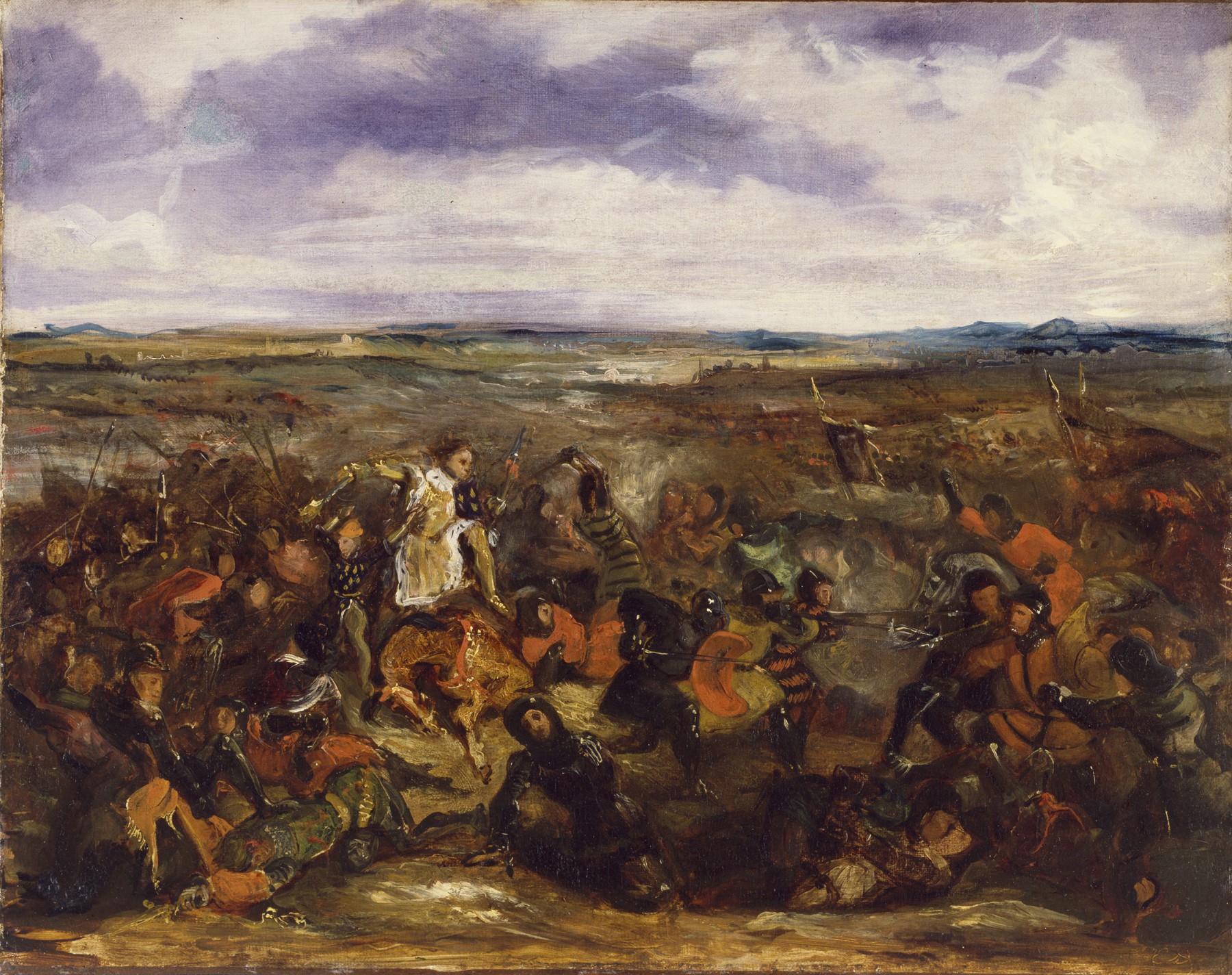
On the morning of 19 September 1356, something almost impossible happened on a sun-baked ridge south-east of Poitiers, France. An outnumbered English army of roughly 6,000–8,000 men — hungry, exhausted, and seemingly trapped — destroyed a French force perhaps three times its size and walked off the field with the King of France as their prisoner.
Edward of Woodstock, the Black Prince, was just 26 years old. In a single day he achieved what no English commander before him had managed: the capture of a reigning French monarch in open battle. King John II of France, the gauntlet of surrender still warm in his hand, was led away into a captivity that would last the rest of his life.
The ransom eventually demanded — 3 million gold écus, roughly equivalent to France's entire annual royal revenue — nearly broke the French state. Poitiers was the second great English triumph of the Hundred Years' War, sandwiched between Crécy in 1346 and Agincourt in 1415. It is the least celebrated of the three, yet arguably the most dramatic.
The Hundred Years' War: Setting the Scene
The conflict that produced Poitiers had its roots in dynastic ambition and disputed inheritance. When Edward III of England claimed the French throne through his mother Isabella — daughter of Philip IV — the first Valois king, Philip VI, flatly rejected him in 1337. Decades of grinding, devastating war followed.
The Battle of Crécy on 26 August 1346 had already proved the lethal potential of English tactics: disciplined longbowmen and dismounted men-at-arms working together had shredded the flower of French chivalry. Philip VI died in August 1350, leaving a kingdom already weakened by war and the catastrophic Black Death. His son John II — known to history as 'John the Good,' an irony history has not been kind about — inherited both the crown and the crisis.
By 1356 both sides had settled into a war of chevauchées: mounted raiding columns that burned crops, looted towns, and stripped away the tax base of the French crown. The strategy was economic warfare dressed as military campaigning, and it was slowly strangling France.
The Black Prince: Soldier, Commander, Legend
Edward of Woodstock was born on 15 June 1330, the eldest son of Edward III. He first saw serious combat at Crécy at just 16, commanding the right flank of the English army — a baptism of fire that shaped everything that followed. The nickname 'the Black Prince' does not appear in contemporary sources; it surfaces after his death and most likely referred to his black armour, though some historians have connected it to the terror his campaigns inspired.
By 1355 he commanded English forces in Gascony, leading a brutal chevauchée that swept from Bordeaux south and east to the Mediterranean coast, burning as it went. He was a genuinely gifted battlefield commander, skilled at choosing ground and combining dismounted men-at-arms with longbowmen in the kind of integrated, all-arms tactics that the English had been refining since Edward I's Welsh and Scottish wars.
His inner circle was formidable. Sir John Chandos, one of the finest knights of the age and a founding member of the Order of the Garter, served as his closest military adviser. Sir James Audley, who reportedly asked to be placed in the vanguard at Poitiers and fought so fiercely he had to be carried from the field, was another key figure. These were not courtiers in armour; they were professional soldiers of the first order.
The Road to Poitiers: The 1356 Chevauchée
In August 1356 the Black Prince led his army north from Bergerac in Gascony, cutting a wide path of destruction through the Loire Valley all the way to Tours. The objective was partly plunder and partly provocation — to force John II into battle or to humiliate him politically by demonstrating he could not protect his own kingdom.
John took the bait. He assembled a large French army and drove south fast enough to cut off the English line of retreat towards Bordeaux. By 17 September the Prince's force was camped near the village of Maupertuis, south-east of Poitiers, low on supplies and with the French army blocking the road home. What had looked like a profitable raid suddenly looked like a trap.
Cardinal Talleyrand de Périgord attempted to broker a truce on 18 September. The Prince reportedly offered to return plunder and prisoners and to agree not to fight against France for seven years. John's response was a demand for unconditional surrender. It was the most expensive miscalculation of his reign.
The Battle of Poitiers: Hour by Hour on 19 September 1356
The English position was shrewdly chosen. A ridge near Maupertuis offered a strong defensive line, with thick hedgerows and vineyards on either flank that would funnel any attacker directly into the longbowmen's killing ground. The Black Prince's commanders had surveyed the terrain carefully, and the archers were already concealed and pre-ranged by the time the French advance began.
John divided his army into three large divisions, called 'battles.' Learning from Crécy, where cavalry had been shredded by arrow fire, he ordered his men-at-arms to dismount and advance on foot — a sensible adaptation that, as it turned out, made things worse rather than better. Men in full plate armour, advancing uphill over rough ground in late-summer heat, were exhausted before they reached the English line.
The first French division, led by the teenage Dauphin Charles, was met by a storm of arrows. English longbowmen were capable of releasing up to twelve arrows per minute at sustained rates; the physical evidence of their training survives literally in their bones, with pronounced skeletal asymmetry found in archers' remains from the period. The Dauphin's division broke and fled before it reached the English men-at-arms.
The second French division, under the Duke of Orléans, followed the Dauphin off the field. When the third division — John II's own — came forward, the English made their decisive move. Rather than wait, the Black Prince launched a counter-attack down the ridge, smashing into the already shaken and exhausted French at close quarters. The result was a rout.
The Capture of King John II: A Moment Unlike Any Other
In the chaos of the collapse, King John was surrounded by English and Gascon soldiers all desperate to claim the staggering ransom a royal prisoner represented. A Gascon knight named Denis de Morbecque reportedly reached him first and accepted his surrender — though several others immediately disputed the claim, and the wrangling had to be settled later.
The moment of surrender was recorded by the chronicler Jean Froissart, whose Chronicles remain the richest narrative source for the battle. According to Froissart, John refused to yield to just anyone, demanding to know where his cousin the Prince of Wales was — a detail that speaks volumes about the medieval aristocratic code that governed even defeat in battle. His youngest son Philip, later to become Philip the Bold of Burgundy, was captured fighting at his father's side.
That evening, the Black Prince hosted a victory feast and insisted that King John be seated at the head of the table while he himself served the king, standing. It was a calculated act of chivalric theatre — and it was reported approvingly across every court in Europe. The gesture cost Edward nothing and bought him an enormous amount of political prestige.
John was taken to Bordeaux and then, in May 1357, to England, where he was received in London with remarkable public ceremony. He was housed at the Savoy Palace in conditions appropriate to his rank. Also captured at Poitiers were dozens of French nobles, the combined value of whose ransoms represented a windfall almost incomprehensible in scale.
The Ransom That Nearly Broke France: Aftermath and the Treaty of Brétigny
The Treaty of Brétigny, signed on 8 May 1360, set John's ransom at 3 million gold écus. In exchange, Edward III formally renounced his claim to the French throne, while France ceded vast territories — Aquitaine, Calais, and Ponthieu — in full sovereignty. It was, on paper, a settlement that reshaped the map of western Europe.
France could not pay. The ransom was simply too vast for a kingdom already ravaged by war, plague, and the economic chaos that followed Poitiers. In 1358, before the treaty was even signed, the desperation of the French peasantry had exploded into the Jacquerie — one of the bloodiest peasant revolts of the medieval period, a direct consequence of the financial and political crisis John's capture had accelerated.
In 1363, one of John's sons who had been left in England as a hostage escaped. John, bound by a personal code of honour he took entirely seriously, voluntarily returned to captivity in London. He died at the Savoy Palace on 8 April 1364 — a prisoner to the end, his honour intact, his kingdom permanently changed by a single September morning eight years earlier.
Why the Longbow Won at Poitiers — and What It Changed
The longbow victories of the Hundred Years' War were not accidents. They were the product of decades of systematic training — English and Welsh law at various points actually required archery practice — combined with commanders who understood how to use terrain to maximise the bow's effect and minimise French cavalry superiority.
At Poitiers, the hedgerows were not a lucky accident; they were a deliberate tactical asset. The French were channelled into a narrow frontage where arrow fire could sweep across their entire formation. When the French attempted to adapt by dismounting, they traded one vulnerability (horses killed beneath them) for another (exhausted men in heavy armour advancing slowly up a slope under sustained fire).
The lesson Poitiers reinforced was already reshaping European warfare: disciplined infantry combined with missile troops could defeat heavy cavalry. The revolution was not complete — cavalry retained battlefield importance well into the 15th century — but Crécy, Poitiers, and Agincourt together formed a powerful argument that the age of the mounted knight as the decisive arm of war was ending.
Legacy: What Poitiers Meant Then — and Means Now
For the Black Prince, Poitiers was the high-water mark. His later career was marked by controversy — the sack of Limoges in 1370, in which hundreds of civilians were killed, cast a long shadow over his chivalric reputation. He fell gravely ill during his Spanish campaigns and died on 8 June 1376, a year before his father Edward III, never wearing the crown he had seemed born to hold.
For France, the trauma of Poitiers and the Treaty of Brétigny drove fundamental change. The humiliation of a captured king and a surrendered quarter of the kingdom created the political will for the centralised monarchy and professional armies that would, under Charles VII and Joan of Arc, eventually expel the English from France entirely by 1453.
Jean Froissart's Chronicles — despite their courtly bias and occasional inaccuracy — remain essential reading for Poitiers. Froissart understood narrative, and his account of John's dignity in defeat and the Prince's chivalric generosity shaped how subsequent centuries imagined the medieval knight at his best and worst.
The battlefield near Maupertuis today is quiet farmland, relatively undeveloped, unmarked by the kind of national memorial infrastructure that surrounds Crécy or Agincourt. Local historians and dedicated visitors still walk the ridge where it happened — where a young English prince, outnumbered and running out of food, turned a desperate situation into one of the most astonishing battlefield captures in the history of medieval warfare.
If the story of Poitiers caught your imagination, we'd love to hear your thoughts in the comments below. And if you know someone who loves medieval history, please share this article — these stories deserve to be told and retold.
Further Reading
- The British Library — holds extensive manuscript collections including medieval chronicle sources relating to the Hundred Years' War
- The National Archives (United Kingdom) — primary source documents covering English medieval military and diplomatic history
- The Bibliothèque nationale de France — major repository of French medieval manuscripts and chronicle material including Froissart's Chronicles
- The Royal Armouries (Leeds and Tower of London) — collections and research relating to medieval arms, armour, and the English longbow
- English Heritage — maintains and interprets sites connected to the Plantagenet kings and the military history of medieval England