The Quiz Question
What historical factor partly fueled US Prohibition in the 18th Amendment?
- A. Purely religious morality movement
- B. Anti-German sentiment and WWI timing
- C. Labor movement demands
- D. Medical professionals' claims
The answer is B. Anti-German sentiment and WWI timing. Here is the full story.
When Americans think of Prohibition, they tend to picture Bible-thumping preachers and suffragette marchers. What they often forget is the other ingredient in the mix: wartime hatred of Germany. The story of how the 18th Amendment came to be is not just a tale of moral reform — it is a story of ethnic scapegoating, wartime panic, and one of the most brilliant pieces of political opportunism in American history.
A Nation at War — With Its Own Beer
By 1917, German-Americans were the largest single ethnic group in the United States, numbering well over 8 million people. For decades they had been model citizens — industrious, civic-minded, and enormously productive. Nowhere was their influence more visible than in the brewing industry.
When America declared war on Germany on 6 April 1917, that visibility became a liability almost overnight. Temperance campaigners had been hammering away at the alcohol question for decades without achieving a federal solution. The war handed them something they had never quite managed to manufacture on their own: a villain with a foreign accent.
The 18th Amendment, ratified on 16 January 1919, is remembered as a triumph of moral reform. The full truth is messier, and considerably more revealing about how democracies behave under pressure.
The German Grip on American Beer
German immigrants began arriving in the United States in large numbers in the 1840s and 1850s, many fleeing the failed revolutions of 1848. They brought with them lager-brewing traditions from Bavaria and Prussia that would transform American drinking culture entirely.
By 1910, over 1,300 breweries operated across the country, the majority founded or owned by German-American families. The names they built became American institutions: Pabst, Schlitz, Anheuser-Busch, Miller, Blatz, Stroh. Milwaukee, Wisconsin — nicknamed "The German Athens" — became the undisputed brewing capital of the nation.
The industry was economically enormous. It employed hundreds of thousands of workers and contributed substantial excise tax revenue to the federal government — revenue that politicians were extremely reluctant to give up. German-American beer halls and social clubs called Turnvereins were the beating hearts of immigrant communities in Cincinnati, St. Louis, Chicago, and New York.
This was not a fringe ethnic subculture. It was mainstream American commercial and social life. Which made what happened after April 1917 all the more dramatic.
The Temperance Movement Before the War
To understand how the war changed everything, you need to understand how close — and yet how far — the prohibition movement had come before it. The Anti-Saloon League, founded in Oberlin, Ohio in 1893, had campaigned relentlessly for a federal ban on alcohol for over two decades. The Women's Christian Temperance Union, which had been led by the formidable Frances Willard, framed alcohol as a direct threat to family safety and women's lives.
By 1916, 23 US states had already enacted some form of statewide prohibition through local campaigns. The movement had genuine momentum. But a federal constitutional amendment remained out of reach, blocked in large part by the ferocious lobbying power of the brewing industry.
The key figure on the dry side was Wayne Wheeler, the Anti-Saloon League's lead strategist. Wheeler was not a firebrand preacher. He was a cold-eyed political operator who had personally helped elect and unseat politicians across dozens of states. He understood something crucial: the brewing industry's political power depended on its respectability. Strip that away, and the whole edifice could collapse.
Wheeler had been waiting for his moment. The war gave it to him.
War Fever and the German Enemy Within
The speed with which anti-German sentiment consumed American public life after April 1917 is almost difficult to believe today. Within months, sauerkraut had been renamed "liberty cabbage," dachshunds were called "liberty pups," and German measles became "liberty measles." Streets named after German figures were hastily renamed. German-language teaching was banned in schools across multiple states.
Over 500 German-language newspapers had been published in the United States before the war. Most were shut down or forced to convert to English. German-American churches that had conducted services in German for generations faced public pressure — and in some states, legal prohibition — on the use of their ancestral language.
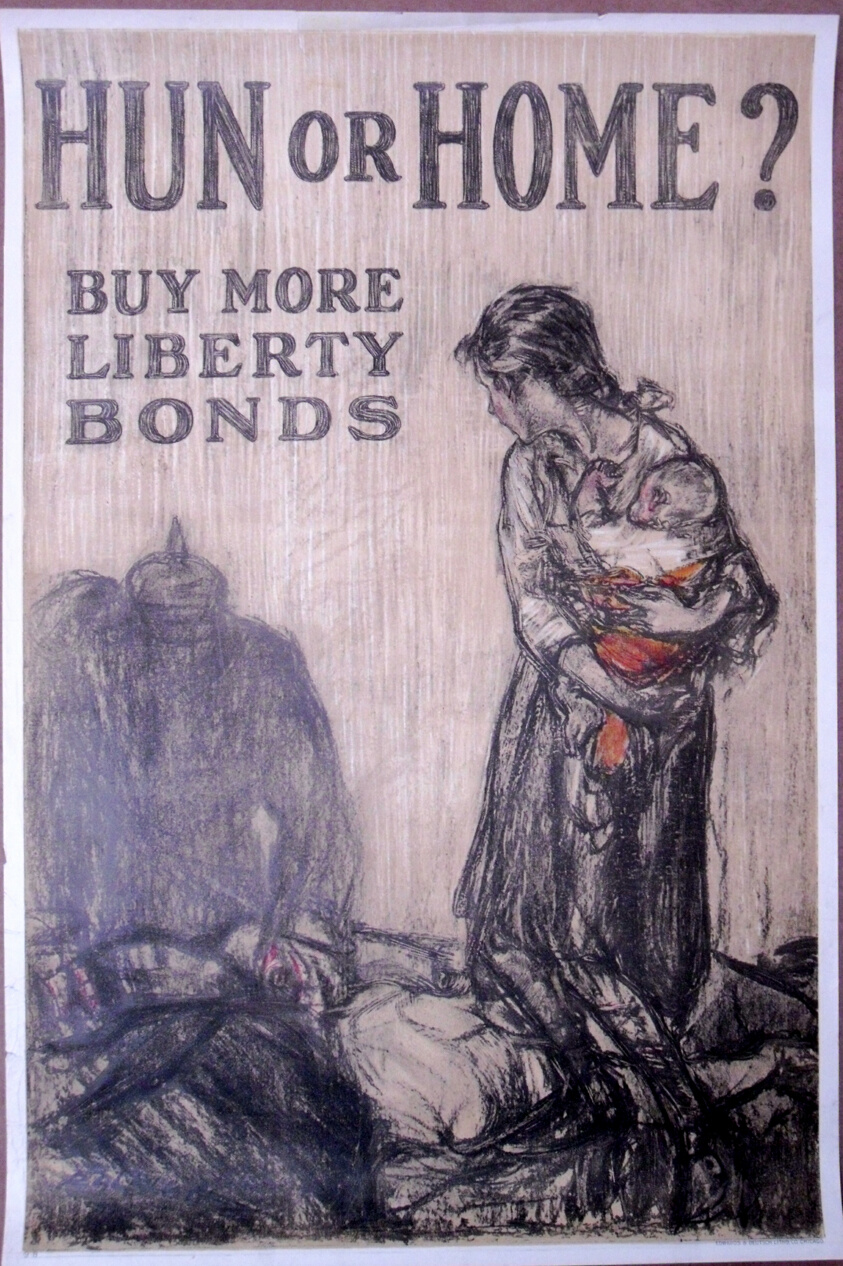
The Committee on Public Information, established by President Woodrow Wilson and led by journalist George Creel, ran propaganda campaigns that portrayed German culture as fundamentally barbaric. Beer, as one of the most visible symbols of German-American life, was swept up in that portrayal without difficulty.
Several states, including Iowa and Ohio, made speaking German in public a criminal offence — in some cases extending even to private telephone calls and church sermons. German-Americans who had been proud, confident members of their communities found themselves afraid to speak their own language in the street.
Brewing Families Under Attack
The great German-American brewing dynasties became specific targets. Adolphus Busch, who had built Anheuser-Busch into one of the largest breweries in the world, had died in 1913. His son August Busch Sr. was left to face the storm, publicly accused of disloyalty and forced into humiliating public demonstrations of patriotism.
Temperance campaigners deployed a slogan that cut straight to the bone: "Kaiser Kultur in a Bottle." Drinking German beer, the argument went, was tantamount to funding the enemy. It was an absurd claim on its face — but in the atmosphere of wartime hysteria, it landed with devastating effect.
Wayne Wheeler went further. He publicly accused German-American brewers of financing pro-German propaganda operations inside the United States. This charge had a limited factual basis — some German-American organisations had indeed lobbied against American involvement in the war — but Wheeler wielded it as a broad indictment of the entire industry.
In 1918, the federal government briefly explored the possibility of nationalising the brewing industry as a wartime security measure. German-American communities across the Midwest, previously among the most organised and politically active ethnic groups in the country, went quiet. At precisely the moment when they needed to fight back, they had lost the political will — and increasingly the political standing — to do so.
The Wartime Arguments That Sealed Prohibition
Wheeler and the Anti-Saloon League were too shrewd to rely on ethnic hatred alone. They reframed Prohibition as a straightforward wartime necessity. Grain used in brewing, they argued, should be redirected to feed American troops and America's starving European allies. It was a patriotic argument that was very hard to counter.
Congress agreed. In September 1917, the Lever Food and Fuel Control Act was passed, banning the use of grain for brewing as a wartime emergency measure. It was the first time the federal government had directly curtailed alcohol production — and it demonstrated that it could be done.
Wheeler made the political logic explicit: you could not be a loyal American and drink German beer. The brewing lobby, which had been one of the most powerful forces in Washington for thirty years, found itself politically toxic. Its allies in Congress melted away.
Congress passed the 18th Amendment in December 1917, sending it to the states for ratification. What followed was remarkable. In normal circumstances, amending the Constitution is an agonisingly slow process. This time, the required 36 states ratified the amendment by January 1919 — a pace that would have been unimaginable before the war supercharged the political environment.
Key Figures Who Shaped the Moment
No single person did more to deliver Prohibition than Wayne Wheeler. Historians credit him with influencing over 1,500 pieces of legislation during his career, and he is widely regarded as the most effective single-issue lobbyist in American history. He understood power, and he used it without sentiment.
Billy Sunday, the flamboyant former baseball player turned evangelist, held mass revival meetings across the country linking alcohol, German brewers, and un-American values in sermons that drew enormous crowds. His performances were spectacle as much as politics — but they moved people.
Senator Morris Sheppard of Texas was the 18th Amendment's primary Senate sponsor. He described the brewing industry as "a conspiracy against American democracy" — language that would have seemed overheated before 1917 but played very differently in wartime.
President Woodrow Wilson was personally ambivalent about Prohibition. But his wartime emergency legislation — the Lever Act and related measures — cleared the political and legal ground that made the amendment possible. Whatever his private reservations, his actions helped seal it.
Prohibition's Reality — And Its Rapid Unravelling
The Volstead Act, passed in October 1919, gave the 18th Amendment its teeth, defining "intoxicating liquor" as anything over 0.5% alcohol and establishing the enforcement framework. Prohibition formally began on 17 January 1920.
The results were not what the Anti-Saloon League had promised. Within months, organised crime moved in to supply what the law had banned. Italian-American and Irish-American criminal enterprises — groups that had not been politically destroyed by the war — stepped into the vacuum the German-American brewers had been forced to vacate. The irony was almost too perfect.
Al Capone's Chicago operation was earning an estimated $60 million a year from illegal alcohol by the late 1920s — equivalent to roughly $1 billion in today's money. By 1929, New York City alone was home to an estimated 30,000 speakeasies, more drinking establishments than had existed in the entire city before Prohibition began.
The law had not reduced drinking. It had simply changed who profited from it — and handed enormous power to criminal organisations that would shape American urban life for generations.
The Legacy: War, Prejudice, and Unintended Consequences
The 18th Amendment holds a unique and uncomfortable place in American constitutional history: it is the only amendment ever to have been repealed. The 21st Amendment ended Prohibition on 5 December 1933, a belated acknowledgement that the experiment had failed.
Historians have increasingly recognised that WWI anti-German hysteria was a crucial accelerant — one that many earlier accounts of Prohibition glossed over. The temperance movement had built the engine, but wartime ethnic hatred provided the fuel that finally got it running.
The broader damage to German-American cultural life was permanent. The Turnvereins, the German-language newspapers, the confident ethnic identity that had flourished in America's heartland since the 1850s — all were shattered by the combination of wartime persecution and the legal destruction of the industry that had sustained them. The German-American community that emerged after 1919 was quieter, more assimilated, and considerably less visible than the one that had existed before.
Anheuser-Busch, Pabst, and Miller did survive. After Repeal in 1933, they rebuilt and eventually became even larger than before. But the tight-knit German-American cultural world that had produced them — the beer halls, the Turnvereins, the German-language press — was gone, swept away not by a rival culture, but by a war and a wave of fear.
Prohibition stands as one of history's sharpest lessons in the danger of legislating morality in the heat of wartime passion. It also stands as a reminder of how easily a democracy can turn on its own citizens when a foreign enemy is close enough — or can be made to seem so.
Further Reading
- The Library of Congress — holds extensive archives on the temperance movement, the Anti-Saloon League, and the legislative history of the 18th Amendment
- The National Archives (United States) — primary source documents on wartime legislation including the Lever Food and Fuel Control Act and the Volstead Act
- The Smithsonian Institution — has covered the history of Prohibition and German-American cultural life in depth through its National Museum of American History
- The Rutherford B. Hayes Presidential Library and Museums — holds the papers of the Anti-Saloon League, one of the most significant collections for research into the Prohibition movement
- The Wisconsin Historical Society — an outstanding resource for the history of German-American communities in the Midwest and the brewing industry centred on Milwaukee