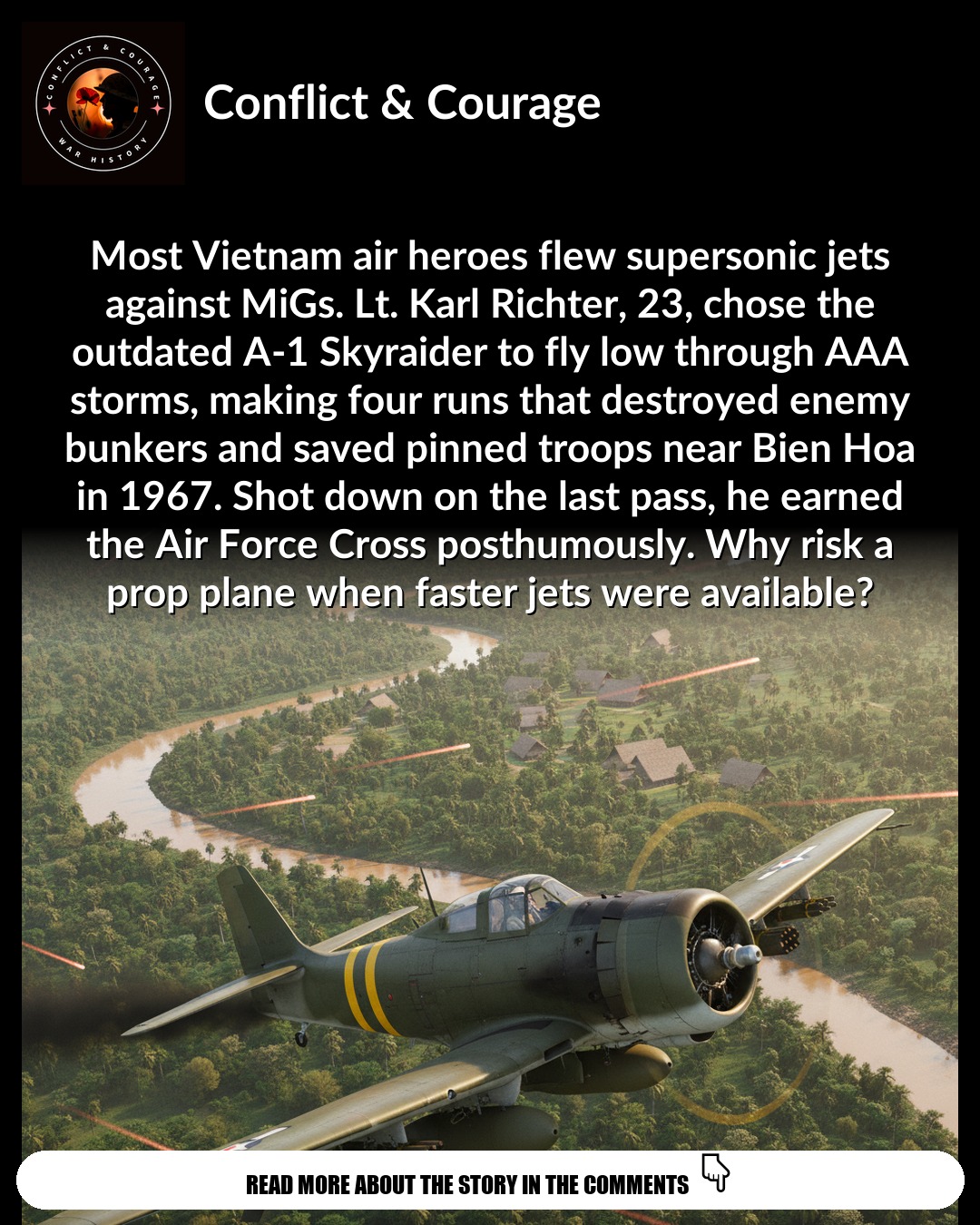
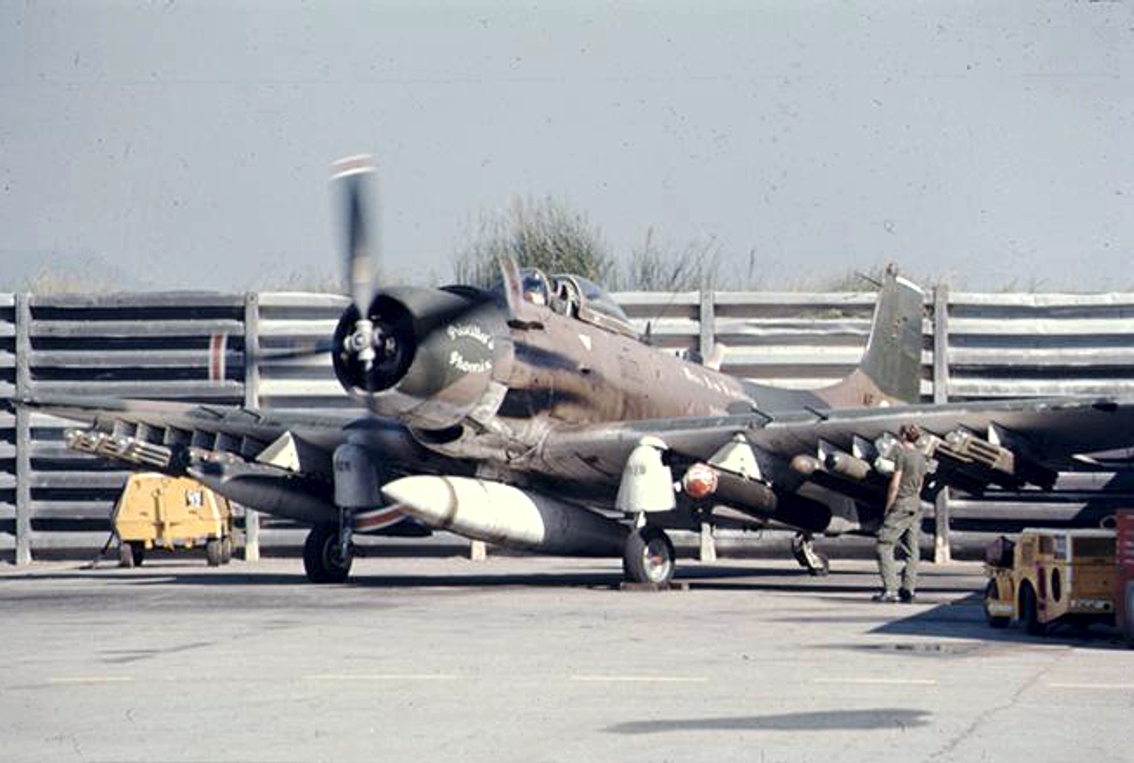
By the mid-1960s the Douglas A-1 Skyraider was already an old design. Conceived in the closing months of the Second World War as a carrier-based, propeller-driven attack aircraft, it was a relic of the piston age in a war increasingly defined by jets. Yet in the skies over Southeast Asia the Skyraider proved almost uniquely suited to close air support and combat rescue. It could carry an enormous ordnance load, loiter for hours over a target, and fly low and slow enough to deliver its weapons with precision where a fast jet could not. Air Force and Navy crews came to rely on it, and in the rescue role its call sign became a byword for hope on the radio: Sandy.
The A Shau Valley, 10 March 1966
The best-documented act of Skyraider heroism belongs to Major Bernard F. Fisher of the United States Air Force. On 10 March 1966 a Special Forces camp in the A Shau Valley, near the Laotian border in South Vietnam, was under heavy assault. According to the National Museum of the U.S. Air Force, an estimated 2,000 North Vietnamese troops surrounded the camp. Fisher, flying an A-1E from Pleiku Air Base, was diverted to the fight and led a flight of Skyraiders down through a narrow break in the overcast to provide close air support to the men on the ground.
During the attack, ground fire struck one of the other Skyraiders, flown by Major Dafford W. "Jump" Myers. Myers could not keep his aircraft aloft and crash-landed on the camp's battered airstrip, sliding to a halt amid wreckage and burning debris with enemy troops close at hand. A rescue helicopter would take precious minutes to arrive, and it seemed almost certain that Myers would be captured or killed before one could reach him.
A Landing Under Fire
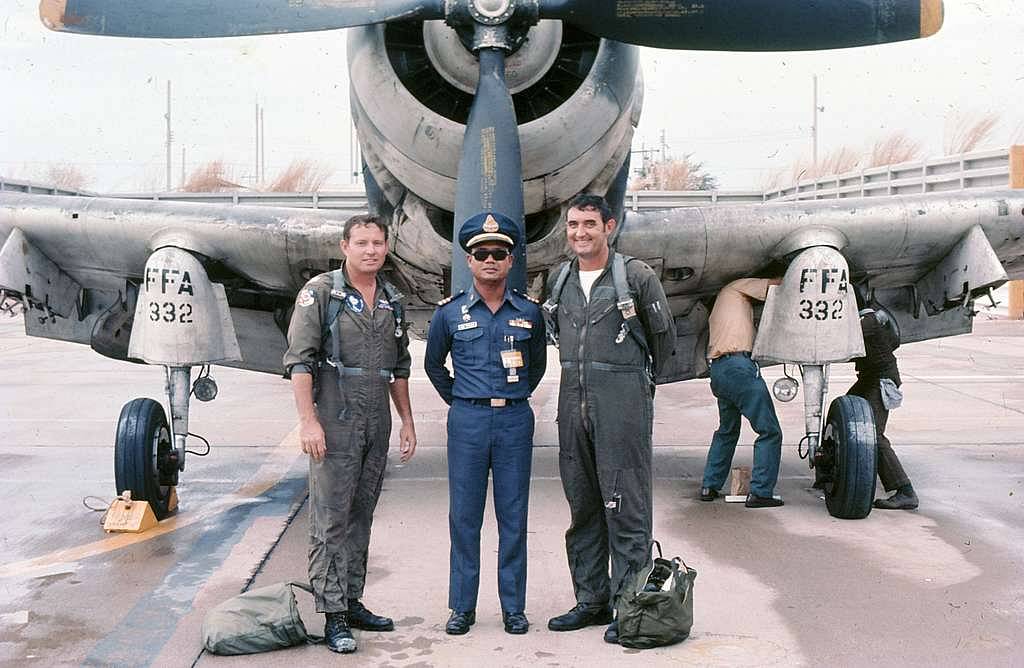
Fisher made a decision that few pilots would have attempted. Rather than wait for a helicopter, he chose to land his own A-1E on the same airstrip, a short, cratered runway of pierced-steel planking still swept by enemy fire. He touched down, dodging shell holes and debris, and taxied back toward the wreckage of Myers's aircraft. Spotting the downed pilot, Fisher helped him aboard and pulled him into the right seat of the cockpit. Then, threading his way once more between the craters, he took off. His aircraft was later found to have been hit nineteen times, but both men flew out alive.
The Medal of Honor
For this rescue, Bernard Fisher received the Medal of Honor from President Lyndon B. Johnson at the White House on 19 March 1967. It was the first Medal of Honor awarded to a member of the U.S. Air Force for action in the Vietnam War. Fisher, a career officer who had volunteered for Vietnam, always deflected credit, and Myers lived on for many years afterward as the man his wingman had refused to leave behind.
Fisher's action was not an isolated case of the Skyraider being asked to do the improbable. Throughout the war, A-1 crews flying as Sandy rescue escorts routinely orbited over downed airmen for hours, suppressing enemy fire and shepherding rescue helicopters in and out of hostile territory. The aircraft's slow speed, long endurance and rugged airframe, the very qualities that made it seem obsolete, were precisely what allowed it to hold a position over a man on the ground until he could be brought home. That role, repeated countless times and rarely commemorated with medals, was the Skyraider's most enduring contribution to the war.
An Aircraft Remembered for What It Saved
The A-1 was finally retired from U.S. Air Force service in 1975, and the actual A-1E that Fisher flew on his Medal of Honor mission is preserved today at the National Museum of the U.S. Air Force in Dayton, Ohio. The Skyraider is remembered less for the targets it destroyed than for the lives its crews protected, and the A Shau Valley rescue remains the clearest illustration of why. It was an old aircraft, flown by men who used its unglamorous strengths to reach people no faster machine could have reached.
Sources & Further Reading
- National Museum of the U.S. Air Force, "Uncommon Valor: Major Bernard Fisher" — nationalmuseum.af.mil
- U.S. Air Force, "Uncommon gallantry: Remembering Bernard Fisher" — af.mil
- Congressional Medal of Honor Society, "Bernard Francis Fisher" — cmohs.org