He Was Both a Legend and a Broken Man. What Do We Really Know About Him?
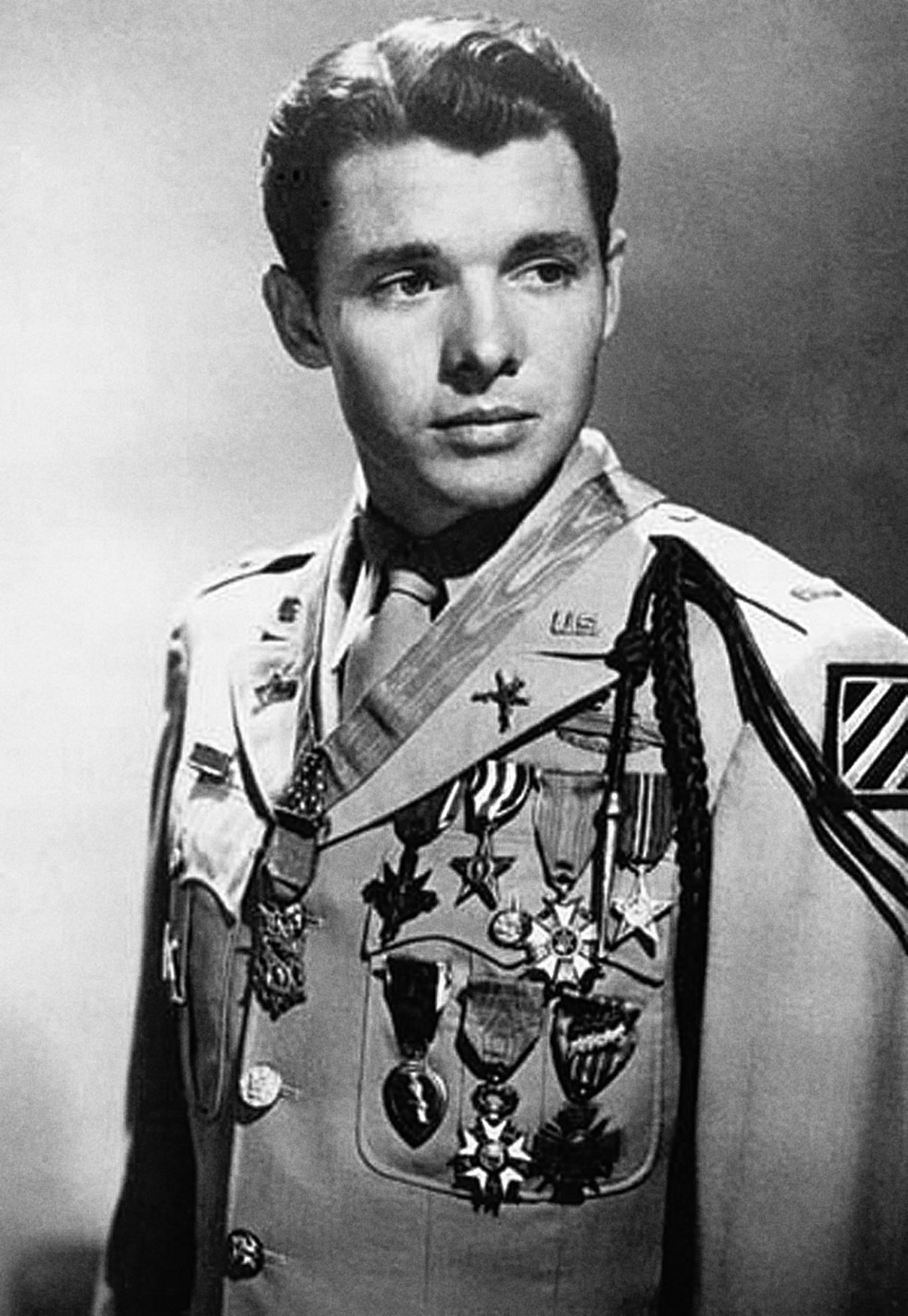
He was barely old enough to shave. He stood five feet five and weighed around 110 pounds soaking wet. And yet Audie Murphy became the most decorated American combat soldier of the Second World War — a distinction that still stands.
Most people remember him from the Western films he made in the 1950s and 60s. That easy smile. That boyish face. What the screen never showed you was the loaded pistol under his pillow, the nightmares that never left, and a man quietly falling apart behind the mythology America had built around him.
He was both a once-in-a-generation warrior and a boy consumed by what war made him. What do we actually do with that?
The Boy They Turned Away — Three Times
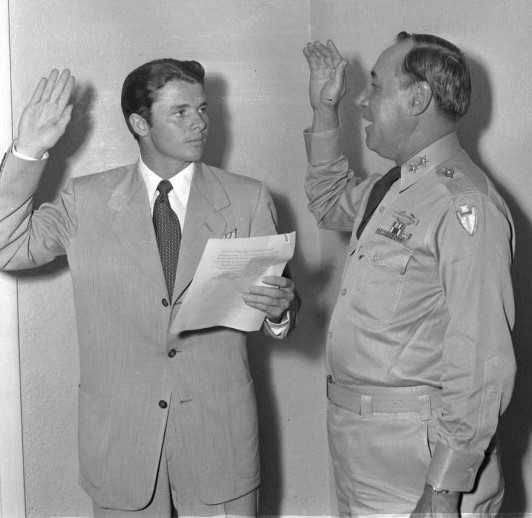
Murphy was born in 1925 in Hunt County, Texas, into the kind of poverty that doesn't leave you. One of nine children, his father abandoned the family, and his mother died when he was sixteen. When the war came, he tried to enlist — and got turned away by the Marines for being too small and too young, then by the paratroopers, then cautiously by the Navy.
The Army finally accepted him. Then tried to make him a cook because he looked too boyish for the front line.
Here's the uncomfortable truth: Murphy lied about his age to enlist. He was 17. Was that patriotism? Possibly. Or was it a young man with nothing left to lose, looking for a way out of a life that had already taken everything from him? The answer probably matters more than most people want to admit.
The underdog arc is compelling. But the question of what actually drove him to fight — and to fight the way he did — is one the hero mythology quietly sidesteps.
The Day on the Burning Tank Destroyer That Defined a War
January 26, 1945. Holtzwihr, Alsace. Temperature well below freezing. Murphy's company had been reduced from 128 men to 19. A force of around 250 German infantry, supported by tanks, was advancing across open ground.
Murphy ordered his men to fall back into the woods. Then he climbed onto a burning M10 tank destroyer — a vehicle that could have exploded beneath him at any second — and turned its .50 calibre machine gun on the advancing Germans. Alone. For nearly an hour. While simultaneously directing American artillery by field telephone.
When his commanding officer radioed to ask if it was safe, Murphy reportedly replied: "I'll tell you when I get back."
His Medal of Honor citation — America's highest military decoration — describes one of the most remarkable individual last stands of the entire war. Some call it supreme courage. Others argue it was a young man who had simply stopped fearing death. Which interpretation you choose says something about how you understand war itself.
28 Decorations — But Was He Really America's Greatest Soldier?
Murphy came home with the Medal of Honor, the Distinguished Service Cross, two Silver Stars, the Legion of Merit, three Purple Hearts, and decorations from both France and Belgium. Twenty-eight awards in total. The number is staggering.
Most people equate decoration count with battlefield greatness. Unpopular opinion: the real reason Murphy accumulated so many awards was that he survived engagements that killed almost everyone around him — and survival at that level is itself a form of military skill that rarely gets discussed openly.
Compare him, briefly, with figures like Sergeant York from the First World War or lesser-known fighters from the Pacific theatre. The debate about who deserves the title of America's greatest soldier remains genuinely unresolved. Murphy's fame is also distinctly American — he fought alongside British, French and Allied troops in Italy and France who earned their own legends quietly, without Hollywood waiting for them at home. Does that context change the comparison? You decide.
Hollywood Hero, Hidden Wounds
Murphy returned home on the cover of Life magazine at 21. James Cagney personally invited him to Hollywood. He made 44 films — most famously playing himself in To Hell and Back (1955), which became Universal's highest-grossing film for nearly two decades.
Behind the cameras, he barely slept. He kept a loaded pistol under his pillow. He ran up serious gambling debts and became dependent on prescription sedatives. The 1950s culture of stoic masculinity — the same culture that shaped an entire generation of veterans — made his private collapse almost completely invisible to the public.
What is rarely acknowledged is that Murphy spoke openly about what we now call PTSD long before the term existed. For a man of his generation and background, that took a particular kind of courage that his combat record sometimes overshadows. He advocated loudly for better mental health treatment for veterans. That fight outlasted him.
Many veterans of that era will recognise the silence he was breaking — because they lived inside the same silence themselves.
When the Glory Fades: The End of Audie Murphy's Story
Murphy died on May 28, 1971, when a private plane went down in fog near Roanoke, Virginia, in the Blue Ridge Mountains. He was 45 years old. His estate was nearly bankrupt.
He was buried with full military honours at Arlington National Cemetery. His grave is the second most visited in the entire cemetery, after John F. Kennedy's. The man the nation had made into the perfect symbol of American heroism died quietly, in debt, still haunted by a war that had ended twenty-six years earlier.
That's where the hero and the broken man paradox lands hardest. Does that ending diminish his courage — or make it mean more?
The Murphy Legacy: Warrior, Symbol, or Warning?
There are three ways to read Audie Murphy's life. As proof of extraordinary individual heroism — one man who simply had something others didn't. As a symbol of what war demands from the very young, particularly the poor and the desperate. Or as a warning about what happens when nations build myths around their soldiers and then have no use for the human being underneath.
His legacy quietly shifted how Americans began to talk about combat trauma — a conversation the U.S. military and public are still, frankly, having. The men who stormed Omaha Beach came home to the same silence. So did thousands of others whose names never made a magazine cover.
Some say Murphy was the ultimate soldier. Others say he was a boy shaped by poverty and war into something that peacetime simply had no place for. Both things can be true. The question is which truth we choose to carry forward.
Was Audie Murphy's story one of triumph, tragedy, or something more complicated than either?