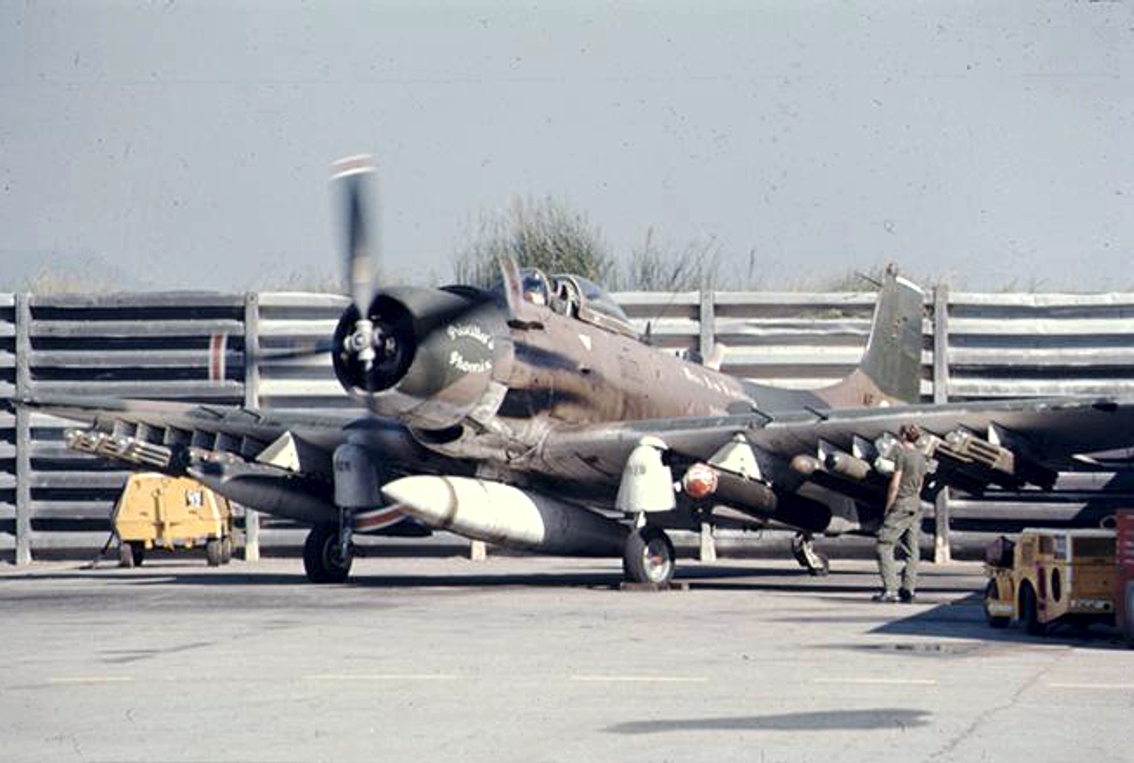
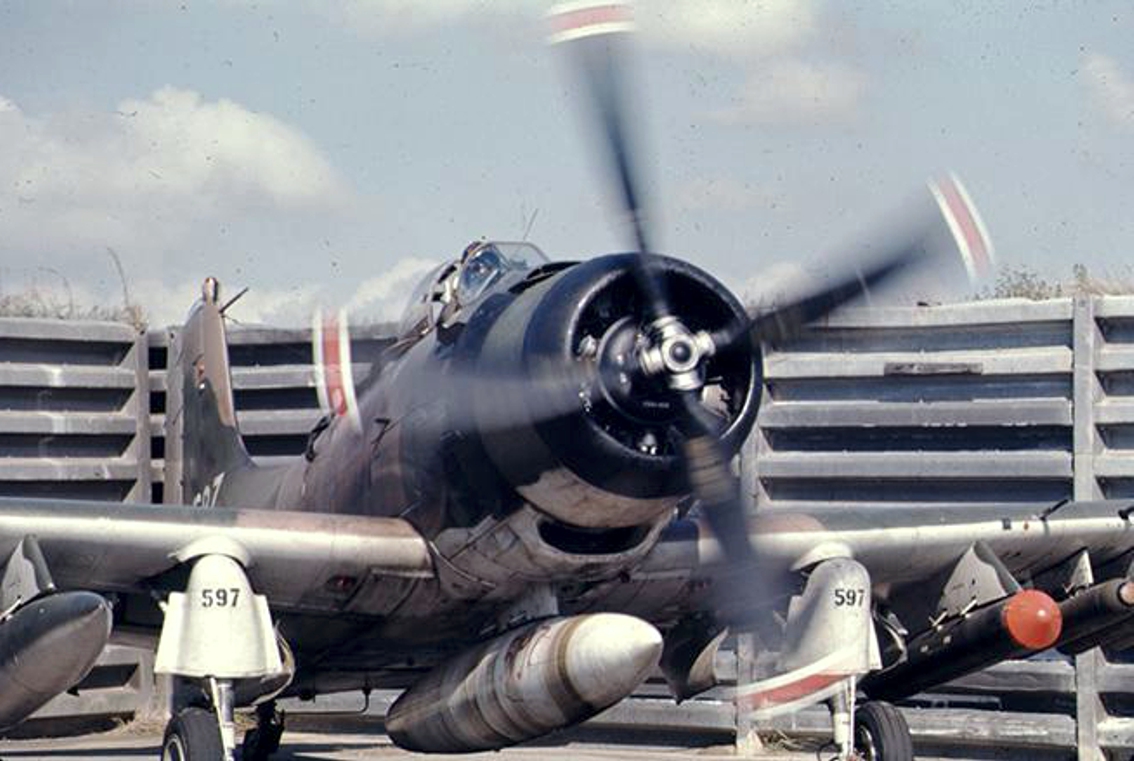
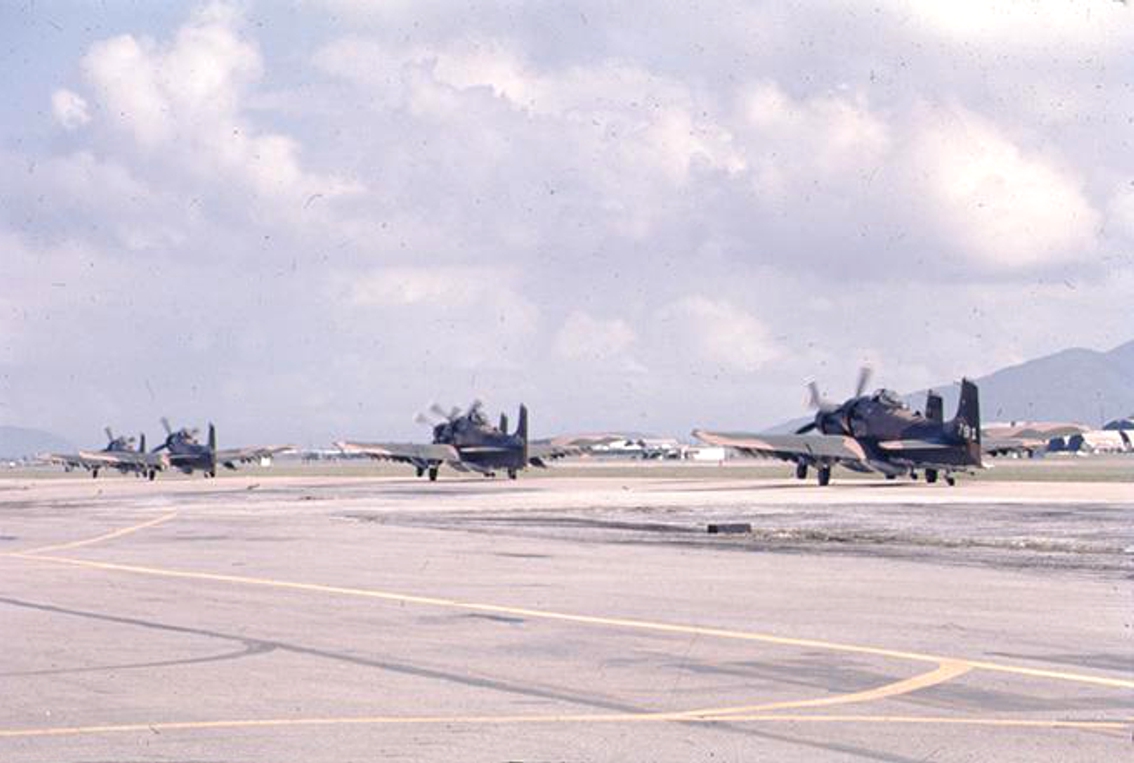
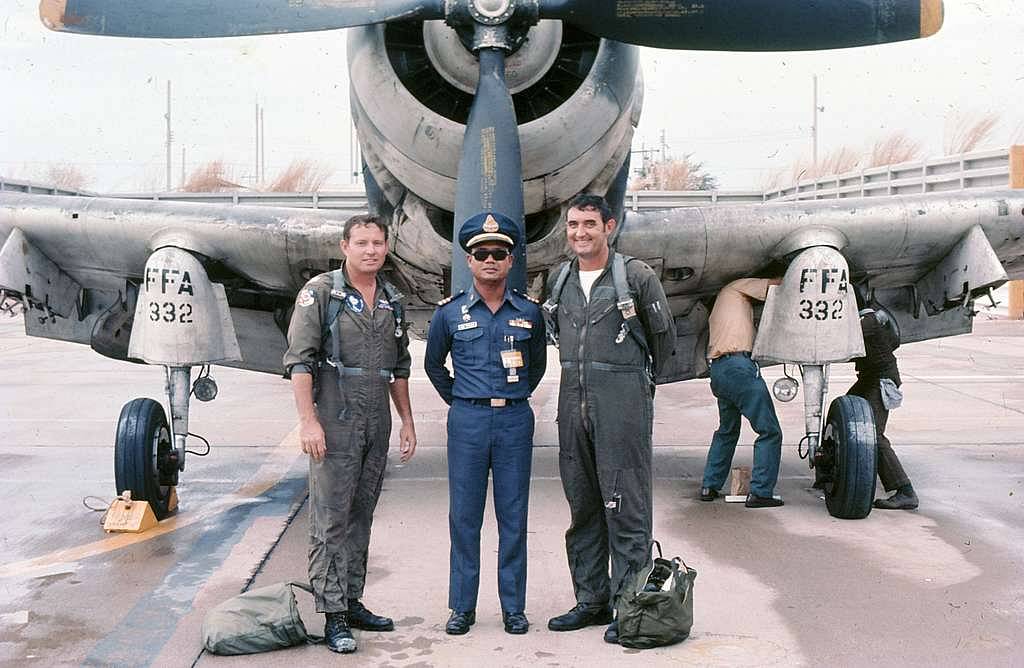
Douglas A-1H Skyraider of the 1st SOS at Da Nang Air Base, Vietnam, on 1 December 1972 (VAS096526) (Wikimedia Commons)
The Forgotten Heroes of Vietnam's Skies
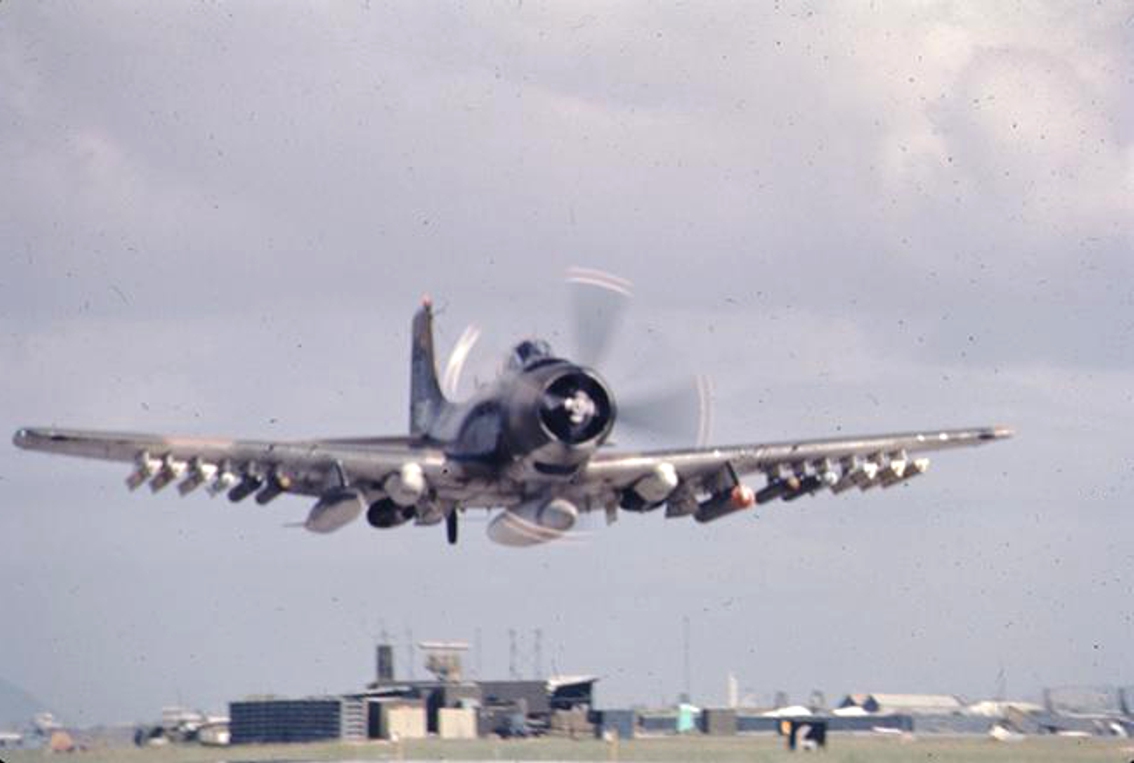
While Robin Olds and his F-4 Phantom dominated headlines as jet aces, another breed of warrior fought a different kind of war in Vietnam's skies. These were young lieutenants, many barely out of their teens, piloting prop planes that had already seen action in Korea over a decade earlier. The Douglas A-1 Skyraider pilots volunteered for missions that jets couldn't handle—flying low and slow through curtains of anti-aircraft fire to deliver pinpoint strikes for troops in desperate trouble. Their aircraft may have looked outdated next to the sleek F-105 Thunderchiefs and F-4 Phantoms, but when American soldiers were pinned down and dying, it was often the distinctive drone of a Skyraider's engine that meant salvation was coming. Douglas A-1H Skyraider of the 1st SOS leaving Da Nang Air Base, Vietnam, on 1 December 1972 (VAS096527) (Wikimedia Commons)
Meet the Douglas A-1 Skyraider: The 'Spad' That Wouldn't Quit
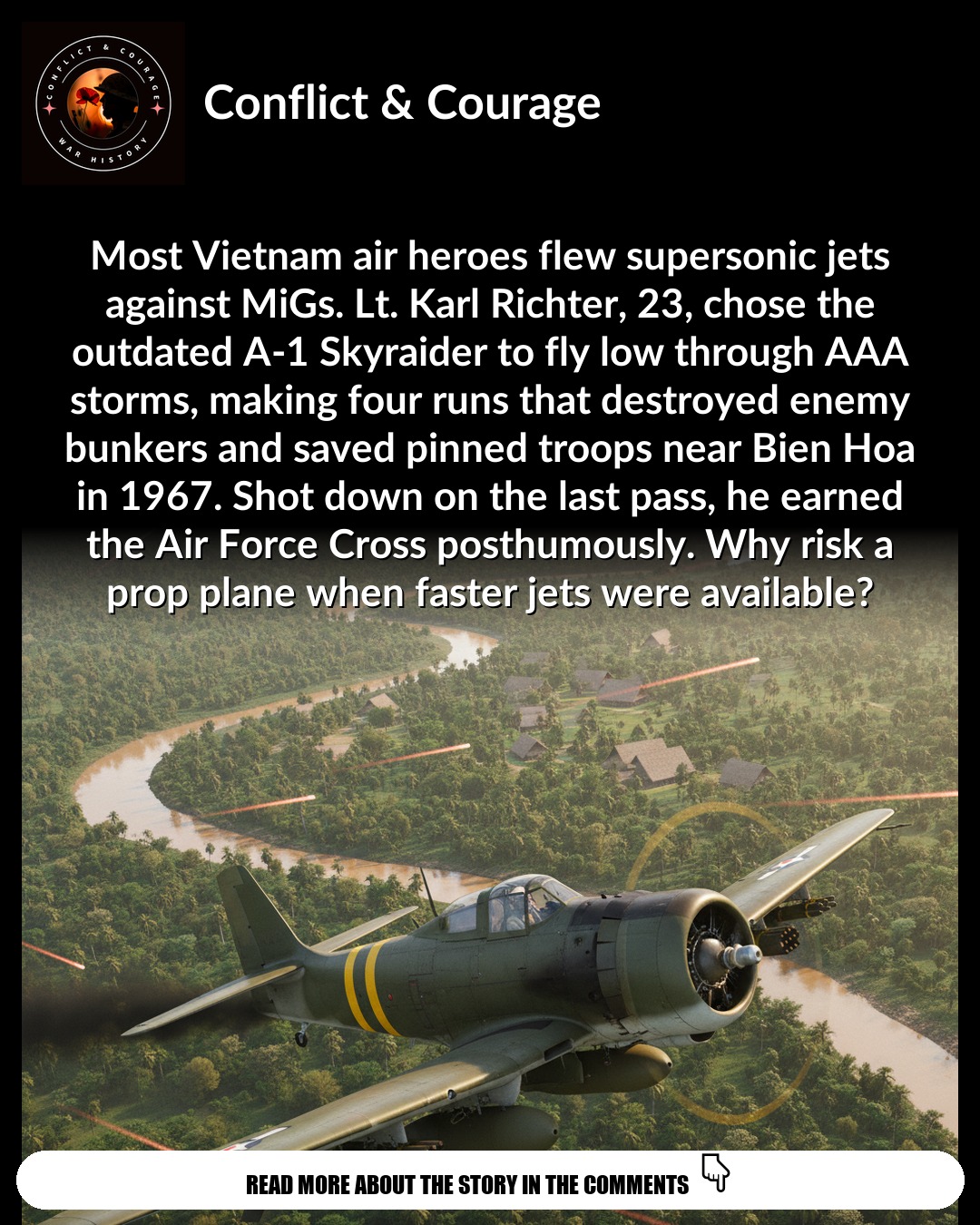
Designed in the closing days of World War II, the A-1 Skyraider seemed like a relic by the 1960s. But this single-engine, propeller-driven attack aircraft possessed qualities that no jet could match in the jungles of Southeast Asia. The Skyraider could carry an astounding 8,000 pounds of ordnance—more bombs than a World War II B-17 Flying Fortress. Its massive payload capacity meant pilots could bring exactly the right weapon for each target: rockets for bunkers, napalm for entrenched positions, or cluster bombs for area targets. Nicknamed the "Spad" after the famous World War I fighter, the A-1 earned a reputation for incredible toughness. Its radial engine could absorb tremendous battle damage and keep running. More importantly, its slow speed—a liability in air-to-air combat—became a crucial advantage when providing close air support to ground troops. Douglas A-1 Skyraider of the 1st SOS taking off from Da Nang Air Base, Vietnam, on 1 December 1972 (VAS096530) (Wikimedia Commons)
Close Air Support: When Every Second Counted
Close air support demanded split-second timing and surgical precision. Unlike strategic bombing missions that targeted enemy infrastructure, close air support meant dropping ordnance within yards of friendly forces—sometimes closer. Ground troops used smoke grenades, radio calls, and mirror flashes to mark enemy positions for incoming aircraft. Forward Air Controllers (FACs) flying small spotter planes coordinated between ground forces and attack aircraft, but the final responsibility lay with the pilot in the cockpit. Jets screaming overhead at 500+ mph had seconds to identify targets and release weapons. The A-1 Skyraider, cruising at 150-200 mph, gave pilots time to study the battlefield, communicate with ground forces, and deliver ordnance with deadly accuracy. Like the heroic individual actions we've seen in other conflicts, these pilots made split-second decisions that saved countless lives. Douglas A-1 Skyraiders of the 1st SOS leaving Da Nang Air Base, Vietnam, on 1 December 1972 (VAS096529) (Wikimedia Commons)
That Day Near Bien Hoa: A 23-Year-Old's Ultimate Sacrifice
The call came in urgent and desperate—American ground forces were pinned down by heavily entrenched North Vietnamese Army positions near Bien Hoa Air Base. Conventional artillery couldn't reach the enemy bunkers, and jets had already made high-speed passes without eliminating the threat. A 23-year-old lieutenant volunteered to lead a flight of four A-1 Skyraiders into the teeth of intense anti-aircraft fire. The mission required multiple low-level attack runs through a gauntlet of machine guns and small arms fire that would shred any aircraft flying slow enough to aim accurately. On his first pass, his 20mm cannons raked the treeline. The second run delivered rockets into suspected bunker positions. His third pass dropped napalm that silenced several enemy machine gun nests. Ground forces reported the enemy fire was diminishing, but stubborn pockets of resistance remained. On his fourth and final pass, flying barely 100 feet above the jungle canopy, his aircraft absorbed dozens of hits. But his precisely aimed cluster bombs destroyed the last enemy strongpoints, allowing the trapped American forces to withdraw to safety. His Skyraider, riddled with holes and trailing smoke, crashed moments after completing the attack. The young pilot was killed in action, but his sacrifice saved dozens of American lives. Last-ever Douglas A-1 Skyraider flight of the U.S. Air Force, 5 May 1975 (Picryl / Public Domain)
The Skyraider's Combat Legacy in Vietnam
The A-1 Skyraider's service in Vietnam extended far beyond close air support missions. "Sandy" flights—Search and Rescue operations—saw Skyraiders escorting rescue helicopters into hostile territory to recover downed aircrews. Their long loiter time and heavy armament made them ideal for suppressing enemy fire during rescue operations. Night interdiction missions along the Ho Chi Minh Trail showcased the aircraft's versatility. Equipped with sophisticated sensors and flares, Skyraider pilots hunted truck convoys and supply depots under cover of darkness. Some missions involved psychological warfare—Skyraiders equipped with loudspeakers and leaflet dispensers conducted "bullhorn" missions, broadcasting surrender appeals to enemy troops. These unconventional tactics demonstrated the aircraft's adaptability to Vietnam's unique warfare requirements.
Tactics That Live On: The Skyraider's Training Legacy
The close air support tactics developed by Skyraider pilots during Vietnam directly influenced modern military aviation doctrine. Today's A-10 Warthog pilots study Vietnam-era Skyraider missions to understand the principles of effective ground support. Communication protocols between pilots and ground controllers, target identification procedures, and weapons delivery techniques pioneered by Skyraider crews remain standard practice. The emphasis on precision over speed in close air support situations—a lesson written in blood over Vietnam's battlefields—continues to shape how modern attack aircraft operate.
Remembering the Prop Plane Heroes
The Air Force still honors the tactical innovations of Skyraider pilots in its close air support training manuals. These young aviators, many of whom paid the ultimate price for their precision and courage, deserve recognition alongside the more famous jet aces of the Vietnam era. Their legacy lives on not just in training manuals, but in the lives they saved and the ground troops who came home because a young pilot in an old prop plane was willing to fly through hell itself to protect them. What stories of unsung military heroes do you think deserve more recognition? Share your thoughts in the comments below, and help us keep these important stories alive for future generations.