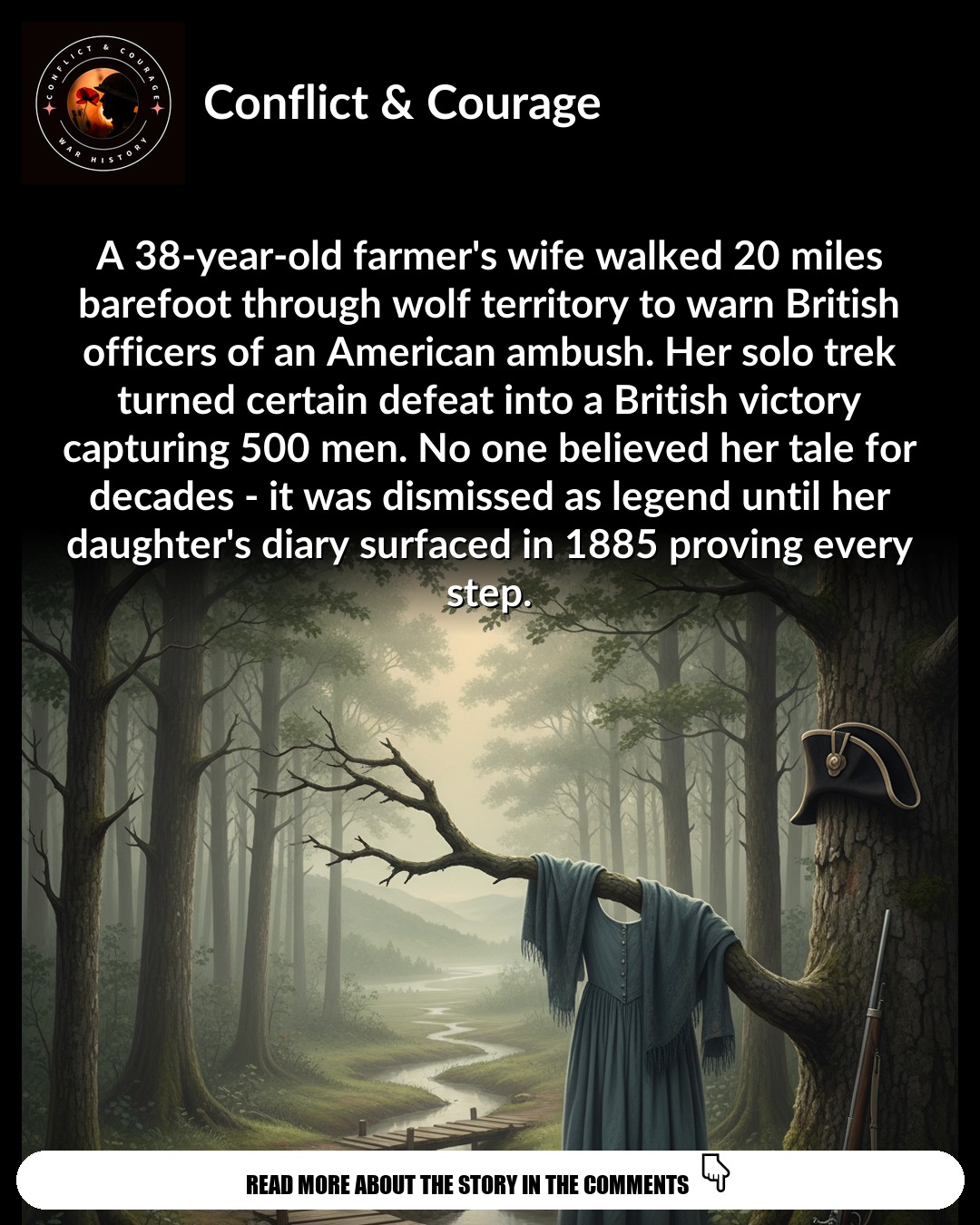
Picture this: enemy officers are dining at your kitchen table, casually discussing battle plans they assume a housewife couldn't possibly understand. For Laura Secord, this wasn't just dinner conversation—it was military intelligence that would change the course of the War of 1812.
The Kitchen Table That Changed History
In June 1813, American officers found themselves billeted in the Secord home near Queenston. Laura Secord, a 38-year-old mother of five, served them dinner while they discussed their upcoming surprise attack on British positions at Beaver Dams.
The Americans felt completely safe discussing military secrets in front of her. After all, what could a colonial housewife possibly do with such information? They had no idea they were revealing their plans to someone who would risk everything to warn the British forces.
As she moved quietly around the table, refilling glasses and clearing plates, Laura absorbed every detail of their planned assault. The element of surprise was everything—and she was about to take it away from them.
A Dangerous Decision: Setting Out Alone
Laura's husband James lay wounded from an earlier battle, unable to travel. No British forces were stationed nearby to warn, and sending a message through normal channels would take too long.
She made a decision that would have seemed impossible to most women of her era: she would make the dangerous 20-mile journey herself. Even her own family couldn't know the true purpose of her trip—the stakes were simply too high.
At dawn on June 22, 1813, Laura Secord set out alone through hostile territory, carrying intelligence that could save British lives and hold the Niagara frontier.
Through Swamps, Wolves, and Enemy Lines
The route to warn Lieutenant James FitzGibbon's forces led through some of the most treacherous terrain in Upper Canada. Laura navigated dense forests, boggy swamplands, and bramble-choked ravines that would challenge any experienced woodsman.
Wild animals posed a constant threat. Wolves and bears roamed these woods freely, and a lone woman represented easy prey. But Laura pressed on, using cow paths and Indigenous trails to stay hidden from American patrols.
For a 38-year-old woman in 1813, the physical demands were extraordinary. No proper hiking boots, no trail maps, no backup plan—just determination and the knowledge that British soldiers' lives hung in the balance.
The Warning That Saved an Army
Exhausted and mud-caked, Laura finally reached FitzGibbon's outpost. The British lieutenant initially doubted her story—could this bedraggled housewife really have walked twenty miles with crucial intelligence?
But as Laura detailed the American plans, FitzGibbon realized she was telling the truth. He immediately began preparing a counter-ambush, working with Indigenous allies who knew the terrain around Beaver Dams intimately.
The trap was set. Now they just had to wait for the Americans to walk into it.
Victory at Beaver Dams: 500 Americans Surrender
On June 24, Lieutenant Colonel Charles Boerstler led 500 American soldiers straight into the ambush Laura had made possible. Instead of surprising the British, they found themselves surrounded and outnumbered.
The engagement was swift and decisive. Facing certain destruction, Boerstler surrendered his entire force. Not a single British soldier died in the victory, though several Americans fell in the brief fighting.
The strategic implications were enormous. Holding Beaver Dams helped secure the entire Niagara frontier for Britain. Laura's twenty-mile walk through hostile territory had potentially saved an entire campaign.
Forgotten for Fifty Years
Despite her crucial role, Laura Secord's story vanished from official records. Victorian attitudes toward women's roles in warfare meant that male officers received all the credit for the victory at Beaver Dams.
Military historians focused on FitzGibbon's tactical brilliance and the Indigenous allies' battlefield skills. A housewife's intelligence gathering didn't fit the heroic narratives of the time.
Laura's story only surfaced decades after her death, when historians began uncovering the forgotten contributions of ordinary civilians to the War of 1812. Like many unsung heroes throughout military history, her sacrifice had been quietly erased from the official record.
Legacy of a Kitchen Table Spy
Today, Laura Secord is finally recognized as one of Canada's greatest war heroes. Museums and memorials preserve her story, and historians understand her vital contribution to British victory in 1813.
Her tale reminds us that military history isn't just about generals and battlefields—it's about ordinary people making extraordinary decisions. Intelligence gathering, whether by professional spies or determined civilians, often shapes the outcome of entire wars.
Laura Secord proved that heroism comes in many forms. Sometimes it's a dramatic cavalry charge, and sometimes it's a muddy walk through the wilderness when everything depends on getting the message through.
What other forgotten heroes of the War of 1812 deserve recognition? Share your thoughts on Laura Secord's incredible journey and let us know which untold military stories you'd like to see explored next.