The Quiz Question
At which May 1864 Virginia battle did some of the most brutal hand-to-hand fighting of the Civil War occur at a salient known as the 'Bloody Angle'?
- A. Battle of Spotsylvania Courthouse
- B. Battle of the Wilderness
- C. Battle of Cold Harbor
- D. Battle of Petersburg
The answer is A. Battle of Spotsylvania Courthouse. Here is the full story.
On the morning of 12 May 1864, somewhere in the fog and driving rain of central Virginia, men stopped being soldiers and became something more desperate. At a bend in a muddy earthwork outside the village of Spotsylvania Courthouse, two armies locked together like dogs in a pit. They would not let go for nearly twenty hours. What happened there — at the place soldiers simply called the Bloody Angle — remains one of the most ferocious episodes in American military history.
Setting the Scene: Virginia, Spring 1864
By March 1864, Ulysses S. Grant had been given command of all Union armies, and he brought with him a philosophy that differed sharply from every commander who had come before him. He was not interested in capturing territory. He was determined to destroy the Army of Northern Virginia — to find it, fix it, and kill it.
The Overland Campaign opened with the Battle of the Wilderness on 5–7 May 1864, two days of savage, half-blind fighting in a tangle of second-growth forest that cost Grant roughly 17,500 casualties. But where previous Union commanders had pulled back after such punishment, Grant did the opposite. On the night of 7–8 May, he ordered his army to march south — toward Spotsylvania Courthouse.
Spotsylvania was a small crossroads village, but controlling it meant controlling the road network leading to Richmond, the Confederate capital. Lee understood this immediately. His engineers and infantry raced Grant's columns through the Virginia night, and they arrived first, beginning to throw up extensive fieldworks on 8 May. The race was over before most of Grant's men knew there had been one.
The Mule Shoe: A Defensive Blunder Set in Earth
Confederate engineers, working fast under pressure, constructed a large forward salient — a bulge in the defensive line — roughly one mile long and half a mile wide. Soldiers quickly nicknamed it the "Mule Shoe" for its distinctive shape on any map. It looked formidable on the ground. On paper, it was a problem.
A salient can be fired into from three sides. Reinforcing troops inside it means crossing open ground under fire. These were known weaknesses, and Lee's chief of artillery, Brigadier General Armistead Long, recognised the danger of keeping guns inside the salient overnight. His warnings were only partially heeded.
Confederate Major General Edward "Allegheny" Johnson commanded the division holding the Mule Shoe — approximately 4,000 men and 20 artillery pieces. On the night of 11–12 May, responding to a false intelligence report that suggested Grant might be shifting away, Confederate artillery was controversially withdrawn from the salient. Within hours, that decision would prove catastrophic.
Grant's Dawn Assault: The Hammer Falls
Union Major General Winfield Scott Hancock had spent the previous day massing his entire II Corps — roughly 20,000 men — opposite the tip of the Mule Shoe. The assault was timed for just before dawn on 12 May, in conditions that could hardly have been worse: thick fog, steady rain, and ground turned to mud.
The attack launched at approximately 4:35 a.m. The fog that made movement miserable also masked the advancing blue columns from Confederate pickets. Hancock's men surged forward and overran the salient's tip in a matter of minutes. Nearly all of Johnson's division — some 3,000 men — were taken prisoner, including General Johnson himself and Brigadier General George Steuart.
The 20 artillery pieces inside the salient were captured almost before a single shot was fired, confirming in the most brutal possible way the folly of withdrawing them the night before. The Confederate centre had been ripped open. For Robert E. Lee, the next few minutes would be among the most dangerous of his career.
Lee's Counterattack and the Birth of the Bloody Angle
Facing catastrophic collapse at the centre of his line, Lee himself attempted to ride forward and lead a counterattack by Major General John B. Gordon's Confederate division. His men would not have it. In a scene that had already played out once during the Wilderness fighting, soldiers surrounded Lee's horse and refused to advance until their commander rode to safety. The cry of "General Lee to the rear!" echoed across the field.
Gordon's division, reinforced by brigades under Rodes and Ramseur, drove back the Union penetration with tremendous force. But they could not retake the whole salient. Instead, the fighting compressed itself into the northwest corner of the Mule Shoe — the tight bend in the earthwork that soldiers would forever call the Bloody Angle.
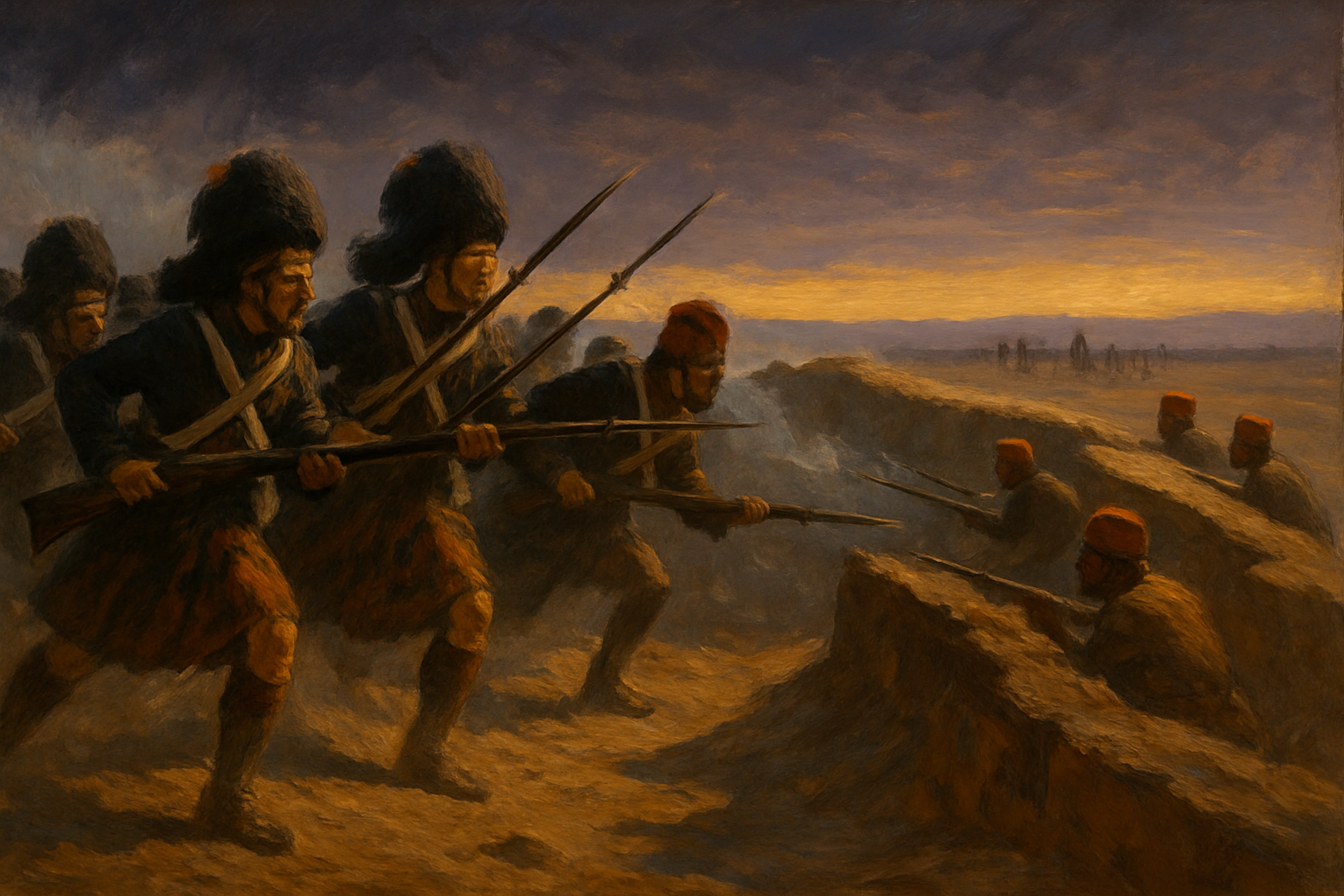
What followed defies easy description. Both sides piled men into the narrow killing ground. Union troops pushed from outside; Confederates defended from within. Between them stood only a log and earthen parapet, perhaps waist-high in places. Men stood on the bodies of the fallen to fire over the top. Others jabbed bayonets blindly through gaps in the logs, hoping to hit something on the other side. Fresh Confederate troops under General John C. Breckinridge arrived to bolster the line as Lee's engineers frantically dug a new, shorter defensive position some 500 yards to the rear.
Twenty Hours of Hell: The Battle Nobody Forgets
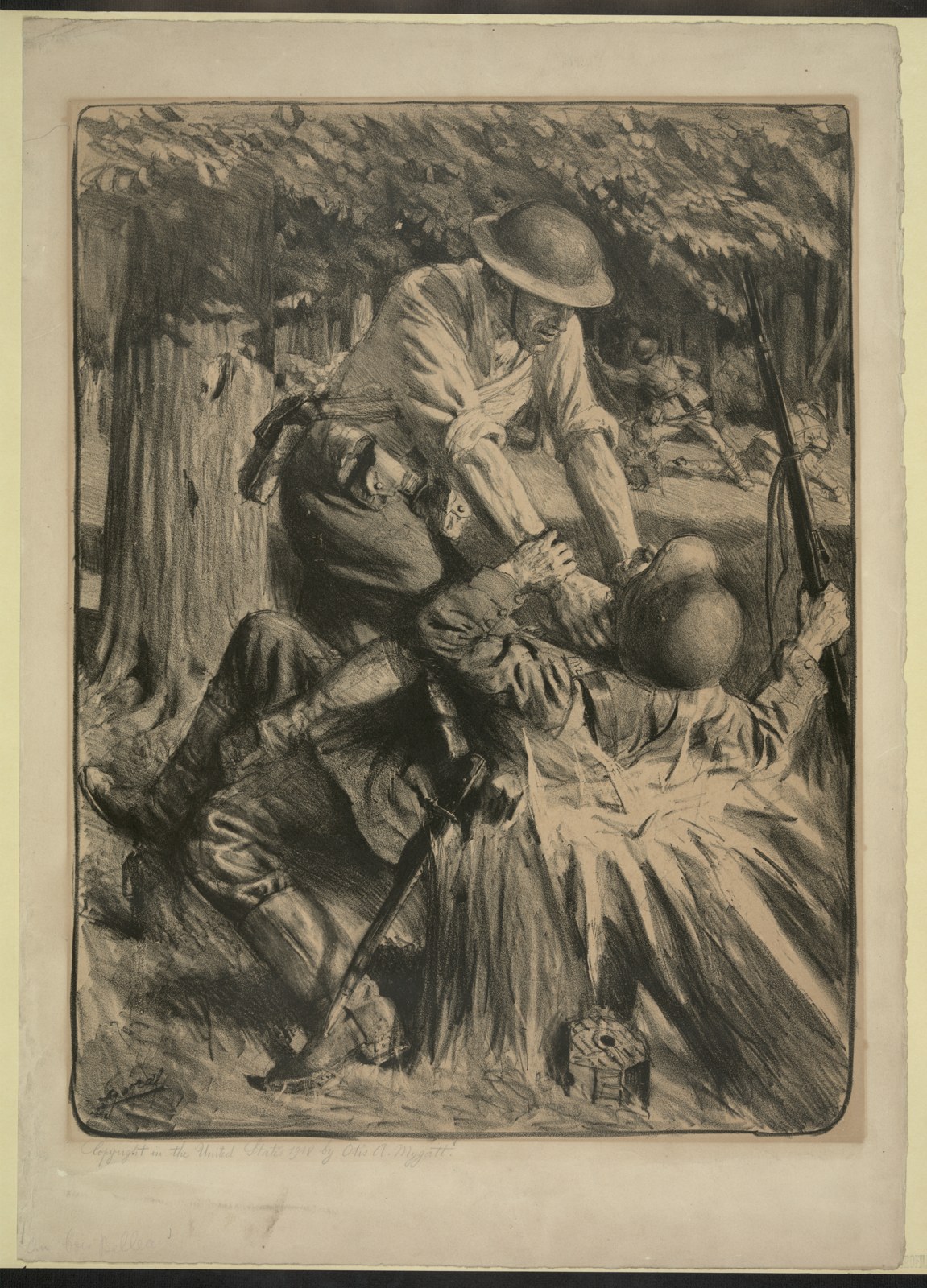
The fighting at the Bloody Angle was unlike almost anything the war had produced. Men fought chest-to-chest across the parapet, grabbing enemies by the collar and hauling them over the top. Rifles were fired until the barrels burned bare hands, then swung as clubs until they broke. When the guns and clubs were gone, men used whatever they could reach.
Rain fell throughout the day and into the night, turning the ground into a slick red mud. One Confederate survivor described the earth at the Angle as "literally mixed with blood and brains." Chaplains and stretcher-bearers working behind the line reported stepping over the dead three and four bodies deep. The noise was so continuous and overwhelming that some soldiers later said they lost all track of time.
The most haunting physical evidence of what happened there is a single oak tree, roughly 22 inches in diameter, that stood near the Angle. By the time the firing stopped, rifle bullets alone had gnawed it completely down — not a shell, not an axe, but the sheer volume of small-arms fire. That tree was recovered after the battle and is now held by the Smithsonian Institution, a mute witness to the intensity of those hours. Casualty estimates for 12 May alone exceed 12,000 men on both sides combined.
The Men Who Fought There: Faces in the Mud
History tends to remember battles by the names of generals, but the Bloody Angle belongs to the men who stood at that parapet. Colonel Emory Upton, just 24 years old, had pioneered the assault tactics used at Spotsylvania after a smaller but successful attack on 10 May. He was promoted to Brigadier General on the battlefield — one of the youngest men to hold that rank in the Union Army.
On the Confederate side, Brigadier General James Walker led the Stonewall Brigade — the most famous infantry unit in Lee's army, shaped and hardened by Stonewall Jackson himself. At the Angle, it was virtually destroyed. The brigade that had marched through the Valley Campaign, stood at First Bull Run, and survived Antietam was, after 12 May 1864, a shadow of what it had been.
Six days later, on 18 May, the 1st Maine Heavy Artillery — fighting as infantry for the first time after being converted from garrison duty — suffered more than 600 casualties in a single charge at Spotsylvania. It was the highest single-day regimental loss of the entire war. These were men who had expected to serve out the war behind fortress walls; instead they walked into one of the deadliest fields in American history.
Midnight Withdrawal: How the Battle Finally Ended
Lee's engineers worked throughout 12 May under fire, constructing a new, shorter defensive line across the base of the Mule Shoe. It was desperate, exhausting work, done in the dark and the rain with Union fire never stopping. But it was finished.
At approximately midnight on 12–13 May, Confederate forces quietly disengaged from the Bloody Angle and fell back to the new line. Roughly 20 continuous hours of combat came to an end, not with a dramatic charge or a bugle call, but with an exhausted army slipping away in the dark.
Union soldiers cautiously occupied the abandoned salient at dawn on 13 May and found a landscape of almost indescribable carnage — bodies piled four and five deep along the parapet, the mud churned to a consistency that men would spend the rest of their lives trying to describe. Fighting around Spotsylvania continued until 21 May, with further Union assaults on 18 May repulsed at heavy cost. Then Grant did what Grant always did: he sideslipped south, toward Cold Harbor.
Total Union casualties for the entire Spotsylvania engagement reached approximately 18,000 men. Confederate losses are estimated at 12,000–13,000 — proportionally far harder to replace in an army that was already running short of everything.
Grant vs. Lee: What Spotsylvania Revealed About Both Commanders
Grant's willingness to absorb staggering losses and keep moving shocked both Lee and the Northern public. Newspapers began calling him "Butcher Grant," a label he resented for the rest of his life. But his dispatch to Washington on 11 May — "I propose to fight it out on this line if it takes all summer" — captured something real about his strategic thinking, and it became one of the most quoted statements of the entire war.
Lee demonstrated at Spotsylvania that determined fieldworks could neutralise Union numerical superiority. It was a lesson that would echo with terrible familiarity in the trenches of the Western Front fifty years later. But it also revealed a critical Confederate weakness: Lee could win tactical engagements, but he could not replace his losses. The Army of Northern Virginia after May 1864 was never again the offensive force it had been.
Grant had recognised something that eluded his predecessors. The road to victory did not run through capturing Richmond. It ran through grinding down Lee's irreplaceable veterans until there were not enough of them left to hold the line. It was a strategy of attrition, and Spotsylvania was its clearest expression. The war would end within a year.
Legacy: Why the Bloody Angle Still Matters
The Spotsylvania battlefield is preserved today as part of the Fredericksburg and Spotsylvania National Military Park in Virginia. Visitors can walk the exact ground of the Bloody Angle — a quiet, tree-lined ridge that gives almost no hint of what was absorbed into its soil on a rainy May night in 1864.
Military historians regard the Mule Shoe assault as a significant step toward the infiltration tactics that would evolve into 20th-century combined arms warfare. Emory Upton's innovations at Spotsylvania were studied, adapted, and eventually influenced doctrine on both sides of the Atlantic.
The Overland Campaign, of which Spotsylvania was the centrepiece, cost Grant roughly 55,000 casualties in six weeks. It also kept relentless, unbroken pressure on Lee in a way no Union commander had ever sustained before. That pressure never lifted again. Lee surrendered at Appomattox Courthouse less than a year later.
For the men who survived the Bloody Angle, it became the fixed point of memory around which everything else revolved. Veterans' accounts written thirty and forty years after the war still returned obsessively to those twenty hours in the rain — the burning rifle barrels, the mud that was something worse than mud, and the faces of men on the other side of a log parapet who looked just as frightened as they did.
If you found this story as gripping as we did, we'd love to hear from you. Share this article with a fellow history enthusiast, or leave a comment below — did you know about the oak tree in the Smithsonian, or the astonishing losses of the 1st Maine? Tell us what surprised you most.
Further Reading
- Fredericksburg and Spotsylvania National Military Park (National Park Service, Virginia)
- Smithsonian Institution — National Museum of American History, Washington D.C.
- Library of Congress — Civil War Collections, Washington D.C.
- U.S. Army Center of Military History, Fort Lesley J. McNair, Washington D.C.
- Museum of the Confederacy (American Civil War Museum), Richmond, Virginia