The Quiz Question
Which elite RAF unit, formed in August 1942 under Australian airman Donald Bennett, flew ahead of Bomber Command's main force to mark targets with flares?
- A. The Tirpitz strike wing
- B. The Dam Busters
- C. The Few
- D. The Path Finder Force
The answer is D. The Path Finder Force. Here is the full story.
By 1941, Britain's strategic bombing campaign against Nazi Germany was in serious trouble — and the numbers told a damning story. A secret government study, the Butt Report, commissioned by Churchill's scientific advisor Lord Cherwell and published in August 1941, revealed that fewer than one in three bomber crews were dropping their bombs within five miles of their intended target on moonless nights. Over heavily defended cities, the figure dropped to one in ten. Thousands of airmen were flying into the most dangerous skies in the world — and their bombs were falling on empty fields.
The solution that emerged from that crisis was one of the most remarkable specialist units in RAF history: the Path Finder Force. Small, elite, and fiercely demanding, it would transform British bombing from an expensive gamble into a genuinely lethal strategic weapon.
The Night the Bombers Kept Missing: Why Britain Needed the Pathfinders
The Butt Report landed on Air Ministry desks like a bombshell. Cities like Cologne, Hamburg and Berlin were suffering far less damage than RAF commanders had claimed. Bomber Command's confident raid reports were, in many cases, fiction — not through dishonesty, but through the brutal difficulty of navigating at night over a blacked-out continent without reliable instruments.
Crews were risking everything — flying deep into Germany through flak and nightfighters — only for their bombs to explode harmlessly in forests and farmland. The human cost was real; the strategic impact was not. Something fundamental had to change.
Senior commanders accepted that a specialist target-marking unit was urgently needed. The idea was simple: send a small force of the best navigators and pilots ahead of the main bomber stream to locate the target and mark it with flares. The main force would then bomb the markers, not the darkness. But fierce internal debate delayed that solution for nearly a year.
The Man With the Plan: Who Was Air Vice-Marshal Donald Bennett?
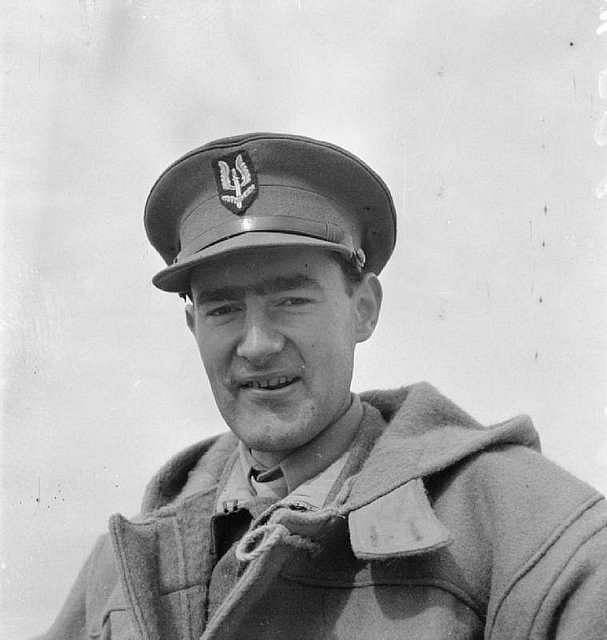
The officer eventually chosen to build and lead the new force was not a typical RAF career man. Donald Clifford Tyndall Bennett was born in Toowoomba, Queensland, Australia on 14 September 1910 — a brilliantly gifted aviator who had been pushing boundaries long before the war began.
In 1938, Bennett set a world long-distance seaplane record, flying from Dundee to South Africa — a journey of over 6,000 miles. He went on to become one of Britain's most experienced transatlantic navigators with Imperial Airways, accumulating a depth of practical flying and navigation knowledge that few could match.
His wartime record was equally impressive. In April 1942, his Halifax bomber was shot down over Norway during a raid on the German battleship Tirpitz. Rather than surrender, Bennett evaded capture, walked through occupied Norway and crossed into neutral Sweden — returning to Britain within weeks. Promoted to Air Commodore at just 31, making him the youngest officer of that rank in the RAF, he was the ideal man to forge an elite force from scratch.
Birth of the Pathfinders: Formation and Early Controversy, August 1942
The Path Finder Force was officially formed on 15 August 1942, designated No. 8 Group (Pathfinder Force) RAF and headquartered at RAF Wyton in Huntingdonshire. It drew its founding squadrons — No. 7, No. 35, No. 83, No. 156 and No. 109 — from across Bomber Command, cherry-picking volunteers with proven operational records.
Commander-in-Chief Arthur 'Bomber' Harris bitterly opposed the whole concept. He feared that concentrating the best crews in one unit would strip his squadron commanders of their most experienced men, undermining morale across the rest of Bomber Command. Harris preferred a decentralised system of 'raid leaders' embedded within each squadron. It took direct pressure from Air Chief Marshal Charles Portal and the Air Ministry to overrule him.
Bennett's standards were uncompromising from the start. Crews had to have completed at least one full operational tour and demonstrate exceptional navigational ability before they were accepted. The PFF was not a place for the merely competent — it demanded the best, and it expected them to fly the most dangerous sorties of the entire strategic bombing campaign.
Tools of the Trade: Flares, Markers and the Technology of Target-Marking
Pathfinder aircraft flew ten to thirty minutes ahead of the main bomber stream, using a combination of dead reckoning, radio navigation aids and eventually radar to locate targets in complete darkness. The technology improved rapidly under the pressure of operational necessity.
From late 1942, crews relied on 'Gee' — a radio pulse navigation system that allowed aircraft to fix their position over Europe. Later came 'Oboe,' a far more accurate system used by No. 109 Squadron's de Havilland Mosquitoes, which could guide aircraft to within a few hundred yards of a target. In January 1943, H2S — a ground-mapping radar developed by British scientists — was introduced, allowing crews to 'see' cities through cloud on a cathode-ray screen.
The physical markers themselves were equally ingenious. Target Indicators (TIs) were specially developed pyrotechnic flares that cascaded in vivid colours — red, green and yellow — to mark the aiming point for the main force below. Three core marking techniques were developed: 'Newhaven' for visual ground marking, 'Parramatta' for radar-guided ground marking, and 'Wanganui' for sky marking when cloud obscured the ground entirely. Each technique was named, codified and drilled into crews until it was instinctive.
Into the Fire: Key Raids and the Pathfinders in Action
The PFF flew its first operational missions on the night of 18/19 August 1942, marking targets at Flensburg, Osnabrück, Frankfurt and Düsseldorf. Early results were mixed — the techniques were new, the technology imperfect, and German defences were already learning to light decoy fires to draw bombers off target.
By the Battle of the Ruhr (March to July 1943), the difference PFF marking made was unmistakable. Raids on Essen and Dortmund achieved a scale of destruction that had been completely beyond Bomber Command's reach just eighteen months earlier. The Krupp armaments works at Essen — one of the most important industrial targets in Germany — was devastated.
Operation Gomorrah, the Hamburg firestorm raids of late July and early August 1943, demonstrated the PFF's terrible effectiveness at its most extreme. Pathfinder marking guided successive waves of bombers with enough precision to create a self-sustaining firestorm that killed an estimated 37,000 civilians and destroyed vast swathes of Germany's second city. The psychological shock in Germany was profound.
The costly Battle of Berlin (November 1943 to March 1944) tested the PFF severely. Cloud cover, the sheer distance to the German capital and ferocious Luftwaffe nightfighter defences meant marking was often imprecise, and Bomber Command suffered catastrophic losses. But by D-Day in June 1944, PFF techniques had been refined to such precision that Pathfinders could mark within hundreds of yards of a target — accurate enough to support devastating raids on French railway networks without obliterating the towns around them.
The Men Behind the Flares: Life as a Pathfinder Crew
Pathfinder airmen wore a special gold eagle badge below their flying brevet — a mark of distinction that set them apart across every RAF station and became a source of fierce pride. But the honour came at a brutal price.
PFF crews were required to complete a 45-operation tour rather than the standard 30 — a decision that dramatically increased their statistical chance of being killed. The mathematics of survival in Bomber Command were already grim: roughly 55,000 RAF aircrew lost their lives during the strategic bombing campaign, according to figures held by the Imperial War Museum. Pathfinder crews, leading every major raid into the heaviest defences, faced the worst odds of all.
Crews came from right across the Commonwealth. Australians, Canadians, New Zealanders and South Africans flew alongside British airmen, reflecting the deeply multinational character of Bomber Command. Notable figures included Wing Commander John 'Benny' Goodman, a highly regarded Mosquito pilot, and Guy Gibson — fresh from leading the Dambusters raid — who liaised closely with PFF operations and drew directly on Bennett's methods.
From Bomber Boys to Precision Pioneers: The PFF's Growing Sophistication
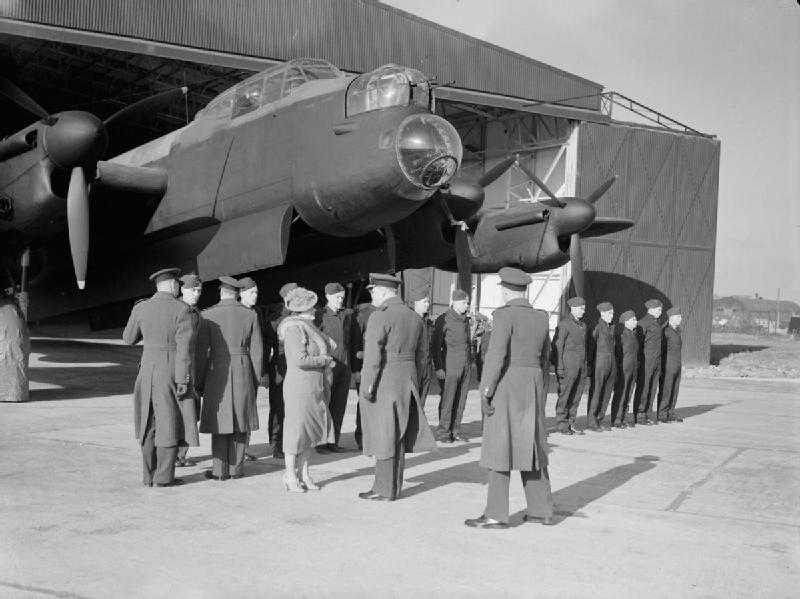
No. 109 Squadron's Mosquitoes, equipped with Oboe radar, became the PFF's most precise instrument. Operating from altitudes of around 28,000 feet — high enough to be largely beyond the reach of flak and nightfighters — they could drop Target Indicators with extraordinary accuracy, then turn for home before the main force even crossed the enemy coast.
One of the PFF's most significant tactical innovations was the 'Master Bomber' technique. A single experienced aircrew would orbit the target throughout the entire raid, observing the fall of markers and bombs, correcting errors and directing the main force by radio in real time. It was a concept that required nerve, skill and exceptional situational awareness under fire.
Guy Gibson used the Master Bomber concept during the Dambusters raid on 16/17 May 1943 — a direct adaptation of methods pioneered by Bennett's force. By 1944, the PFF had expanded to over twenty squadrons operating Lancasters, Halifaxes, Stirlings and Mosquitoes. American 8th Air Force commanders studied PFF techniques closely, and similar pathfinder methods were adopted by the USAAF for their own daylight bombing campaign over Europe.
End of the War, End of the Force: The PFF's Final Missions and Disbandment
The PFF flew its final wartime operations in April 1945, marking targets in Germany as Allied armies closed in from east and west. By then, the Luftwaffe was a shadow of its former self, and the precision of PFF marking had reached a level that would have seemed like science fiction to the exhausted crews reading the Butt Report four years earlier.
No. 8 Group (PFF) was officially disbanded on 15 December 1945. Donald Bennett, promoted to Air Vice-Marshal by the war's end, was one of the youngest officers ever to hold that rank in the RAF. But the peace brought no rewards. He clashed repeatedly with Harris throughout the war, and afterwards was passed over for permanent RAF appointments — a bitter conclusion for the man who had arguably done more than anyone to make strategic bombing work.
A post-war assessment credited the PFF with reducing the average bombing error from miles to hundreds of yards — a transformation achieved through three years of relentless operational refinement, at enormous human cost.
Why the Pathfinders Still Matter: Legacy and Lasting Significance
The Path Finder Force established the foundational principles of precision target-marking that would influence air power doctrine for generations. The concepts developed over the Ruhr and Hamburg — specialist lead aircraft, electronic navigation aids, real-time target correction — echo in every modern precision strike mission flown since.
Donald Bennett wrote a frank and controversial memoir, Pathfinder, published in 1958, defending the strategic bombing campaign and settling scores with wartime critics. The book remains an essential primary source for anyone studying Bomber Command. The H2S ground-mapping radar technology developed for the PFF also had direct peacetime applications, contributing to the development of civil aviation ground-mapping systems.
The Pathfinder Association preserved the memory of No. 8 Group's men for decades, with reunions held at RAF Wyton long after the war. The gold Pathfinder eagle badge remains one of the most iconic decorations of Second World War RAF service — treasured by families across the Commonwealth and keenly sought by collectors at military auctions. It is a small piece of metal that carries the weight of extraordinary courage.
If this story of the men who led the way into the darkest skies of World War Two moved you, share it with a fellow history lover — and tell us in the comments: did you have a family member who served in Bomber Command or the Pathfinder Force? We'd love to hear their story.
Further Reading
- Imperial War Museum — collections and research on RAF Bomber Command and No. 8 Group
- The National Archives, Kew — operational records of No. 8 Group (Pathfinder Force) RAF
- RAF Museum, Hendon — Bomber Command archives and aircraft of the Pathfinder Force
- Bomber Command Museum of Canada, Nanton — Commonwealth aircrew records and memorials
- Air Historical Branch, Ministry of Defence — official RAF historical records and campaign histories