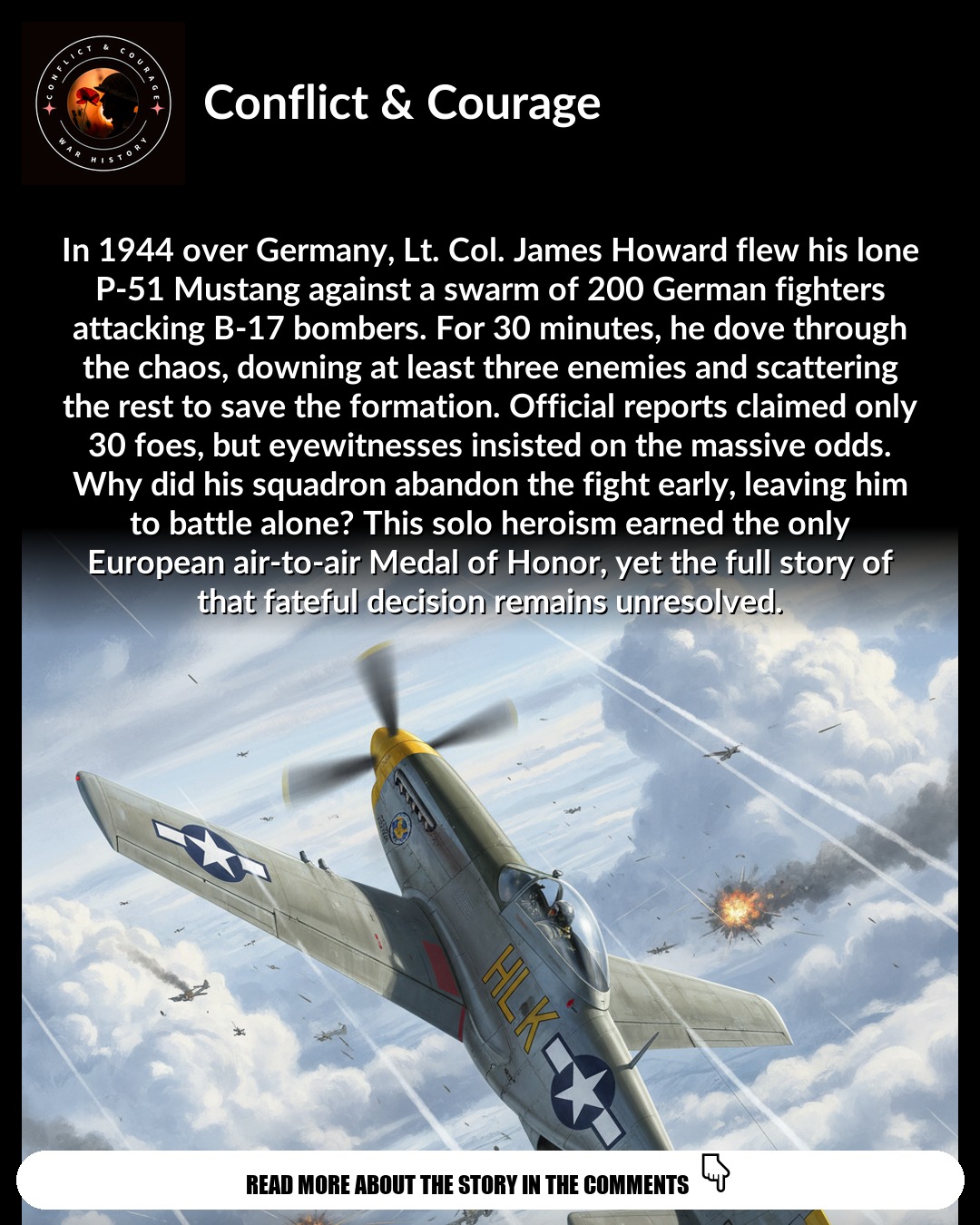
On 11 January 1944, Lieutenant Colonel James Howell Howard of the 354th Fighter Group flew his P-51 Mustang into a fight that would make him the only fighter pilot to receive the Medal of Honor in the European theater of the Second World War. Over Oschersleben, Germany, he single-handedly defended a formation of American B-17 bombers against attacking German fighters. The action is sometimes exaggerated into a lone stand against 200 enemy aircraft. The documented number is far more modest and no less impressive: he engaged more than thirty German fighters, not two hundred.
Escorting the Bombers
Howard led a group of P-51s tasked with providing fighter escort for a heavy bomber formation on a long-range mission deep into enemy territory. As his group met the bombers over the target area, the formation came under attack by numerous German fighters. Howard and his group engaged, and he destroyed a twin-engine Messerschmitt Bf 110 in the opening exchange. In the confusion of that fight he lost contact with the rest of his group and returned alone to the altitude of the bombers.
Alone Against the Fighters
What he found was a bomber formation under heavy attack with no other friendly fighters in sight. Howard could have broken off to try to gather his scattered group before re-engaging. Instead, according to his Medal of Honor citation, he chose to attack single-handed a formation of more than thirty German airplanes.
He pressed home his attacks for roughly thirty minutes. In that time he destroyed three enemy aircraft outright and probably destroyed or damaged others. Toward the end of the engagement, three of his four guns jammed and his fuel was running dangerously low. Even so, he kept attacking, continuing his aggressive passes in an effort to shield the bombers from the German fighters despite the odds against him.
Witnessed, Not Mysterious
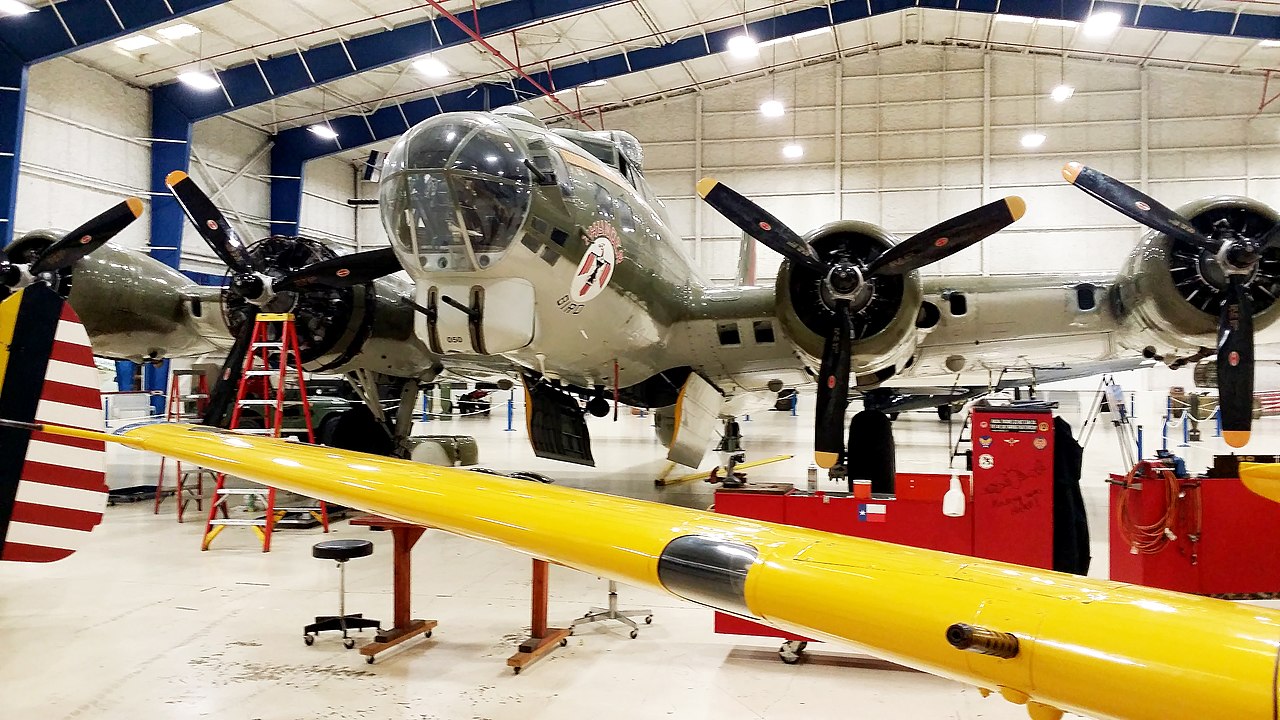
One further point deserves correction. Howard's fight is sometimes framed as a mystery, as if the details rested on his word alone. They did not. The action was seen from the bombers he was protecting. The crews of the B-17 formation watched a single Mustang wade repeatedly into the German fighters on their behalf, and their accounts corroborated what Howard reported. A contemporary press account identified him as "the lone United States fighter pilot who for more than 30 minutes fought off" the attackers. The engagement was public, witnessed, and documented at the time.
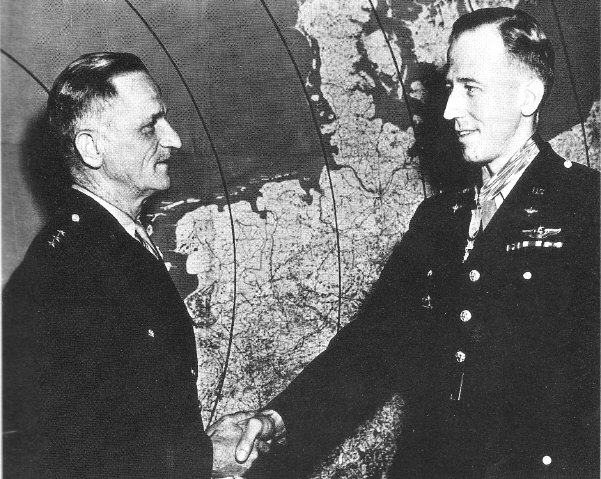
It is also worth noting the wider significance of the award. Howard was the only fighter pilot to receive the Medal of Honor in the European theater of the war, a distinction that reflects both the intensity of that single engagement and the fact that the medal was reserved for actions of the highest order. Howard had come to the Mustang with combat experience already behind him, having flown earlier in the Pacific with the American Volunteer Group, the "Flying Tigers," before returning to fly with the U.S. Army Air Forces in Europe.
Howard's Medal of Honor was issued under War Department General Orders No. 45, dated 5 June 1944. He went on to serve in the postwar Air Force and rose to the rank of brigadier general. Stripped of the inflated numbers and the invented mystery, the record is still remarkable: one pilot, low on fuel and down to a single working gun, choosing to stay and fight so that a formation of bombers could reach home.