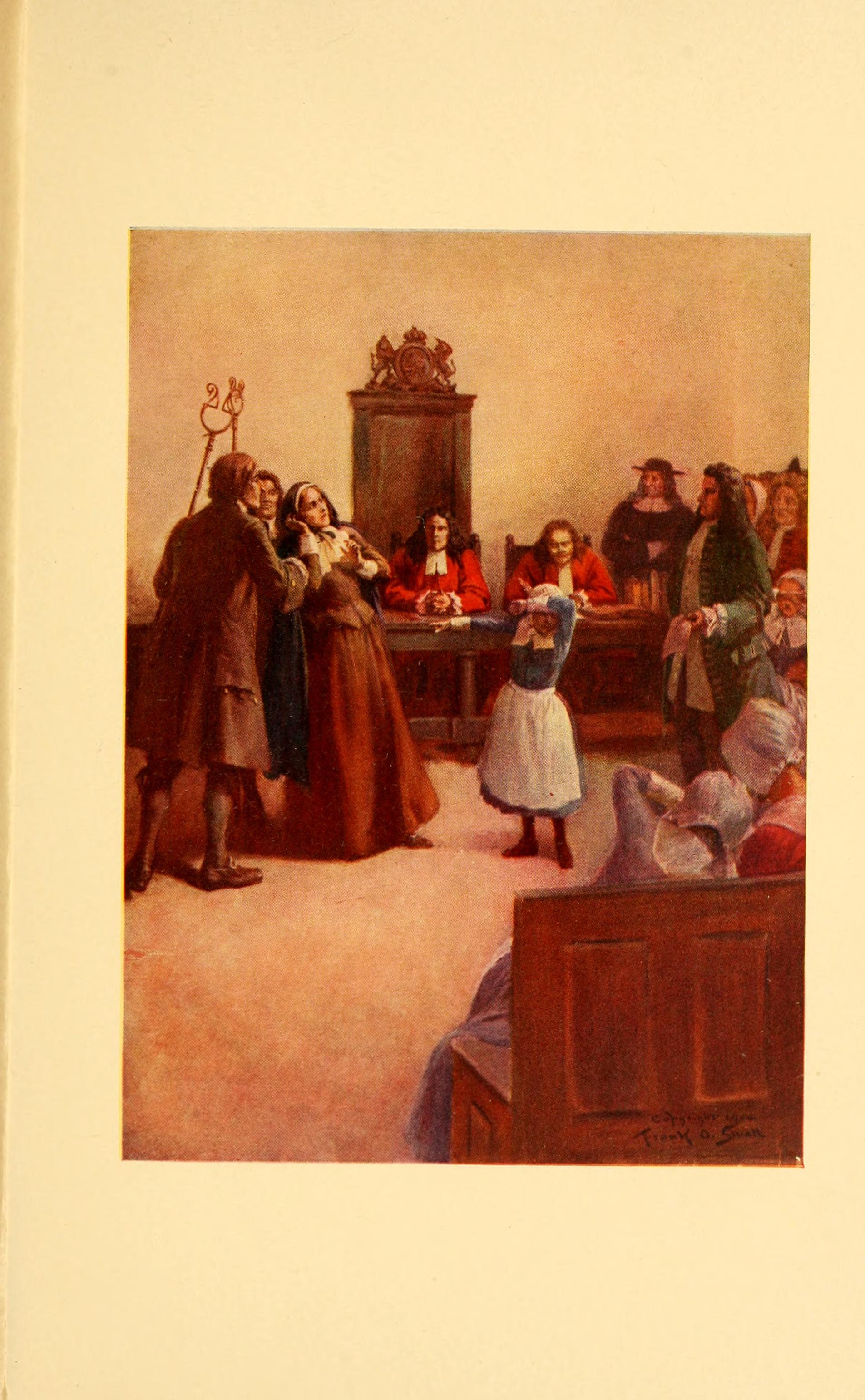
The Quiz Question
How did the Salem Witch Trials begin in 1692?
- A. Town-wide religious hysteria with no specific starting point
- B. Accusations made by two girls, Betty Parris and Abigail Williams
- C. A woman confessed to witchcraft
- D. Puritan ministers called for hunts
The answer is B. Accusations made by two girls, Betty Parris and Abigail Williams. Here is the full story.
In the bitter winter of 1692, something went terribly wrong in a small Massachusetts farming community — and the consequences would echo across centuries. What began with two girls in a minister's household spiralled into one of the most devastating episodes of mass hysteria in American history. Nineteen people were hanged, one man was crushed to death, and hundreds more had their lives shattered by accusations they could not disprove. Understanding how it all began means understanding the world that made it possible.
A Village on Edge: The World of Salem in 1692
Salem Village — today the town of Danvers, Massachusetts — was a tight-knit Puritan community of roughly 500 to 600 souls, quite separate from the wealthier, more cosmopolitan Salem Town nearby. The gap between the two communities was more than geographical. Farming families in the village resented the merchant prosperity of Salem Town, and that simmering resentment would prove explosive when crisis arrived.
The winter of 1691–1692 was punishing. Food shortages compounded the anxiety already stirred by King William's War (1689–1697), a brutal frontier conflict with Native American tribes aligned with the French. Many Massachusetts families had lost loved ones or fled attacks on settlements in Maine and New Hampshire, bringing raw trauma home with them.
Puritan theology placed the Devil squarely at the centre of everyday life. Illness, misfortune, strange behaviour — all were understood as potential signs of demonic interference. This was not superstition at the margins of belief; it was mainstream Puritan doctrine, preached from the pulpit every Sunday. Into this charged atmosphere came Reverend Samuel Parris, who had arrived as Salem Village's minister in 1689. A divisive, uncompromising man, his sermons deepened existing fractures rather than healing them.
The Two Girls at the Centre of It All
Betty Parris was nine years old — the minister's own daughter, living in the parsonage at the heart of village life. Her cousin Abigail Williams, aged eleven, lived with the family as well. In January 1692, both girls began exhibiting symptoms that terrified everyone around them: convulsive fits, screaming, contorted postures, and frantic claims of being pinched or bitten by invisible forces.
The Parris household employed Tituba, an enslaved woman from Barbados, who had reportedly entertained the girls with folk stories and fortune-telling games during the long, dark winter months. Whether her storytelling planted seeds of imagination in the girls' minds, or whether it simply made her a convenient suspect later, remains a matter of historical debate.
A third girl, Ann Putnam Jr., aged twelve, soon displayed identical symptoms. Her involvement would prove critical. The Putnam family were among the most powerful and politically active in Salem Village, and they became driving forces behind the wave of accusations that followed. Local physician Dr. William Griggs examined the girls in February 1692 and, finding no physical explanation for their symptoms, concluded they were suffering from what he called "the Evil Hand" — a diagnosis of witchcraft that carried enormous weight in a Puritan community.
The First Accusations: Three Women in the Dock
Under pressure from Reverend Parris and alarmed neighbours to name their tormentors, the girls accused three women in late February 1692: Tituba, Sarah Good, and Sarah Osborne. The choice of targets was revealing. Sarah Good was a homeless beggar, widely regarded with suspicion and ill-will. Sarah Osborne was elderly and had stopped attending church — social outcasts both, and therefore easy marks.
Tituba's confession on 1 March 1692 changed everything. Rather than deny the charges, she delivered a vivid, dramatic account of the Devil, red cats, and a mysterious book filled with signatures — electrifying the community and giving the court a ready-made framework for the accusations that would follow. Historians widely believe her confession was coerced; Reverend Parris is believed to have beaten her before she spoke. But the detail she provided gave the proceedings a terrifying legitimacy.
Sarah Osborne never stood trial — she died in Boston jail on 10 May 1692. Sarah Good was hanged on 19 July 1692. Standing at the gallows, she reportedly told the minister urging her to confess: "I am no more a witch than you are a wizard, and if you take away my life, God will give you blood to drink." It was a defiance that cost her nothing more, but has echoed down through history.
How a Local Crisis Became a Colony-Wide Panic
By March and April 1692, the circle of accusers had widened dramatically. Adults in the community began making their own accusations, many rooted in long-standing personal grudges or land disputes. What had begun as a household crisis was becoming a social wildfire.
Governor William Phips convened a special court — the Court of Oyer and Terminer, meaning "to hear and determine" — on 27 May 1692 to handle the rapidly growing caseload. Chief Justice William Stoughton, a hardline Puritan, made a fateful decision: he allowed "spectral evidence" as valid proof of guilt. Under this standard, testimony that a defendant's spirit or spectre had appeared in a dream or vision was enough to condemn them. It was a legal standard that made innocence almost impossible to prove.
By June 1692, over 150 people had been formally accused. The accused ranged from elderly grandmothers to Dorcas Good — Sarah Good's four-year-old daughter, who was imprisoned in chains. Accusations spread beyond Salem Village to neighbouring towns including Andover, Gloucester, and Topsfield, revealing that the panic had tapped into anxieties that ran across the entire colony.
The Trials and Executions: A Community Tears Itself Apart
The first execution took place on 10 June 1692. Bridget Bishop — a tavern keeper known for her colourful dress and independent spirit — was hanged on Gallows Hill in Salem. Between June and September 1692, eighteen more people followed her to the same hill. A twentieth victim, Giles Corey, was pressed to death under heavy stones on 19 September for refusing to enter a plea, likely to prevent his estate from being seized.
The case of Rebecca Nurse haunts the record most painfully. A pious seventy-one-year-old grandmother, beloved in her community, she was initially acquitted by the jury. Judge Stoughton sent the jurors back to reconsider, and they reversed their verdict. Nurse was hanged on 19 July 1692, maintaining her innocence to the last. Five others died in prison, including the infant of Sarah Good, bringing the total death toll to at least twenty-five people.
The system created a grotesque paradox: those who confessed to witchcraft were spared execution, while those who maintained their innocence were hanged. Over fifty accused individuals confessed falsely to save their lives — a fact that would haunt many of them for the rest of their days.
The Voices That Pushed Back: Doubt and Resistance
Not everyone was swept up in the hysteria. Puritan minister Increase Mather published Cases of Conscience Concerning Evil Spirits in October 1692, arguing forcefully that spectral evidence was unreliable and that it was better for ten guilty witches to escape than for one innocent person to die. It was a principled stand that carried real weight from a man of his theological standing.
Boston merchant and scientist Thomas Brattle wrote a widely circulated letter the same month, ridiculing the court's methods and lamenting the suffering being inflicted on innocent people. His was a rational, empirical voice raised against mob sentiment — and it mattered. Governor Phips's own wife was accused in the autumn of 1692, which sharpened his resolve considerably. He dissolved the Court of Oyer and Terminer on 29 October 1692.
In 1697, Judge Samuel Sewall made a public apology for his role in the trials — standing in silence in Old South Church, Boston, as his statement of guilt was read aloud to the congregation. It was a remarkable act of contrition for the era, and one of the most honest moments of public accountability in early American history. Ann Putnam Jr., one of the original accusers, publicly apologised in 1706, stating she had been "a deluded instrument of Satan."
The Aftermath: Justice Delayed, Reputations Restored
A new court, the Superior Court of Judicature, convened in January 1693 under rules that excluded spectral evidence. Nearly all remaining defendants were acquitted or released. Governor Phips issued a general pardon in May 1693, though many prisoners had to pay their own jail fees before walking free — a final, bitter indignity.
In 1711, the Massachusetts legislature passed a bill restoring the rights and reputations of many convicted individuals and awarded £600 in restitution to their heirs — meaningful, but far from adequate for the lives destroyed. Some victims waited nearly three centuries for official acknowledgement: Massachusetts formally apologised and cleared several names in 1957, and in 2001 the final five victims were added to the exoneration list.
Salem Village renamed itself Danvers in 1752, perhaps seeking to distance the community from its darkest chapter. Salem Town, which had hosted the trials, kept its name — and in the centuries since has embraced its history as a central part of its identity.
Why Did It Happen? Historians Weigh In
Historians have offered compelling and varied explanations. Paul Boyer and Stephen Nissenbaum, in their landmark 1974 study Salem Possessed, mapped the accusations geographically and found that accusers were predominantly from the poorer farming west of the village, while the accused were more often from the prosperous east — strong evidence that class resentment and economic anxiety were major drivers.
Mary Beth Norton, in In the Devil's Snare (2002), argued that the trauma of King William's War was central — many Salem residents had fled massacres on the Maine frontier and carried profound psychological distress that the crisis gave terrible expression to. In 1976, researcher Linnda Caporael proposed that ergot fungus on the rye crop — which produces LSD-like symptoms — may have caused the girls' initial fits. The theory remains contested among historians and scientists alike.
The most compelling modern consensus is that no single cause explains Salem. It was a perfect storm: Puritan theology that made the Devil's intervention plausible, political instability after Massachusetts lost its royal charter in 1684, deep community feuds, frontier trauma, and the terrifying unpredictability of colonial life — all colliding at once, in a small community with nowhere to escape.
The Legacy: Salem's Shadow Across the Centuries
Arthur Miller's 1953 play The Crucible used the Salem trials as a direct allegory for McCarthyism and the Red Scare, ensuring the episode retained its power as political and cultural commentary far beyond its historical moment. It remains one of the most performed plays in American theatre.
In legal history, Salem stands as a defining warning about the dangers of mob justice, coerced confession, and the admission of unreliable evidence. The principles violated so catastrophically in 1692 — the right to confront one's accusers, the exclusion of hearsay — are now embedded in the Sixth Amendment to the US Constitution. Salem taught hard lessons that shaped American law.
Today, Salem, Massachusetts draws over one million visitors annually. The Salem Witch Trials Memorial, dedicated in 1992 on the three-hundredth anniversary, lists the names of all twenty victims. Betty Parris — the nine-year-old girl whose fits set it all in motion — married young, had children, and died in 1760 at the age of seventy-seven. She left no written account of what she had experienced or believed, leaving historians to wonder, across the centuries, how much she understood of what she had begun.
The story of Salem is ultimately a story about what happens when fear goes unchecked, when community turns on itself, and when the systems designed to protect the innocent become instruments of persecution. It deserves to be remembered — carefully, honestly, and in full.
Further Reading
- Peabody Essex Museum, Salem, Massachusetts — home to significant primary source collections relating to the 1692 trials
- Massachusetts Archives, Boston — holds original court records, petitions, and legislative documents from the Salem crisis
- The Library of Congress, Washington D.C. — American Memory collections include digitised colonial-era documents and historical context
- Smithsonian Institution — has published extensive research and exhibition material on colonial American history and the Salem trials
- American Antiquarian Society, Worcester, Massachusetts — one of the leading research libraries for early American history, including Puritan New England