A Problem No One Could Solve
By early 1943, Britain's bomber crews had been hammering German industry for months, but the massive dams of the Ruhr Valley remained untouched. These concrete giants supplied water and hydroelectric power to the heart of Germany's war machine. Every military planner knew that destroying them could cripple steel production and flood the industrial heartland.
The problem was simple to state and nearly impossible to solve. Conventional bombs dropped from high altitude would miss. Torpedoes would be stopped by underwater nets. The dams were simply too strong and too well protected for any existing weapon.
Barnes Wallis Had an Idea
Barnes Wallis was not a young man when inspiration struck. Already in his mid-fifties, the aircraft engineer had designed the Wellington bomber and the R100 airship. But his most audacious concept was still ahead of him.
Wallis proposed skipping a cylindrical bomb across the water's surface, like a child skimming stones on a pond. The bomb would bounce over the torpedo nets, strike the dam wall, sink to its base, and detonate at the point of maximum vulnerability. It sounded absurd. The Air Ministry initially rejected the idea outright.
But Wallis was relentless. He tested scale models in his garden, filmed them, and presented the evidence until the doubters ran out of objections. By March 1943, the weapon was approved for operational use.
617 Squadron: The Chosen Few
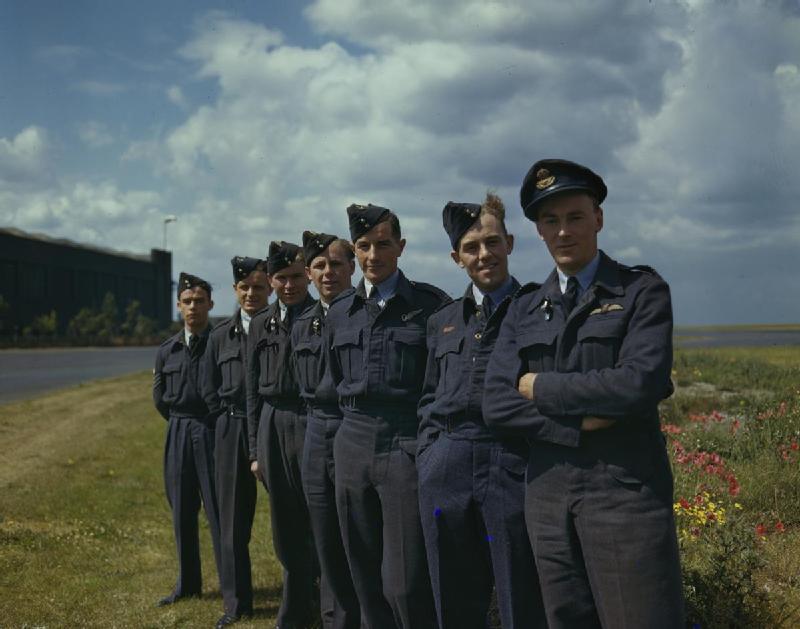
Wing Commander Guy Gibson, just twenty-four years old, was handpicked to lead the mission. He assembled 617 Squadron from the best crews in Bomber Command, 133 men in total, flying nineteen modified Lancaster bombers.
Training was brutal. The crews practised flying at exactly sixty feet above water in total darkness, using two spotlights angled to converge at the correct altitude. They had just weeks to master a technique that had never been attempted in combat.
Operation Chastise
On the night of 16 May 1943, the Lancasters took off from RAF Scampton in three waves. They flew low across the English Channel, skimming treetops and dodging flak towers as they crossed occupied Europe.
The Mohne Dam was the primary target. Gibson made the first run himself, drawing enemy fire while his crews attacked behind him. It took five bombs before the Mohne finally cracked. A wall of water surged through the breach, flooding the valley below.
The force then moved to the Eder Dam, nestled in a steep valley that demanded an almost impossible diving approach. Two bombs breached it as well. The Sorpe Dam, built differently from the others, survived with only minor damage.
The Cost of Courage
Of the nineteen aircraft that set out, eight never came home. Fifty-three airmen were killed and three were captured. The youngest was just twenty years old.
On the ground, the flooding killed an estimated 1,600 people, including hundreds of forced labourers held in camps downstream. It was a devastating reminder that even the most precise operations of war carry a terrible human cost.
A Lasting Legacy
The Dams Raid did not end the war. Germany repaired the Mohne Dam within months. But the operation forced the diversion of thousands of workers and anti-aircraft guns to defend infrastructure across the Reich. It proved that ingenuity, courage, and precision could strike targets once thought invulnerable.
Guy Gibson received the Victoria Cross. Barnes Wallis went on to design the Tallboy and Grand Slam earthquake bombs. And 617 Squadron earned a reputation as the RAF's most elite unit, a status they carried for the rest of the war.
The Dam Busters remain one of the most remarkable stories of the Second World War.