The Quiz Question
Which South Carolina battle in August 1780 was one of the worst American defeats of the Revolutionary War, where British forces under Cornwallis routed General Horatio Gates's army?
- A. Battle of Camden
- B. Battle of Cowpens
- C. Battle of King's Mountain
- D. Battle of Guilford Courthouse
The answer is A. Battle of Camden. Here is the full story.
Before dawn on 16 August 1780, two exhausted armies stumbled into each other on a dark, pine-forested road near Camden, South Carolina — neither side expecting the collision. The battle that followed lasted less than an hour. Its consequences lasted years. Camden stands alongside the fall of Charleston and the disasters at Long Island as one of the most painful moments of the entire Revolutionary War, and it came terrifyingly close to handing Britain permanent control of the American South.
A Catastrophe in the Carolina Heat: The Day America Nearly Lost the South
The summer of 1780 was arguably the lowest point of the American Revolution. Charleston had fallen in May, swallowing more than 5,400 Continental troops in the largest American military surrender of the entire war. British forces under Lord Cornwallis now dominated the deep South with a confidence bordering on certainty.
Into this desperate situation, Congress sent a new army — and a celebrated commander — to reclaim the Carolinas. What followed at Camden was not a close-run defeat. It was a rout, a humiliation, and a masterclass in how catastrophically wrong military command can go. Understanding Camden means understanding just how narrow America's path to independence truly was.
Britain's Southern Strategy: Why Camden Mattered So Much
By 1778, the British high command had fundamentally reoriented the war. After years of frustration in the North, they believed the Southern colonies held large Loyalist populations ready to rise and support the Crown — particularly in the Carolinas and Georgia. If Britain could pacify the South, it could strangle the rebellion.
The fall of Savannah in December 1778 and the catastrophic American surrender at Charleston in May 1780 gave that strategy real momentum. Sir Henry Clinton returned to New York, leaving Lord Cornwallis to consolidate and expand British control through the interior of the Carolinas.
Camden, South Carolina, was not a glamorous target, but it was a vital one — a key inland supply hub and the anchor of Britain's presence in the Carolina backcountry. Holding Camden and destroying the American relief army gathering to retake it would leave the entire region exposed. Losing it would unravel everything Britain had built since Savannah.
The Hero of Saratoga: General Horatio Gates Takes Command
In June 1780, a frustrated Congress bypassed George Washington's recommendation and appointed General Horatio Gates to command the newly forming Southern Army. Gates was, on paper, an inspired choice. He had commanded American forces at the Battle of Saratoga in October 1777, the victory that convinced France to enter the war on America's side — arguably the single most important strategic turning point of the Revolution.
His reputation was formidable. But critics, including a sharp-tongued young Alexander Hamilton, had long questioned whether Gates had truly masterminded Saratoga or had simply gathered credit while Benedict Arnold and Daniel Morgan did the fighting. Washington quietly preferred Nathanael Greene. Congress disagreed.
Gates arrived in North Carolina in late July 1780 and immediately made his first serious error: he pushed his half-starved, exhausted army south toward Camden at a punishing pace, brushing aside warnings about the men's condition. His force numbered roughly 3,700 on paper, but only around 2,000 were seasoned Continental regulars — Maryland and Delaware veterans who were among the finest soldiers in the American army. The rest were poorly trained Virginia and North Carolina militia, men who had never faced a British bayonet charge.
Cornwallis Marches to Meet Him: The British Force at Camden
Lord Charles Cornwallis commanded approximately 2,200 troops — smaller than Gates's force, but vastly superior in discipline, training, and battlefield experience. His infantry included veterans of the 23rd Regiment of Foot (the Royal Welch Fusiliers), the 33rd Regiment of Foot, and the 71st Regiment of Foot, Fraser's Highlanders — battle-hardened professionals who had fought across the Atlantic world.
His most feared subordinate was Lieutenant Colonel Banastre Tarleton, whose mixed cavalry and infantry unit — Tarleton's Legion — had already built a ferocious reputation across the Carolinas. Aggressive, fast-moving, and ruthless, Tarleton was exactly the kind of commander who could turn a battlefield victory into a total destruction of the enemy.
When Cornwallis learned that Gates was advancing, he made a bold decision: rather than wait behind Camden's defences, he would march north and strike first. On the night of 15–16 August, both armies set out toward each other on the same road, neither knowing the other was coming. Both commanders had ordered night marches with minimal rest. The difference was that British regulars, through years of hard training, were better equipped to fight through exhaustion.
The Battle Unfolds: Dawn, Disaster, and Rout
At approximately 2:30 a.m. on 16 August 1780, advance cavalry from both armies collided on the road north of Camden. A brief, sharp skirmish broke out before both sides pulled back and waited tensely for the light. In those dark, humid hours, Gates arranged his battle line — and made the decision that would doom his army.
He placed his experienced Maryland and Delaware Continentals, commanded by the Bavarian-born Baron de Kalb, on the right flank. On the left — directly opposite the British regulars poised to attack — he positioned his Virginia and North Carolina militia, the rawest, least experienced soldiers in his entire force.
When dawn broke and the battle opened, Cornwallis ordered his left wing to advance against the American militia with bayonets fixed. The result was almost instantaneous: the militia broke and fled, thousands of men streaming from the field having fired only a handful of shots. Contemporary accounts describe the road north choked with panicking soldiers throwing away their muskets and equipment.
The collapse of the militia left Baron de Kalb's Continentals dangerously exposed on the right. They fought magnificently — launching counter-attacks, holding their ground, refusing to break even as British forces began enveloping them from three sides. But courage without support is simply a slower form of destruction.
American casualties were staggering: approximately 900 killed and wounded, with over 1,000 more captured. British losses totalled around 68 killed and 245 wounded — a disproportion that underscores just how complete the rout was. Tarleton's cavalry then pursued the fleeing Americans for 22 miles, cutting down hundreds more. Gates's Southern Army had, in the space of one terrible morning, ceased to exist as a fighting force.
The Flight of General Gates: A Commander's Shame
As his army disintegrated around him, Horatio Gates mounted his horse and rode from the battlefield. He did not stop in the next town. He did not stop at the next ridge. He rode approximately 200 miles in three days, reaching Charlotte, North Carolina, before the echoes of the last musket shots had faded from the Carolina pines.
Alexander Hamilton's response was devastating: "Was there ever such an instance of a general running away from his army?" It was a question that followed Gates for the rest of his life. Defenders then and since have argued that commanders routinely left stricken fields to rally survivors elsewhere — but the sheer distance Gates covered made that argument almost impossible to sustain with a straight face.
Congress relieved Gates of command. He was replaced in October 1780 by Nathanael Greene — the general Washington had wanted from the beginning. Gates was never court-martialled, but he never held meaningful independent command again. The hero of Saratoga was now, and would remain, the man who ran from Camden.
Johann de Kalb: The General Who Stayed and Died
If Gates represents Camden's failure of leadership, Johann de Kalb represents its extraordinary human courage. A Bavarian-born officer who had risen through the French army before crossing to America in 1777, de Kalb was 56 years old on the morning of 16 August 1780 — and he fought like a man half his age.
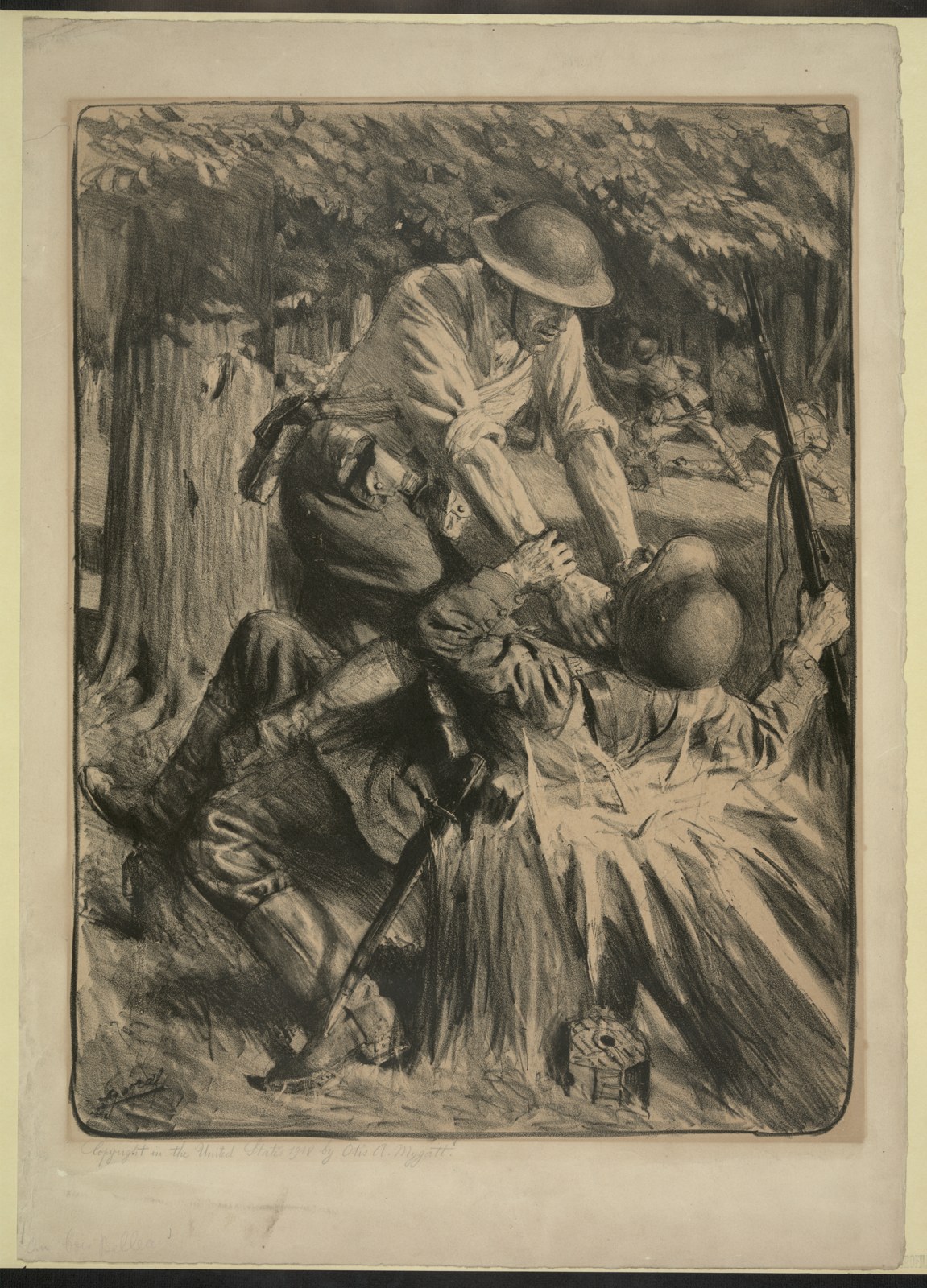
After the militia collapsed, de Kalb led his Maryland and Delaware Continentals in three desperate counter-attacks, refusing to order a retreat even as British and Loyalist troops closed in from multiple directions. He was wounded eleven times — struck by musket balls and bayonet thrusts — before finally being brought down. British officers, recognising extraordinary bravery when they saw it, carried him from the field with care.
De Kalb died of his wounds three days later, on 19 August 1780, in Camden. Cornwallis himself reportedly paid tribute to his courage. De Kalb was later honoured with monuments in both Maryland and South Carolina, remembered as the officer who embodied everything his commanding general was not during those desperate dawn hours.
Aftermath: Britain at Its Peak — and the Seeds of Its Downfall
In the immediate aftermath of Camden, the American position in the South looked almost hopeless. There was no organised Continental force remaining in the Carolinas south of Virginia. Cornwallis moved north with the confidence of a commander who believed the war in the South was effectively over.
He was wrong. Patriot partisan commanders — Francis Marion, known as the Swamp Fox, Thomas Sumter, and Andrew Pickens — kept resistance alive through relentless guerrilla warfare, striking British supply lines and Loyalist militias across the Carolina backcountry. They could not win set-piece battles, but they could make occupation a grinding, exhausting, bleeding experience.
Just two months after Camden, on 7 October 1780, American militia forces destroyed a British Loyalist force at the Battle of Kings Mountain, killing or capturing the entire command of Major Patrick Ferguson. It was a seismic shock that blunted Cornwallis's northward momentum and proved that the South was far from pacified.
Nathanael Greene arrived in December 1780 and set about rebuilding the Southern Army with methodical patience and tactical genius, absorbing the guerrilla lessons the partisans had been teaching since Camden. The road from Camden's devastation led, through Kings Mountain and Cowpens and Guilford Court House, to Yorktown in October 1781 — and British surrender.
Camden's Legacy: What One Hour of Defeat Taught America
The Battle of Camden remains one of the most instructive disasters in American military history. Gates ignored his men's exhaustion, placed his weakest troops directly opposite the enemy's strongest assault, and then abandoned the field. Almost every decision he made accelerated the catastrophe.
Camden also accelerated a hard but necessary evolution in American military thinking. It proved, beyond any serious argument, that untrained militia could not stand against British regulars armed with bayonets in open field combat. Professional Continental soldiers — properly supplied, properly trained, properly led — were not a luxury. They were irreplaceable.
For students of British military history, Camden is a reminder that the Redcoats were often superbly trained, courageously led, and tactically brilliant. Cornwallis at Camden was aggressive, decisive, and willing to take bold risks — the same qualities that would, in the end, lead him to overextend fatally into Virginia. His eventual surrender at Yorktown was not inevitable; it grew, in part, from the overconfidence that Camden helped create.
The Historic Camden Revolutionary War Site today preserves the battlefield and surrounding earthworks — one of the most significant, and most undervisited, Revolutionary War sites in the United States. Walking that ground, among the longleaf pines in the Carolina heat, it is not difficult to imagine the chaos of that dawn: the crashing volley fire, the fleeing militia, and one old Bavarian general refusing to leave his men, fighting until he could fight no more.
If the story of Camden moves you — or if you have your own connection to the Southern Campaign — we'd love to hear from you in the comments below. Share this article with anyone who thinks the American Revolution was a foregone conclusion. It was anything but.
Further Reading
- The Smithsonian Institution — American history collections and Revolutionary War resources
- The National Archives (United States) — Revolutionary War records, pension files, and military correspondence
- The Library of Congress — primary source documents, maps, and manuscript collections relating to the Southern Campaign
- Historic Camden Revolutionary War Site, Camden, South Carolina — official preservation site and archaeological record of the battlefield
- The American Battlefield Trust — battlefield preservation organisation with research resources on Camden and the broader Revolutionary War