The Quiz Question
At which October 1864 Shenandoah Valley battle did Union general Philip Sheridan turn a near-disastrous surprise Confederate attack into a decisive victory after a famous ride from Winchester to rally his troops?
- A. Battle of Cedar Creek
- B. Battle of Winchester
- C. Battle of New Market
- D. Battle of Fisher's Hill
The answer is A. Battle of Cedar Creek. Here is the full story.
Dawn broke cold and misty over the Shenandoah Valley on 19 October 1864. Thousands of Union soldiers were still sleeping in their tents at Cedar Creek when the Confederate storm hit. Within hours, the Army of the Shenandoah was streaming northward in full retreat — and its commander was twelve miles away, eating breakfast in Winchester. What happened next became one of the most celebrated acts of personal battlefield leadership in American history.
The Ride That Changed Everything: A Hook for the Ages
General Philip Sheridan had spent the night of 18–19 October in Winchester, Virginia, returning from a commanders' conference in Washington. He woke to the distant rumble of artillery rolling down the Valley — familiar enough, but with an urgency that troubled him. Something was badly wrong.
He rode south on his black horse Rienzi, first at a cautious trot, then at full gallop as the truth became horrifyingly clear. Streams of retreating Union soldiers clogged the Valley Pike, some without rifles, some without boots. Sheridan rode against the tide, shouting, waving his hat, urging men to turn around and fight. The sight of their general — furious, determined, unmistakably alive — began to change things.
By nightfall, the army that had been routed had smashed the Confederates in a stunning reversal, effectively ending the Shenandoah Valley Campaign. Poet Thomas Buchanan Read immortalised the moment in verse, and Sheridan's Ride became a rallying cry across the Union in the final months of the war.
The Shenandoah Valley: Why It Mattered So Much
The Shenandoah Valley was the Confederacy's breadbasket. Its farms supplied grain, cattle, and vital provisions to Robert E. Lee's Army of Northern Virginia, and its natural corridor running northeast toward Washington had been used repeatedly as an invasion route. As recently as July 1864, Confederate General Jubal Early had raided to the outskirts of the capital itself, causing near-panic in the Lincoln administration.
President Abraham Lincoln faced a bruising re-election campaign in November 1864, and public confidence in the Union war effort was dangerously low. He desperately needed military victories. General Ulysses S. Grant responded by appointing Philip Sheridan — just 33 years old — to command the newly formed Army of the Shenandoah in August 1864, with blunt orders to strip the Valley bare and deny it to the Confederacy.
Sheridan had already delivered. His victories at Third Winchester on 19 September and Fisher's Hill on 22 September had driven Early's Confederates southward and demonstrated that Union forces could beat them in open battle. By mid-October, Sheridan's army was encamped at Cedar Creek, near Middletown, Virginia — apparently secure. The soldiers were growing comfortable. That comfort would nearly cost them everything.
Jubal Early's Daring Gamble: The Confederate Plan
Confederate General Jubal Early commanded approximately 21,000 men — battered after his recent defeats but still dangerous and deeply defiant. Early knew he could not beat Sheridan in a straight fight. What he needed was surprise, and his subordinate General John B. Gordon gave him a plan worthy of the boldest Confederate tradition.
Gordon personally climbed to the summit of Massanutten Mountain and studied the Union positions through field glasses. He saw that the Union left flank — held by General George Crook's VIII Corps — was vulnerable. A night march along a narrow trail hugging the mountain's base, guided by local men who knew the ground intimately, could place three Confederate divisions on the Union flank before dawn.
The plan called for approximately 8,600 men under Gordon to execute the flanking march, with coordinated attacks by the rest of Early's army striking simultaneously at first light on 19 October. It was audacious, logistically demanding, and dependent entirely on secrecy. Early gambled everything on a single morning's shock.
Chaos Before Sunrise: The Confederate Dawn Attack
At approximately 5:00 a.m. on 19 October 1864, Gordon's three divisions burst out of the morning fog and crashed into Crook's VIII Corps. The Union soldiers — many still asleep — had no time to form a coherent defence. The Confederate assault rolled up the Union line from left to right with terrifying speed, like a breaking wave consuming everything in its path.
General Horatio Wright's VI Corps, positioned further right, offered stiffer resistance. The VI Corps was arguably the finest infantry formation in the Army of the Shenandoah, and its men fought hard. But the momentum of the Confederate attack and the collapse of the Union left eventually forced Wright to fall back as well.
By mid-morning, the scale of the Confederate triumph was extraordinary. Early's forces had captured over 1,300 Union prisoners and 18 artillery pieces, along with enormous quantities of food and equipment. Thousands of Federal soldiers were streaming northward in disorganised retreat along the Valley Pike. From a purely tactical standpoint, it was one of the most complete Confederate successes of the entire war's final year.
Sheridan's Ride: Twelve Miles That Saved an Army
Sheridan reached the fleeing soldiers of his army at roughly 10:30 a.m., after a frantic twelve-mile gallop down the Valley Pike. Witnesses described him riding furiously, his barrel-chested frame hunched low over Rienzi, shouting to retreating men and imploring them to turn around. His physical presence — commanding, enraged, absolutely unbroken — had an almost electric effect.
Men who had been walking away from the battle began walking back toward it. Then jogging. Then forming back into rough units. One soldier later recalled that the sight of Sheridan riding against the flow of retreat felt less like receiving an order and more like receiving a transfusion of courage directly from another human being.
Sheridan reached the front and immediately set about rebuilding his defensive line. The VI Corps, which had maintained its cohesion better than the other units, became the anchor. Artillery was repositioned. Cavalry under Generals Wesley Merritt and George Armstrong Custer was pulled to the flanks. By early afternoon, what had been a broken mob was beginning to resemble an army again.
The Afternoon Counterattack: Turning the Tables
Early's Confederates made a catastrophic mistake in the hours after their stunning morning success. Hungry, exhausted men — many of whom had not eaten properly in days — broke ranks to loot the captured Union camps. The sight of Federal cooking fires, food stores, and equipment proved impossible to resist for soldiers who had been living on short rations for weeks.
Early himself hesitated to press the attack. He chose to consolidate his gains rather than pursue the retreating Federals, a decision that military historians have analysed at length. His army was tired, his lines were extended, and he may have believed the Union forces were too broken to rally. He was catastrophically wrong.
At approximately 4:00 p.m., Sheridan unleashed his counterattack along the full Confederate line. General Custer's cavalry division swept around the Confederate left flank in a devastating charge, collapsing the Southern position. What had been a measured Confederate defence became a rout within minutes. Early's army disintegrated — by nightfall the Confederates had suffered over 2,900 casualties in killed, wounded, and captured. They lost not only the artillery they had seized that morning but additional guns of their own. It was a complete reversal in less than twelve hours.
The Men Behind the Battle: Sheridan, Early, Gordon, and Custer
Philip Sheridan was born in 1831 and had built his reputation through relentless aggression and an exceptional ability to inspire troops at moments of crisis. Grant trusted him more than almost any other field commander, ranking him alongside William T. Sherman in reliability and offensive spirit.
Jubal Early — nicknamed "Old Jube" — was a cantankerous, tobacco-chewing Virginian whose profanity was legendary even in an army of colourful characters. He had sustained Confederate resistance in the Valley through sheer tenacity long after most thought it impossible. Cedar Creek was the battle that finally broke him.
John B. Gordon deserves enormous credit for the Confederate side of this story. His flanking plan was a genuine tactical masterpiece, executed under extraordinary difficulty. Gordon went on to serve as a United States Senator after the war and wrote a celebrated memoir, Reminiscences of the Civil War, in which he described the Cedar Creek campaign in vivid detail.
George Armstrong Custer was just 24 years old in October 1864 and already a Major General of Volunteers. His afternoon cavalry charge was the decisive blow that shattered Early's army. Custer's reckless energy was perfectly suited to the moment — he would later find a very different kind of fame at the Little Bighorn in 1876.
Aftermath: The Valley Laid Waste and the War's End Hastened
Cedar Creek effectively ended organised Confederate resistance in the Shenandoah Valley. Early's shattered force never again mounted a serious offensive threat. Sheridan spent the following weeks intensifying his "Burning" campaign — the systematic destruction of farms, barns, mills, and livestock throughout the Valley to deny the Confederacy its agricultural lifeline.
The political timing of the victory could not have been more perfect. Coming just weeks before the November 1864 presidential election, Cedar Creek — alongside Sherman's capture of Atlanta — dramatically shifted public opinion in favour of Lincoln's re-election and continuation of the war. The North, which had been growing weary, suddenly saw a path to victory.
Sheridan's horse Rienzi was renamed "Winchester" after the campaign and became famous in his own right. After the horse's death, he was preserved by taxidermy and is today on display at the Smithsonian Institution's National Museum of American History in Washington, D.C. — a tangible link to one of the war's most dramatic days.
Jubal Early was relieved of command by Robert E. Lee in March 1865, just weeks before the surrender at Appomattox. Cedar Creek had sealed his fate as a field commander, even if his reputation as a ferocious defender of the Lost Cause mythology would only grow after the war.
Legacy and Legend: How Cedar Creek Became American Myth
Thomas Buchanan Read published his poem Sheridan's Ride within weeks of the battle, and it spread through Northern newspapers and political rallies with extraordinary speed. Lines like "Up from the South at break of day, / Bringing to Winchester fresh dismay" were memorised by schoolchildren across the Union for generations.
The poem served a purpose beyond mere celebration — it was wartime propaganda of the most effective kind, personalising the Union cause in the figure of one dynamic, heroic commander riding to rescue his men. It gave the public a story they could hold onto.
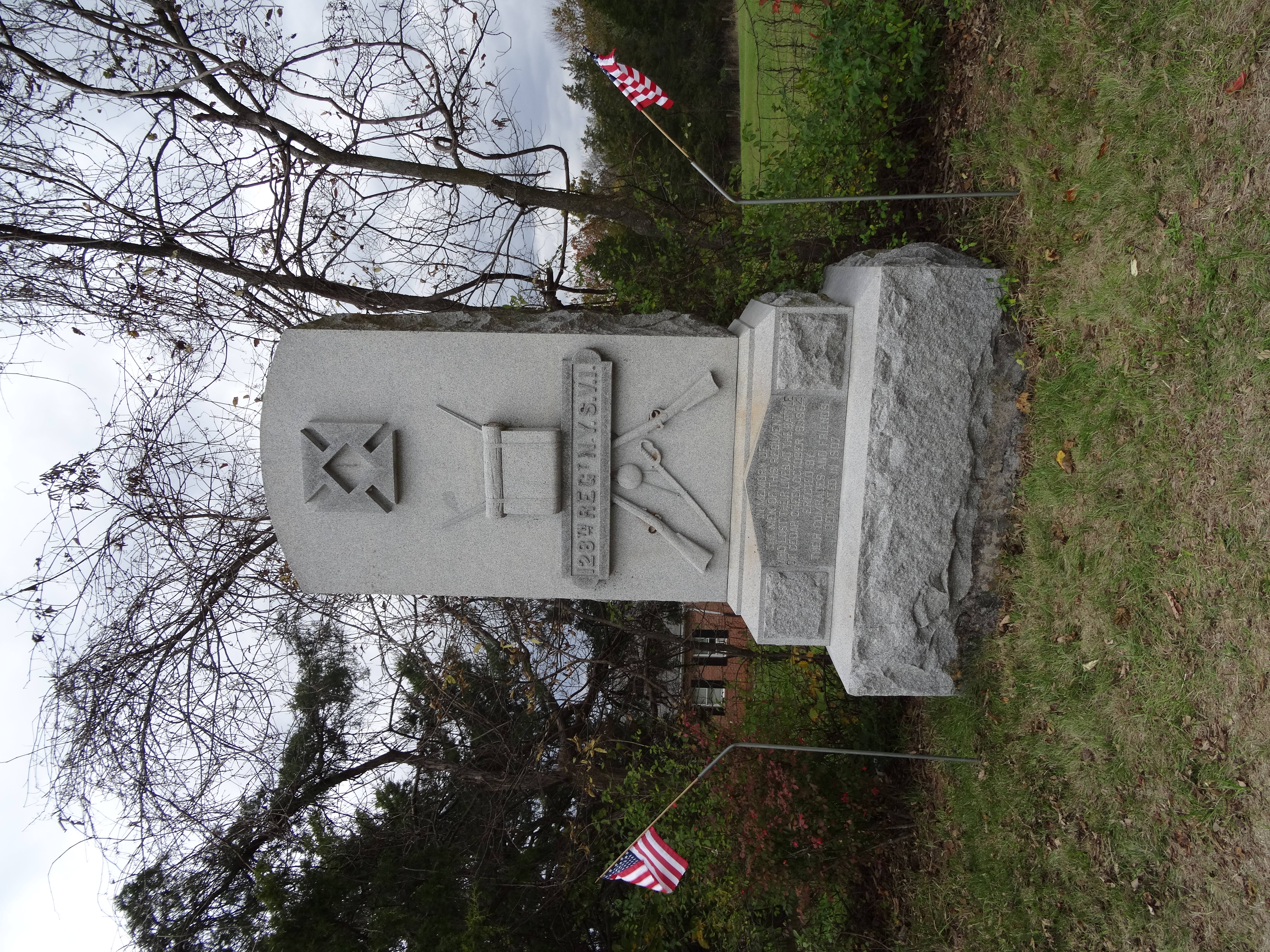
Cedar Creek Battlefield is preserved today within the Cedar Creek and Belle Grove National Historical Park near Middletown, Virginia, managed by the National Park Service. The site protects both the battlefield and the historic Belle Grove Plantation, which served as Sheridan's headquarters. Annual living history events bring the battle to life for visitors each October.
The battle is studied in military academies as a textbook demonstration of how personal leadership and physical presence can reverse a catastrophic tactical situation. It speaks to something deeper than tactics — the idea that an army's morale is a living thing, capable of collapse and renewal, often in the span of a single day.
Sheridan's ride remains one of those stories that transcends the dry facts of troop positions and casualty figures. It is a story about a man arriving at precisely the right moment, refusing to accept the verdict of the morning, and changing the course of history by force of will alone.
If this story resonated with you, we'd love to hear your thoughts in the comments below — and if you know someone who would enjoy it, please do share it with them. Stories like Cedar Creek deserve to be kept alive.
Further Reading
- National Park Service — Cedar Creek and Belle Grove National Historical Park
- Smithsonian Institution's National Museum of American History
- Library of Congress — Civil War Collections
- United States Army Center of Military History
- Virginia Museum of History and Culture