When the Ships Never Even Saw Each Other
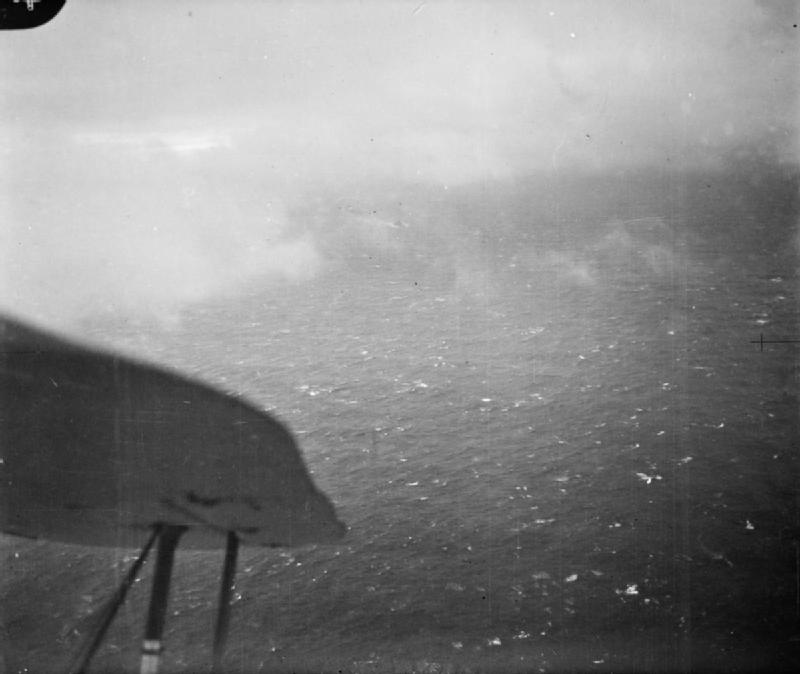
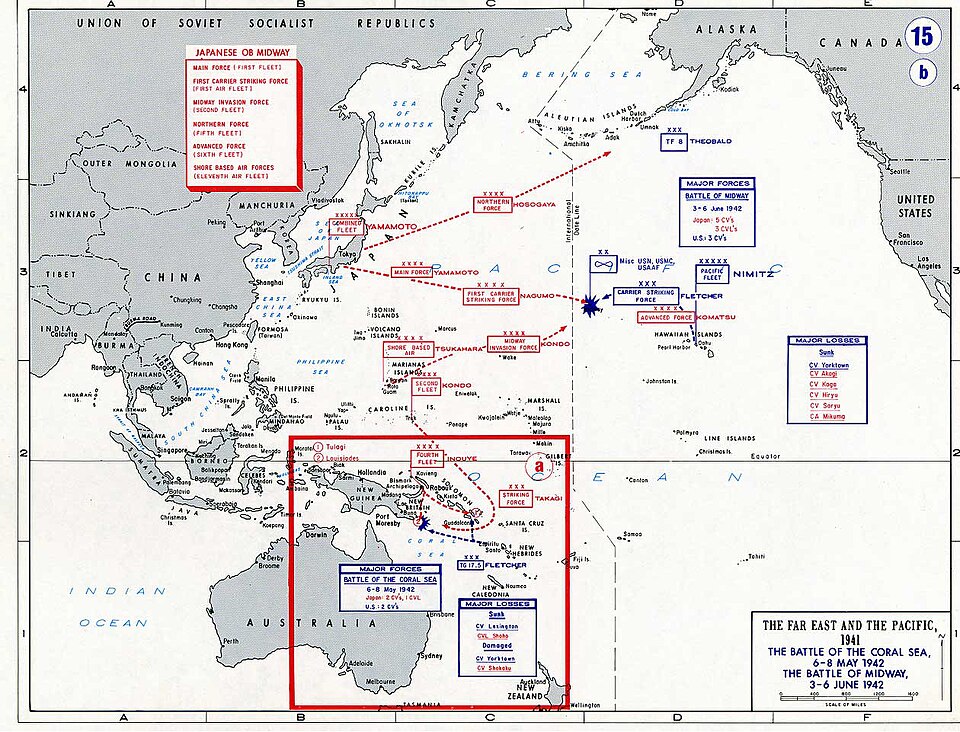
May 1942. The Coral Sea stretches wide and empty between Australia and the Solomon Islands — no coastline, no landmarks, just open Pacific and sky. Somewhere across that vast blue nothing, two powerful fleets were hunting each other. And yet not one ship would ever fire directly at another.
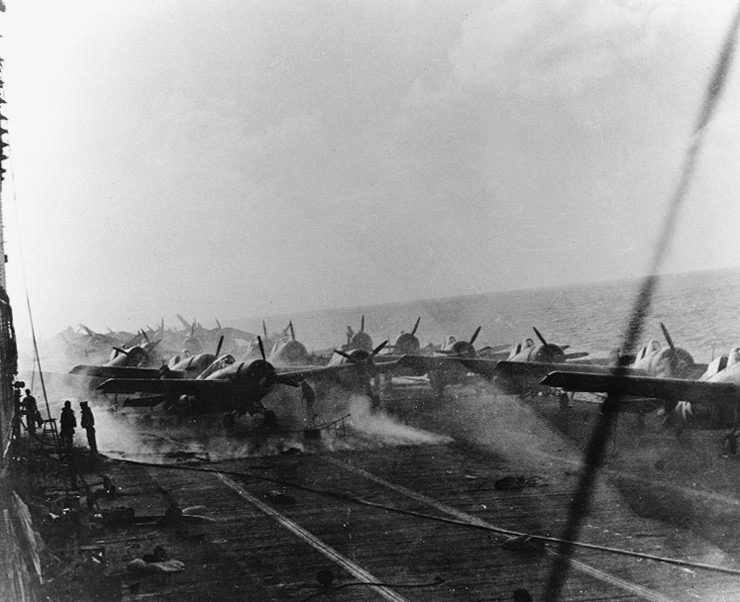
The Battle of the Coral Sea was the first naval engagement in history decided entirely by carrier aviation. Admirals on both sides sent wave after wave of aircraft across hundreds of miles of open ocean, trusting young men in cockpits to find, strike, and somehow return. The battleship — queen of the seas for centuries — had just been quietly dethroned.
Was this brilliant modern warfare? Or a terrifying glimpse of how industrial-age destruction had grown too vast, too fast, for anyone to truly control? That question haunts Coral Sea even now.
What Japan Was Really Trying to Do
By May 1942, Japan had been almost unstoppable for six months. Pearl Harbor. Malaya. Singapore. The Philippines. A string of victories that shocked the world. Now came Operation MO — a plan to seize Port Moresby on the southern coast of New Guinea.
This wasn't a sideshow. If Port Moresby fell, Australia itself lay exposed. Allied supply lines connecting America to its Pacific partners would be severed. The psychological blow to the Allied cause would have been enormous.
Australian and New Zealand forces were deeply involved in what was at stake here — yet Coral Sea is so often told as a purely American story. The Commonwealth dimension deserves more than a footnote. This was a battle fought, in no small part, to save Australia.
Japanese commanders sailed with real confidence. Six months of dominance had done that. Vice Admiral Takagi and Rear Admiral Hara led a formidable force and had every reason to expect another clean victory.
Most People Think America Won. Unpopular Opinion: Japan Lost More Than the Scoreboard Shows
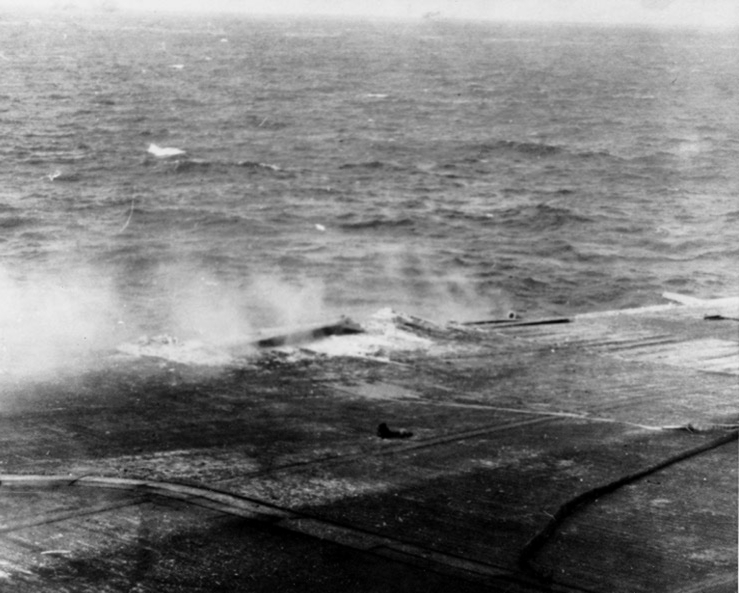
On paper, Japan won. America lost the fleet carrier USS Lexington — a beloved ship her crew called "Lady Lex." Japan lost only the light carrier Shoho. Tally those numbers and the Japanese flag should be planted on the result.
Unpopular opinion: the real defeat at Coral Sea was Japan's, and it showed up one month later at Midway.
Japan's fleet carrier Shokaku was badly damaged and out of action for months. More critically, the veteran aircrew of both Shokaku and Zuikaku were savaged — experienced pilots who had trained for years and simply could not be replaced quickly. Ships can be repaired. Skilled aviators cannot be manufactured on a production line.
Some say Coral Sea was an Allied victory dressed up as a draw. Others say it was a lucky escape that history has been far too generous about. Which side are you on?
The Men in the Cockpits — Not Just the Admirals on the Bridges
It's easy to talk about carriers and tonnage. Harder to remember the young men flying into combat across empty ocean with no certainty they'd find their way home — or that home would still be floating when they did.
The sinking of USS Lexington has become one of the war's remarkable human stories. As the stricken carrier went down, some crew members — knowing evacuation was coming — raided the ship's ice cream stores. Calm, dark humour in the face of catastrophe. It tells you something about the men who fought this battle.
Behind the scenes, Australian and American coastwatchers and reconnaissance crews provided the intelligence that made the battle possible at all. Unsung, often anonymous, frequently in terrible danger — their contribution was essential.
And the Japanese aviators deserve acknowledgement too. Skilled, courageous, fighting for a cause they believed in completely. The moral complexity of that is worth sitting with, not brushing aside.
The Technology That Made It Possible — and Terrifying
The aircraft carrier was barely two decades old as a concept in 1942. A floating airfield, capable of projecting power hundreds of miles beyond the horizon — it was revolutionary and deeply unsettling in equal measure.
American Dauntless dive-bombers and Devastator torpedo bombers faced Japan's feared Aichi Val dive-bombers and Kate torpedo planes. Both sides had capable aircraft and capable pilots. The technology was roughly matched.
What wasn't matched was radar. The Americans had it. The Japanese largely did not. That quiet technological edge shaped the entire battle — who spotted whom first, who had time to respond, who was caught unawares.
Yet communications failures and navigational errors plagued both sides throughout. Japanese aircraft attacked their own ships at one point. American search patterns missed Japanese fleets entirely for hours. War is never as clean as the history books suggest — and Coral Sea proves it.
Coral Sea's Place Alongside Midway in the Pacific War
Midway deserves its reputation. One month after Coral Sea, the United States Navy shattered Japan's carrier force in a battle that genuinely turned the Pacific War. Four Japanese fleet carriers lost in a single day. The momentum shifted permanently. The grinding island campaign that followed at Guadalcanal would cement what Midway began.
But Midway could not have happened without Coral Sea. Shokaku and Zuikaku — both damaged or depleted in May — were absent from the Midway order of battle. Two fewer fleet carriers meant fewer aircraft, fewer experienced crew, and a weaker Japanese hand when the decisive moment came.
Here's the counterfactual worth chewing on: if Japan had taken Port Moresby and kept her carrier force intact, would Midway have gone the same way? Some historians say yes. Others aren't so sure.
Most people remember Midway. When Coral Sea gets all the glory that Midway receives, who remembers the battle that actually made Midway possible?
What Coral Sea Really Proved — And What It Left Unresolved
Coral Sea settled one argument permanently. Carrier aviation had replaced surface gunnery as the dominant force in naval warfare. The admirals who'd doubted it were simply wrong, and the battle proved it beyond further debate.
What it didn't settle was the human cost. Hundreds of men — American, Japanese, Australian — lost at sea, in the air, aboard burning ships. For a result that neither side could immediately declare a victory. That ambiguity is part of what makes Coral Sea so compelling and so uncomfortable.
Across the other side of the world, Britain's carrier operations in the Indian Ocean and Mediterranean were drawing the same hard lessons — that the age of the gun had given way to the age of the aircraft, and that the learning curve was measured in lives. Operations like those involving Wingate's Chindits in the jungle war showed a parallel truth: that modern warfare demanded new thinking at every level, from the cockpit to the high command.
Coral Sea stopped the Japanese advance on Australia. It protected Port Moresby. It quietly crippled the carrier force that would face America at Midway. And yet it remains filed away in the history books as "just a draw."