The Quiz Question
Which February 1951 battle, sometimes called 'the Gettysburg of the Korean War,' saw a surrounded US-French force hold off a much larger Chinese force in a fight often cited as the turning point that stopped the Chinese offensive?
- A. Battle of Chipyong-ni
- B. Battle of Chosin Reservoir
- C. Battle of the Imjin River
- D. Battle of Bloody Ridge
The answer is A. Battle of Chipyong-ni. Here is the full story.
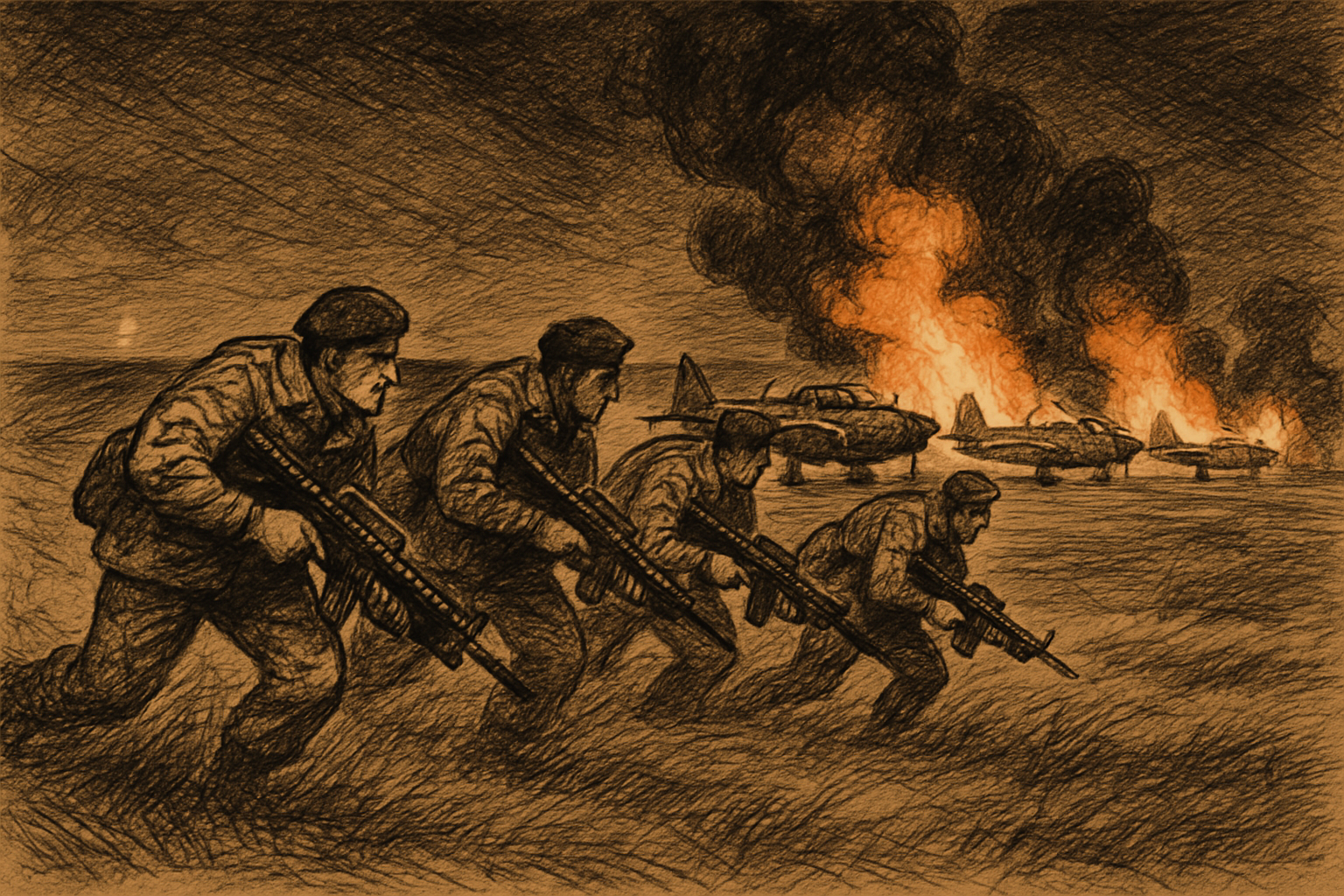
The bugles started around ten o'clock at night. Then came the whistles, the cymbals, the drums — a wall of sound designed to unnerve even the steadiest soldier. On the night of 13 February 1951, those sounds meant one thing to the men dug into the frozen hillsides around Chipyong-ni: the Chinese were coming, and they were coming in overwhelming numbers.
The Night the Chinese Came: A Siege That Shook Korea
Chipyong-ni was a modest crossroads town in central Korea, but its position at the junction of five roads made it strategically vital. Whoever held it controlled the avenues of advance southward toward Seoul. The Chinese knew it. So did General Matthew Ridgway.
Roughly 5,000 UN troops — primarily the US 23rd Infantry Regiment and the attached French Battalion — found themselves completely encircled by an estimated 25,000 soldiers of the Chinese People's Volunteer Army. On paper, the situation was hopeless. Several senior UN commanders had already urged withdrawal before the hammer fell.
What happened over the next 60 hours would earn Chipyong-ni its lasting reputation as "the Gettysburg of the Korean War" — the high-water mark of the Chinese offensive that had threatened to sweep UN forces entirely off the peninsula.
Korea in Early 1951: How Did It Come to This?
To understand Chipyong-ni, you have to understand how badly things had gone wrong in the months before it. In late November 1950, Chinese forces had crossed the Yalu River in massive numbers, hitting UN troops — including American, British, and Commonwealth soldiers — with a ferocity that triggered a catastrophic retreat from North Korea.
The Chinese Third Phase Offensive in late December 1950 recaptured Seoul, plunging Allied morale to its lowest point of the entire war. Units that had been fighting their way north just weeks earlier were now streaming south, wondering if there was any line that could be held.
Into this crisis stepped General Matthew Ridgway, who took command of the Eighth Army on 26 December 1950. Ridgway was a hard, demanding leader who had commanded airborne forces in Normandy and the Battle of the Bulge. He immediately set about restoring discipline, confidence, and fighting spirit to his battered command.
The Chinese Fourth Phase Offensive, launched in late January 1951, aimed to exploit the continuing UN disarray and push deep into South Korea. Chipyong-ni stood directly in its path. Ridgway made a decision that many considered reckless: UN forces would not retreat. They would hold key positions and force the Chinese to attack prepared defences. Chipyong-ni would be the proving ground for that strategy.
The Defenders: Who Held the Line at Chipyong-ni?
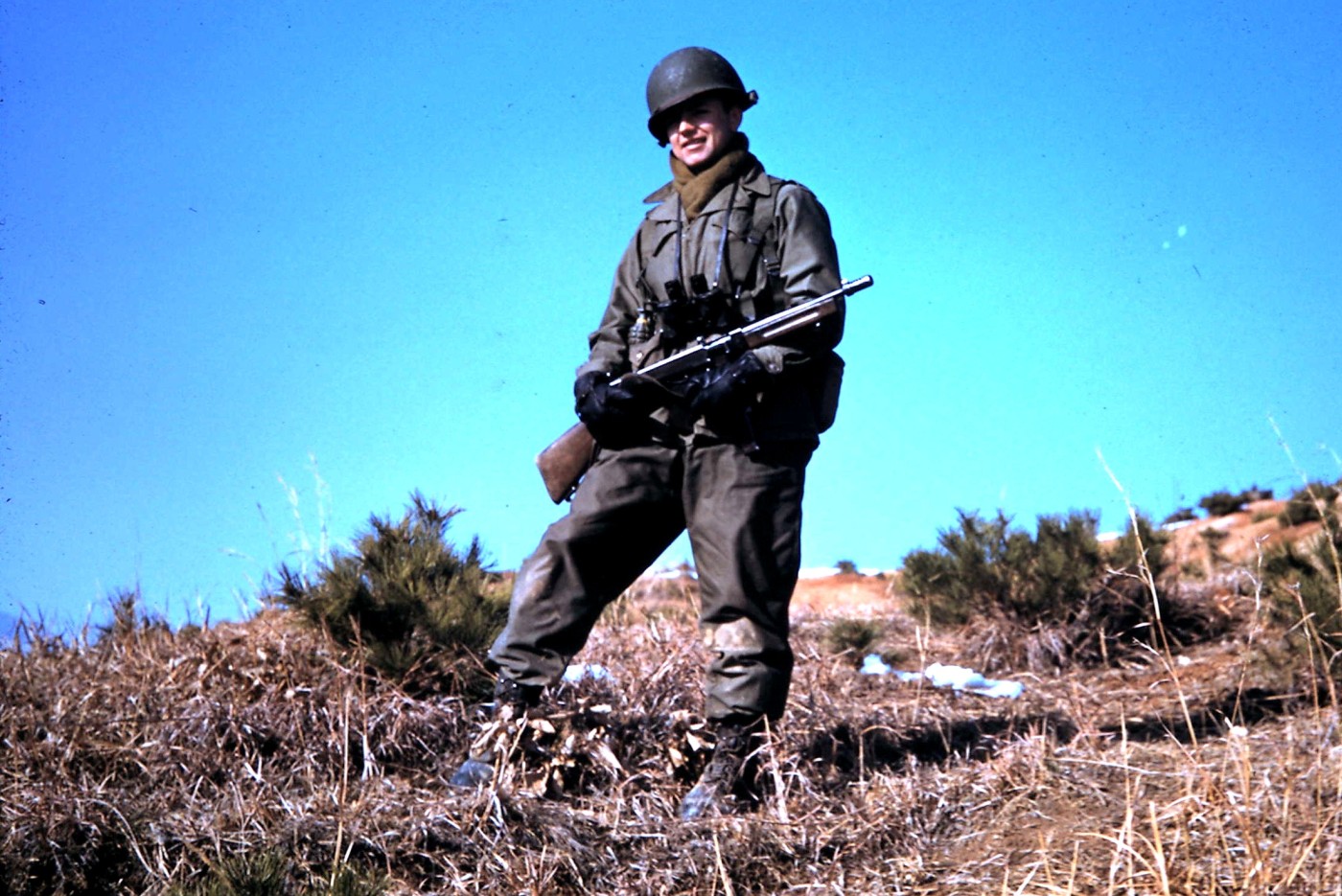
The backbone of the defence was the US 23rd Infantry Regiment, commanded by Colonel Paul Freeman — a veteran officer who had already demonstrated steady nerves in earlier Korean fighting and who would go on to wear four stars. Freeman organised his men into a roughly circular perimeter about a mile in diameter, occupying the low hills ringing the town.
The French Battalion, under Lieutenant Colonel Ralph Monclar, was one of the most remarkable units in the entire Korean War. Monclar was, in fact, a three-star general — but he voluntarily reduced his rank to lieutenant colonel because French regulations prevented a general from commanding a battalion-sized force. He wanted to lead men in combat that badly.
The soldiers Monclar commanded were no ordinary infantrymen. Many were veterans of the Second World War and the grinding war France was then fighting in Indochina. Their experience in close-quarters jungle and mountain fighting gave them a ferocity that impressed even battle-hardened American soldiers alongside them.
Rounding out the garrison were the US 37th Field Artillery Battalion, a Ranger company, and various supporting elements — bringing the total to approximately 4,500 to 5,000 men. Each unit was assigned a sector of the perimeter, with the artillery positioned centrally to support any threatened point. The men dug in and waited.
Day One: The Chinese Strike the Perimeter
At approximately 22:00 on 13 February, the Chinese launched their first major assault. Bugles and whistles directed human-wave attacks against the southern and south-western sectors of the perimeter, where the French Battalion bore the initial fury of the assault.
The fighting that followed was savage beyond description. French soldiers, many of them veterans of some of the hardest combat of the previous decade, met Chinese troops in brutal hand-to-hand fighting through the freezing night. The Chinese repeatedly breached the outer wire and foxhole lines, forcing defenders into close-quarters actions with bayonets, rifle butts, and grenades.
The 37th Field Artillery proved its worth from the opening hour. Firing thousands of rounds during the battle — sometimes at nearly point-blank range — the artillerymen broke up massed infantry charges that might otherwise have overwhelmed the infantry line. Air support, though limited at night, would become increasingly critical as the battle wore on.
By the cold grey dawn of 14 February — Valentine's Day — the perimeter had survived its first night. But ammunition stocks were falling, casualties were mounting, and every man inside the wire knew the Chinese would come again with darkness.
Night of Decision: The Second and Third Assaults
The night of 14–15 February brought the heaviest fighting of the battle. Multiple regiment-strength Chinese attacks crashed into the perimeter from several directions simultaneously — a coordinated effort to find and exploit any weak point in the defence.
G Company of the 23rd Infantry, holding a critical position on the north-eastern perimeter, came desperately close to being overrun. The company commander was killed, and survivors fought on in fragmented small-group actions through the darkness, refusing to yield ground they knew they could not afford to lose.
Colonel Freeman was wounded by mortar shrapnel during these hours but flatly refused evacuation. He continued commanding from inside the perimeter, moving between sectors, steadying his men, making the decisions that kept the defence coherent. His example — wounded but present, calm but utterly determined — helped prevent panic from spreading through exhausted troops who had been fighting for two nights straight.
Daylight on 14 February brought US Air Force and Marine Corps aircraft overhead, flying close air support missions that dropped napalm and bombs perilously close to friendly positions. The pilots flew with extraordinary precision under terrible pressure. Those strikes broke up Chinese formations massing for renewed attacks and bought the defenders precious hours to reorganise.
The Relief Column: Task Force Crombez Breaks Through
Even as the defenders at Chipyong-ni held on, a relief force was fighting its way toward them. Task Force Crombez, built around the US 5th Cavalry Regiment and commanded by Colonel Marcel Crombez, set out on 15 February with tanks and infantry determined to break through the Chinese cordon.
Crombez made a decision that remains controversial to this day. To maximise the column's speed through Chinese ambushes, infantry would ride on the outside of Sherman tanks rather than advancing on foot. The brutal corollary was explicit: soldiers who fell off would be left behind. Speed was everything — every hour counted for the men at Chipyong-ni.
The column fought through fierce Chinese ambushes along the approach road, with soldiers clinging to tank hulls under direct small-arms and mortar fire. Dozens were killed or wounded during the push. The fighting was close, chaotic, and merciless.
At approximately 17:25 on 15 February 1951, the lead Sherman tanks of Task Force Crombez rolled into the Chipyong-ni perimeter. The reaction among the exhausted defenders — men who had been awake and fighting for more than 60 hours — can only be imagined. With the relief column inside the perimeter and continued air support hammering Chinese positions, the besieging forces began to withdraw. The siege was over. The perimeter had never been broken.
The Butcher's Bill: Casualties and the Cost of Victory
UN casualties during the three-day battle amounted to approximately 300 killed and wounded — serious numbers, but remarkable given the disparity in forces and the intensity of the fighting. The French Battalion suffered some of the heaviest proportional losses of any unit in the garrison, a testament to how fiercely their sector was contested.
Chinese casualties told a different story entirely. Estimates from military historians place Chinese killed and wounded between 4,000 and 5,000 — entire regiments shattered against the Chipyong-ni perimeter. The Chinese 39th and 40th Armies, elite formations that had driven UN forces back from the Yalu River just weeks earlier, were so badly mauled that they were effectively combat-ineffective for weeks after the battle.
The US Army recognised the achievement with a Presidential Unit Citation for the 23rd Infantry Regiment. The French Battalion received the same honour — one of the rare occasions in American military history that a foreign unit has been awarded this decoration. It was an acknowledgement, in the most formal terms, that what had been accomplished at Chipyong-ni was extraordinary.
Why Chipyong-ni Changed the Korean War
General Ridgway later described Chipyong-ni as the battle that demonstrated UN forces could defeat Chinese mass-assault tactics when properly prepared — dug in, supported by artillery, and covered by air power. It validated his entire strategic approach to rebuilding the Eighth Army's fighting effectiveness.
The Chinese Fourth Phase Offensive effectively ended at Chipyong-ni. Chinese commanders recognised — painfully — that they could no longer count on sheer numbers to overwhelm prepared UN defensive positions. The combination of artillery, close air support, and determined infantry had broken their most powerful tool: the human-wave assault.
The battle restored confidence that rippled across the entire Eighth Army. If 5,000 men could hold off 25,000 Chinese for three days and nights, the strategic calculation had fundamentally shifted. The nightmare scenario — UN forces driven entirely off the Korean peninsula — receded.
Historians draw the comparison to Gettysburg deliberately and carefully. Just as Pickett's Charge in July 1863 marked the absolute limit of Confederate military ambition — the furthest point the Army of Northern Virginia could reach before breaking — Chipyong-ni marked the limit of Chinese power to drive UN forces from Korea. What followed was the grinding positional war along the 38th Parallel that would eventually produce the 1953 armistice.
Forgotten but Not Gone: Chipyong-ni's Place in History
Chipyong-ni remains far less well known than its strategic importance deserves — a consequence, in part, of the Korean War's own uneasy place in public memory. Americans who came of age between the Second World War and Vietnam sometimes struggle to locate Korea in the sequence of events, let alone specific battles within it.
The French Battalion's role is particularly under-celebrated outside France itself. These men — veterans of Normandy, of Italy, of the jungles of Indochina — fought with a ferocity at Chipyong-ni that deserves to stand alongside the great Allied actions of the Second World War. Their story is one that more people should know.
Colonel Paul Freeman, who commanded the defence with a mortar fragment in his body and never considered leaving his men, went on to retire as a four-star general. He consistently described Chipyong-ni as the defining battle of his long career — the moment he was most tested and most proud of what his soldiers achieved.
A memorial at the Chipyong-ni battlefield in modern South Korea commemorates the American and French soldiers who fought there. French and American veterans' groups have held joint commemorations at the site, maintaining a bond forged in those 60 hours of frozen, desperate fighting in February 1951.
For anyone who remembers the Korean War from the nightly news — who lived through those anxious years when it was genuinely uncertain whether the West could hold the line — Chipyong-ni represents the moment the tide turned. It is a story of ordinary men doing something that looked, on paper, impossible. And it deserves to be remembered.
If this story moved you, share it with someone who loves military history — and tell us in the comments: had you heard of Chipyong-ni before today? We'd love to know what battles from the Korean War you'd like us to cover next.
Further Reading
- US Army Center of Military History — official histories and unit records of the Korean War
- The National Archives (United States) — military records, after-action reports, and declassified documents from the Korean War era
- The Korean War Veterans Memorial Foundation — commemorative and educational resources on the conflict
- Imperial War Museum, London — collections covering British and Commonwealth involvement in Korea, with broader context on the conflict
- Smithsonian National Museum of American History — artefacts and educational materials relating to the Korean War and Cold War era