The Quiz Question
Which battle on the night of 11 to 12 June 1982 saw 3 Para take a fortified ridge east of Port Stanley at a cost of 23 dead, the heaviest single loss for the battalion in the war?
- A. Battle of Mount Longdon
- B. Battle of Two Sisters
- C. Battle of Mount Harriet
- D. Battle of Wireless Ridge
The answer is A. Battle of Mount Longdon. Here is the full story.
A Hill in the Dark: The Night That Defined a Generation of Paratroopers
Mount Longdon rises roughly 250 metres above the boggy, wind-scoured terrain of East Falkland, sitting approximately five miles west of Port Stanley. It is not a dramatic peak by any measure — just a rocky spine of quartzite crags jutting from the moorland. But on the night of 11–12 June 1982, it became the site of the costliest single engagement fought by any British unit in the entire Falklands War.
3 Para — the 3rd Battalion, Parachute Regiment — suffered 23 men killed and 47 wounded taking that ridge. When the full toll became known at home, it shocked a nation that had followed the campaign on the nightly news with a mixture of pride and dread. The battle raged for over eight hours through freezing darkness, across ground laced with mines, covered by snipers, and defended by a determined Argentine garrison that had no intention of giving ground easily.
Sergeant Ian McKay of 3 Para was posthumously awarded the Victoria Cross for his actions that night. It was the only VC awarded for the Battle of Mount Longdon — and one of just two Victoria Crosses of the entire Falklands campaign.
The Road to Longdon: Why the Falklands War Was Fought
Argentina invaded the Falkland Islands on 2 April 1982, overwhelming the tiny Royal Marines garrison of Naval Party 8901 after a brief but fierce resistance. The Argentine military junta, led by General Leopoldo Galtieri, calculated that Britain would not — or could not — respond in force to recover islands 8,000 miles from home.
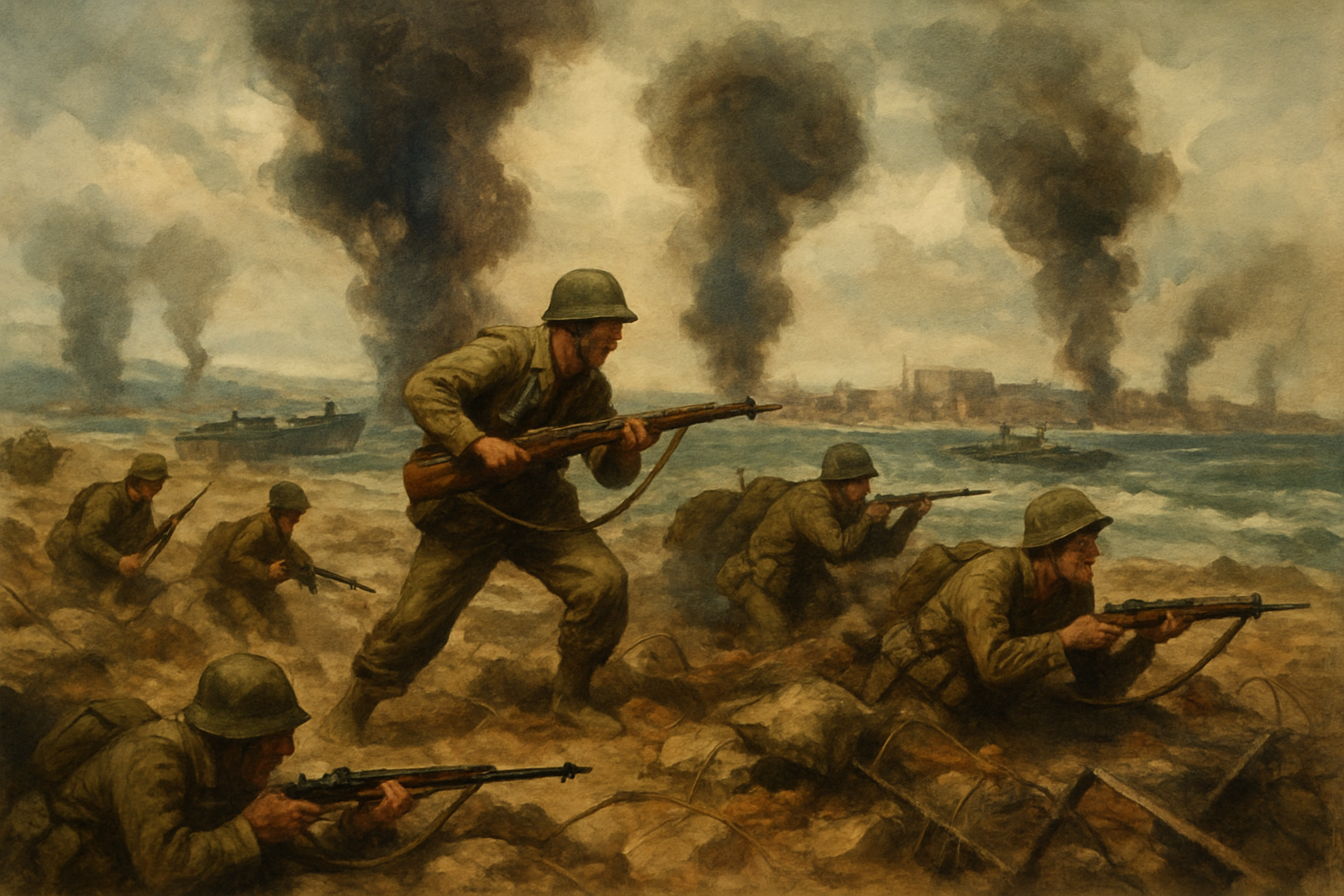
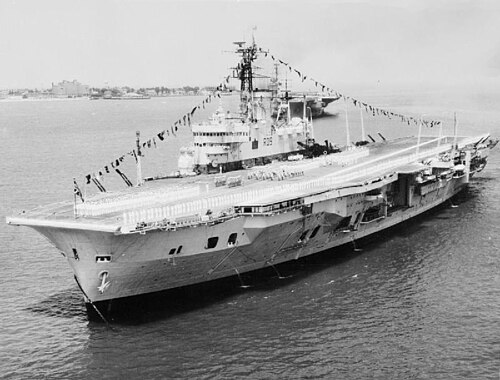
They miscalculated. Prime Minister Margaret Thatcher dispatched a naval Task Force of over 100 ships and 28,000 personnel within days. British forces landed at San Carlos Water on 21 May 1982, establishing a critical beachhead on East Falkland at considerable cost to the fleet from Argentine air attack.
The battles at Goose Green on 28–29 May — where 2 Para fought a much larger Argentine force and lost their commanding officer, Lieutenant Colonel H. Jones — and the brutal 'yomp' across East Falkland tested men to their limits before they even reached the outskirts of Stanley. The campaign as a whole was a logistical and human feat that few military planners had thought possible. By early June, Argentine forces had constructed a formidable defensive arc of fortified high ground around Port Stanley. Mount Longdon was its northern anchor.
The Fortress on the Ridge: Argentine Defences on Mount Longdon
The Argentine forces defending Longdon were primarily from the 7th Infantry Regiment, commanded by Major Carlos Carrizo-Savedra, numbering approximately 280–300 men. These were not raw conscripts thrown into a hopeless position — they had had weeks to prepare, and they had used the time well.
The ridge was heavily fortified with sangars — stone weapon emplacements built from the natural quartzite — along with minefields covering the approaches and interlocking fields of fire that left almost no dead ground for an attacker to exploit. Heavy weapons included 12.7mm Browning heavy machine guns, 81mm mortars, and recoilless rifles positioned to cover the western and northern slopes where any attack was most likely to come.
Perhaps most significantly, Argentine snipers were equipped with night-vision scopes — a technology advantage that British forces did not possess in comparable numbers. Those snipers would exact a steady, terrible toll through the long hours of darkness. Argentine commanders had chosen Longdon carefully, and they had prepared it thoroughly.
3 Para's Plan: Silent Approach and a Loud Beginning
Lieutenant Colonel Hew Pike commanded 3 Para, and his plan for taking Longdon was built around surprise. Rather than calling in a preparatory artillery barrage that would alert the defenders and potentially drive civilians in the area under fire, he planned a silent night attack in three phases.
B Company would lead the assault up the western end of the ridge — an axis designated 'Free Kick' — while A Company secured the start line and C Company held in reserve. H-Hour was set for 2100 local time on 11 June 1982, giving the battalion hours of darkness to work through the position before dawn exposed them.
The plan unravelled within minutes. At around 2115, Private Craig Jones stepped on an Argentine anti-personnel mine. The explosion tore through the darkness and the silence, and every Argentine defender on Longdon heard it. What had been designed as a stealthy infiltration instantly became a frontal assault against a fully alerted garrison. 3 Para had lost their greatest tactical advantage before a single deliberate shot had been fired.
Eight Hours of Hell: The Fighting on the Ridge
Argentine fire immediately pinned B Company on the open western slopes. Machine gun positions that had been carefully sited now poured fire into the advancing paratroopers with devastating effect. It was in this moment that Sergeant Ian McKay acted.
With his platoon commander wounded and his section taking casualties from a machine gun position that was killing men around him, McKay gathered a small group and charged the emplacement. He destroyed it, silencing the guns. He was shot and killed in the act. His Victoria Cross citation, held by the Parachute Regiment and Airborne Forces Museum, records that he displayed selfless courage of the highest order, knowing that the odds against his survival were overwhelming.
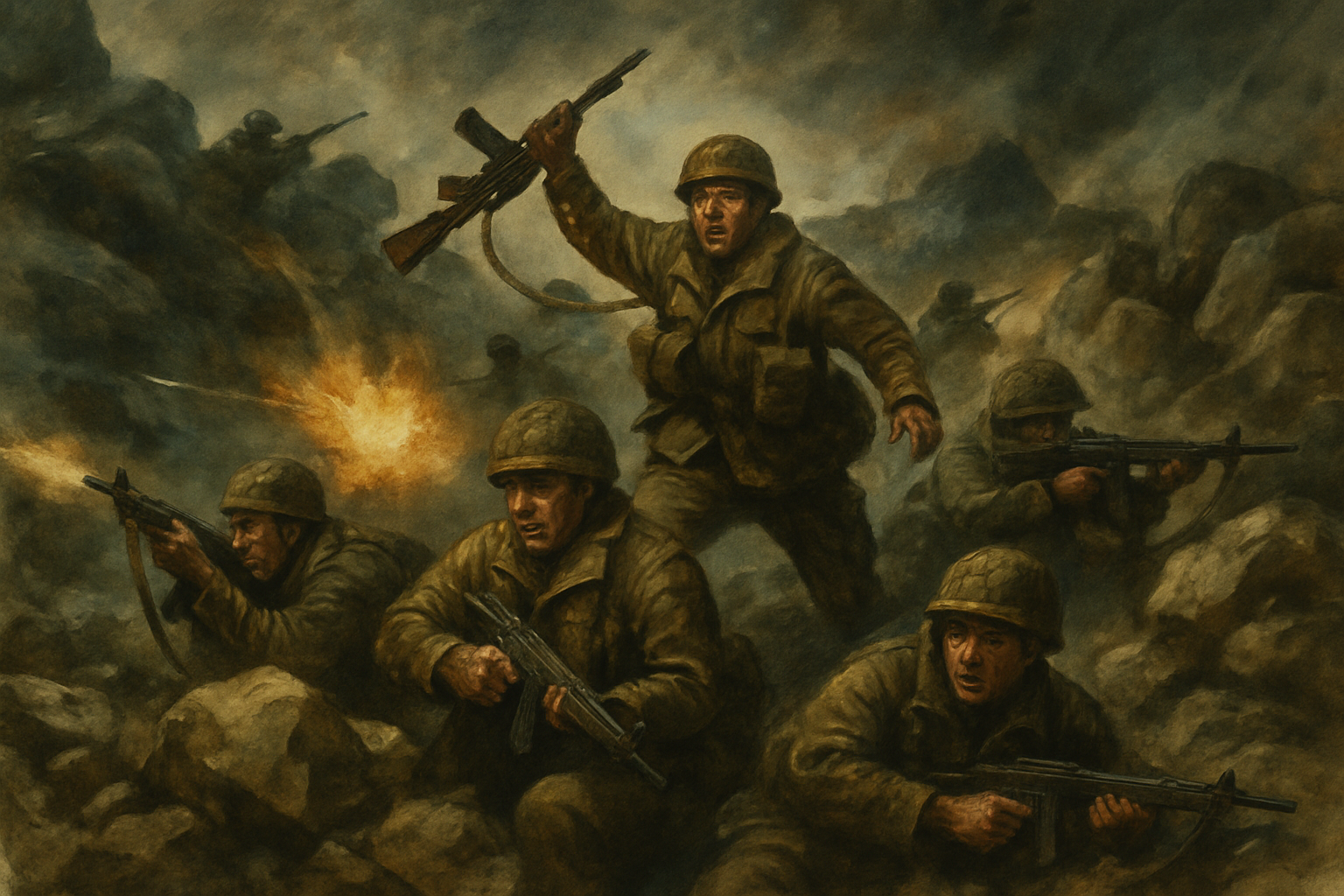
The fighting then descended into something that no training fully prepares a soldier for. B Company fought through the ridge position by position — sangar by sangar — in brutal close-quarters combat among the rocks. Bayonets were fixed. Grenades were thrown into enclosed positions. In the darkness and confusion, the fighting was at times hand-to-hand. Argentine snipers with night scopes continued their work throughout, and Corporal Stewart McLaughlin was killed leading repeated attempts to suppress them and clear their positions.
As B Company's casualties mounted, A Company was committed to the battle. By the time first light began to show, 3 Para had effectively thrown its entire fighting strength into the struggle for the ridge. Argentine artillery and mortar fire fell continuously — and in a grim irony, some British casualties were caused by Argentine shells landing on positions that 3 Para had already taken, because Argentine gunners did not yet know the ridge was changing hands.
By approximately 0600 on 12 June 1982, after more than eight hours of fighting, 3 Para had cleared the last Argentine positions. Mount Longdon was British. The cost had been devastating.
The Men Who Fought: Faces Behind the Statistics
Statistics can obscure the reality of what 23 dead and 47 wounded actually means. These were real men, from real places, with families waiting for news.
Sergeant Ian McKay was 29 years old, from Rotherham in South Yorkshire. He left behind a wife and two young children. Private Jason Burt, just 17 years old, was among the youngest British soldiers to die in the entire Falklands War. He died on Mount Longdon.
Corporal Stewart McLaughlin's commanding officer recommended him for the Victoria Cross. The recommendation was not approved — a decision that has been contested by his family, his comrades, and successive campaigners ever since. Lieutenant Colonel Hew Pike later wrote candidly about the weight of command decisions made that night, and the anguish of committing men into a firefight with no alternative route to the objective.
Many survivors carried wounds — physical and psychological — for decades. The 3 Para community is a tight-knit one, and the grief of 23 families across Britain was shared by every man who had been on that ridge. For those veterans, Mount Longdon is not history. It is memory.
The Final Push: From Longdon to the Fall of Stanley
3 Para did not fight alone that night. While the battle for Longdon raged, 45 Commando Royal Marines assaulted Two Sisters and 42 Commando attacked Mount Harriet in a coordinated effort to crack the outer Argentine defensive ring in a single night of operations.
By dawn on 12 June, all three objectives were in British hands. The Argentine forces defending Stanley were now exposed on their flanks, demoralised, and aware that the momentum had shifted decisively against them. A second phase of attacks on the nights of 13–14 June saw Tumbledown, Wireless Ridge, and Mount William fall in rapid succession.
Argentine forces surrendered on 14 June 1982. Brigadier General Mario Menéndez signed the instrument of surrender to Major General Jeremy Moore in Port Stanley. The war was over in 74 days. Military historians have consistently argued that the capture of Mount Longdon was pivotal — that Argentine possession of that ridge would have enabled a significantly more prolonged defence of Stanley, potentially drawing out the campaign and increasing casualties on both sides.
Controversy and Courage: The Longdon VC Debate and War Crimes Allegations
The battle's legacy has never been entirely straightforward. Corporal McLaughlin's family and former comrades have campaigned for decades to have his Victoria Cross recommendation reconsidered. The Ministry of Defence has repeatedly declined to reopen the case, a position that continues to cause deep frustration among those who were there.
In 2013, a BBC documentary examined allegations that Argentine prisoners had been killed by British soldiers after the battle — claims that divided veterans sharply and attracted significant public attention. The Metropolitan Police launched an investigation, codenamed Operation Northmoor, which examined multiple allegations of unlawful killings during the Falklands War. The investigation was closed in 2019 with no prosecutions brought.
Veterans' groups argued strongly and consistently that the allegations were unjust to men who had fought an extraordinarily brutal close-quarters battle under intense fire, in the dark, against a well-armed enemy who had just killed their friends. The debate around Longdon reflects the wider, unresolved difficulty of applying peacetime legal standards to the reality of intense combat — a conversation that has no easy answers.
Legacy and Remembrance: Mount Longdon's Place in British Military History
A memorial to the fallen of 3 Para stands on Mount Longdon itself. It has become a site of pilgrimage for veterans and their families, many of whom have made the long journey to the Falkland Islands to stand on the ground where their comrades fell. The islands' small community has welcomed them with consistent warmth and dignity.
Sergeant Ian McKay's Victoria Cross is displayed at the Parachute Regiment and Airborne Forces Museum. The battle is studied at the Royal Military Academy Sandhurst as a case study in night operations, command under pressure, and the critical importance — and fragility — of surprise as a tactical tool.
Anniversary commemorations in the Falkland Islands have, in recent decades, brought together British veterans, Argentine veterans, and islanders in a spirit of reconciliation that would have been hard to imagine in June 1982. For the generation that lived through that spring and summer — watching the news bulletins, waiting for the casualty lists — the Falklands War is not distant history. Mount Longdon represents the human cost that lay behind every headline. Twenty-three men went up that ridge and did not come back down. That is what victory looked like.
If Mount Longdon is part of your memory of 1982 — or if you have a family connection to 3 Para or the Falklands campaign — we'd love to hear your story in the comments below. And if this piece brought the battle to life for you, please share it with someone who should know this history.
Further Reading
- Parachute Regiment and Airborne Forces Museum, Duxford, Cambridgeshire
- Imperial War Museum, London — Falklands War collection
- The National Archives, Kew — official operational records of the Falklands campaign
- National Army Museum, London — collections relating to the Falklands War and the Parachute Regiment
- Falklands Conservation and the Falkland Islands Museum and National Trust, Stanley