The Quiz Question
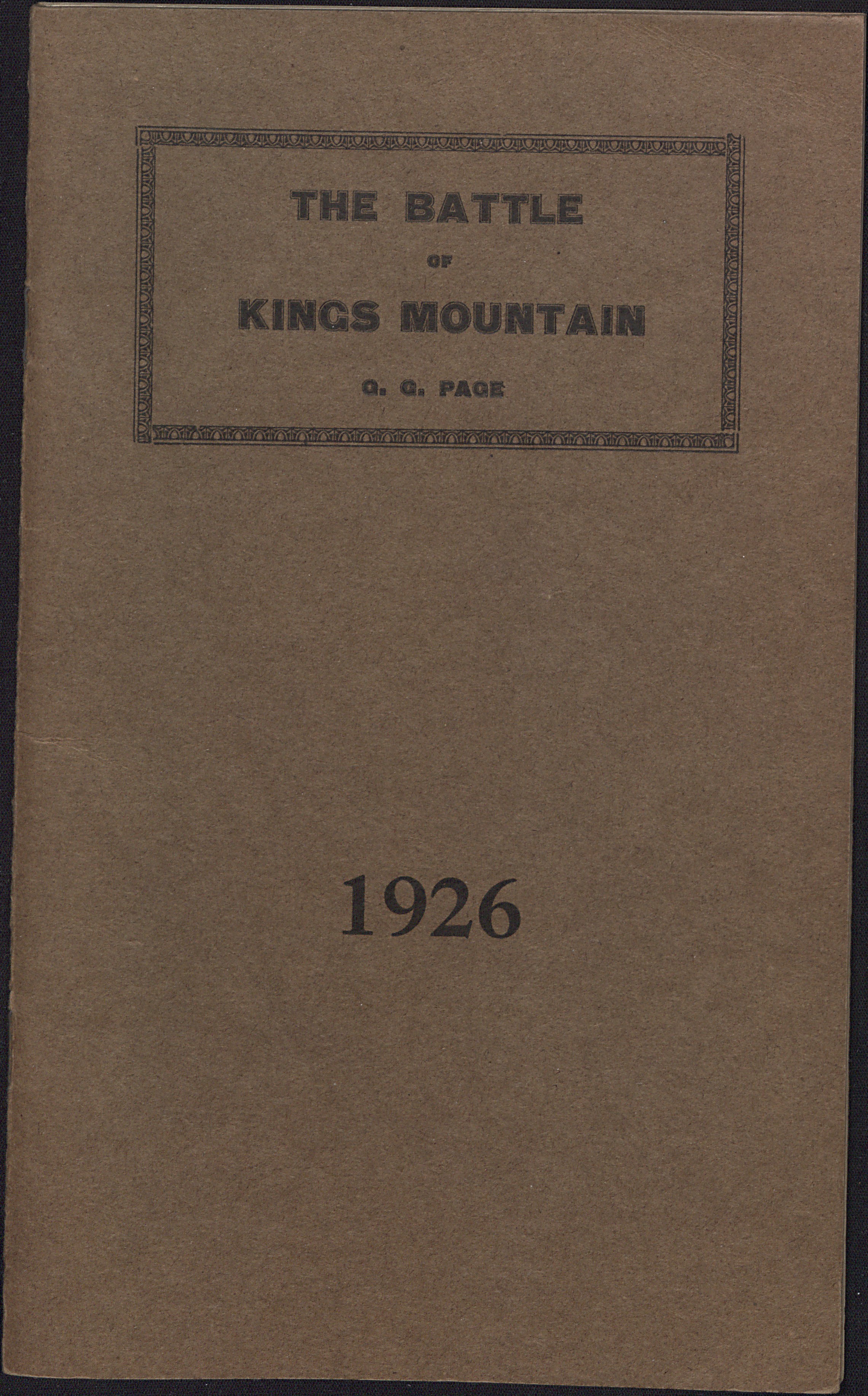
At the Battle of King's Mountain on October 7, 1780, which British major was killed leading Loyalist militia against Patriot 'Overmountain Men,' the only Briton on the field that day?
- A. Patrick Ferguson
- B. Banastre Tarleton
- C. Lord Cornwallis
- D. Francis Rawdon
The answer is A. Patrick Ferguson. Here is the full story.
On the afternoon of 7 October 1780, Major Patrick Ferguson stood atop a rocky ridge straddling the border of North and South Carolina. He was the only British regular soldier in a force of more than 1,100 men. Within sixty-five minutes, he would be dead, his entire command shattered, and the course of the American Revolutionary War quietly, irrevocably altered.
The Lone Redcoat on the Hill
Ferguson had not stumbled into this position — he had chosen it. He believed King's Mountain was unassailable, reportedly boasting that no "backwater men" could drive him from its slopes. It was one of the most catastrophic miscalculations of the Southern Campaign.
The men who proved him wrong were frontier riflemen: lean, weathered hunters and farmers from the valleys west of the Appalachians. They called themselves — or rather, history called them — the Overmountain Men. They came from Virginia, North Carolina, and what would later become Tennessee, and they moved through driving autumn rain to reach that ridge with murder in their hearts and long rifles in their hands.
King's Mountain is routinely described by historians as the turning point of the British Southern Strategy. It is the moment the momentum of Cornwallis's seemingly unstoppable advance began to reverse. To understand why, you have to understand the man at the centre of it all.
Who Was Major Patrick Ferguson?
Patrick Ferguson was born in 1744 in Pitfour, Aberdeenshire, Scotland, into a family of law and learning — his father was a judge, later a senator of the College of Justice. But young Patrick was drawn to soldiering from boyhood, receiving his commission at the remarkable age of fifteen.
He served in the Seven Years' War and in Caribbean campaigns, gaining combat experience that shaped him into one of the British Army's more creative and energetic officers. He was not content with orthodoxy. In the late 1760s, he designed and patented the Ferguson Rifle — a breech-loading flintlock capable of firing four to six rounds per minute, far exceeding the one to three rounds achievable with a standard Brown Bess musket.
Ferguson demonstrated his rifle to the Board of Ordnance in 1776, reportedly loading and firing it in heavy rain — something a standard flintlock musket struggled badly to do. The demonstration impressed observers, but the British Army, with characteristic institutional conservatism, declined mass adoption. Ferguson commanded a small rifle corps armed with the weapon at the Battle of Brandywine in September 1777, where he was severely wounded in the right elbow. The wound left his arm partially disabled for the rest of his life.
By 1780 he had been appointed Inspector of Militia in the Southern Department, serving under Lord Cornwallis. His task was to raise, train, and lead Loyalist militia forces — the backbone of Britain's plan to hold the Carolinas.
The Southern Campaign: Cornwallis Pushes North
The capture of Charleston on 12 May 1780 was the single largest British military victory of the entire Revolutionary War. General Benjamin Lincoln surrendered over 5,000 Continental soldiers and militia — a catastrophic blow to the Patriot cause in the South. Cornwallis moved swiftly to consolidate the victory and push northward toward Virginia, the heart of Patriot resistance.
The British plan depended critically on Loyalist militia holding the countryside. Regular troops were too few and too expensive to garrison every town and crossroads. Ferguson's job was to keep the backcountry loyal, or at least compliant. He recruited aggressively and conducted punitive raids against Patriot communities, which succeeded in swelling Loyalist ranks — but at the cost of hardening Patriot resolve.
Guerrilla leaders complicated everything. Francis Marion — the "Swamp Fox" — harassed British supply lines across the Low Country, while Thomas Sumter struck Loyalist settlements with brutal efficiency. Ferguson's patrols found themselves in an exhausting, grinding irregular war with no clear front line. Meanwhile, his aggressive tactics pushed wavering backcountry settlers firmly into the Patriot camp, precisely the opposite of his strategic goal.
The Overmountain Men: Frontier Warriors Mobilise
The spark that lit the fuse was a message — or at least a reported message. Ferguson allegedly sent word to militia colonel Isaac Shelby that if the frontier communities did not cease their resistance, he would march his army over the mountains, hang their leaders, and "lay waste to the country with fire and sword." Whether the exact wording is accurate, the threat was real enough in spirit.
It backfired spectacularly. Rather than frightening the frontier communities into submission, the warning galvanised them. Colonels Isaac Shelby, John Sevier, William Campbell of Virginia, and Benjamin Cleveland of North Carolina began rallying their men in late September 1780. On 25 September, a large muster assembled at Sycamore Shoals on the Watauga River in present-day Tennessee — around 1,800 men in total, though only the fittest and fastest would make the final march.
They moved hard through the mountains, often in cold rain, shedding slower men and flagging horses along the way. By the time they closed on King's Mountain, the strike force numbered roughly 900 determined fighters. These were not parade-ground soldiers. They were skilled hunters who had spent years shooting game through dense forest at long distances — exactly the kind of engagement that would be forced upon Ferguson's men.
King's Mountain: The Ground and the Gamble
King's Mountain is misleadingly named — it is not a true mountain, but a narrow, rocky ridge rising about sixty feet above the surrounding woodland, stretching roughly 600 yards along the Carolina border. Its slopes are steep and heavily wooded with oak and hickory, the kind of ground that provides excellent cover for men moving upward in skirmish order.
Ferguson chose it believing those slopes made his position impregnable. He reportedly declared it a place God Almighty could not drive him from. His force of approximately 1,100 American Loyalists — including units such as the American Volunteers and various provincial militia — was well-armed, but primarily with smoothbore muskets and bayonets. Those were weapons designed for open-field linear warfare, not for firing downhill at riflemen using trees as cover.
The Patriot commanders recognised that the ridge's shape was actually a vulnerability, not a strength. They divided their roughly 900 men into multiple columns and arranged to encircle the entire ridge, attacking simultaneously from all sides. No matter which direction Ferguson turned his men to repel an assault, another column would be pressing in from somewhere else.
Sixty-Five Minutes of Fury: The Battle Unfolds
The attack began around 3:00 PM. Multiple Patriot columns surged up the slopes, using the trees for cover in exactly the way trained riflemen naturally would. Ferguson's men, trying to shoot downhill at moving targets behind cover, found their muskets at a fatal disadvantage. The long rifles of the frontiersmen — accurate at ranges exceeding 100 yards — were picking men off from distances where musket fire was largely ineffective.
Ferguson responded with energy and courage. He rode along the ridge blowing a silver whistle to signal his officers, and he personally led bayonet charges that repeatedly drove Patriot attackers back down the slope. Those charges worked — temporarily. Each time one column was pushed back, another pressed forward from a different direction. The encirclement was complete and relentless.
Ferguson was everywhere on the ridge, refusing to be still, refusing to yield. Accounts from survivors suggest he was struck by six or seven rifle balls before finally falling dead from his horse near the summit. His death was the end of organised resistance. Captain Abraham DePeyster, his second-in-command, attempted to raise a white flag, but the firing continued for several chaotic, terrible minutes before the battle fully ceased — a reflection of how much rage had accumulated on both sides.
The Casualties: A Lopsided Reckoning
The numbers tell a stark story. Patriot losses amounted to approximately 28 killed and 62 wounded — extraordinary restraint for a force that had charged uphill into a defended position. Loyalist and British losses were catastrophic: around 157 killed on the field, 163 wounded too severely to move, and 698 captured. Ferguson's entire command had been effectively annihilated in a little over an hour.
The aftermath carried its own darkness. Some Patriot militiamen — many of whom had witnessed or heard of the massacre of surrendering Continental soldiers at the Waxhaws in May 1780 by Tarleton's Legion — continued firing even after the white flag appeared. "Tarleton's Quarter!" became a bitter battle cry, invoking the refusal of mercy that had outraged the backcountry. Officers struggled to restore order.
Nine Loyalist prisoners were subsequently tried and hanged at Bickerstaff's Old Fields on 14 October 1780, condemned as murderers and traitors by a swift field tribunal. The executions were extrajudicial by any modern standard, a reminder that this was also a brutal civil war within American society, not simply a conflict between the colonies and Britain.
Ferguson himself was buried on the battlefield. His body was wrapped in a raw cowhide and interred near where he fell. The grave remains there today, a marked and maintained historical site within King's Mountain National Military Park.
The Aftermath: Cornwallis in Retreat
The news of King's Mountain reached Lord Cornwallis like a physical blow. He had been counting on Ferguson to secure his left flank as the main army moved northward. Instead, that flank had simply ceased to exist. More than 1,100 men — gone in sixty-five minutes, and with them any realistic hope of controlling the Carolina backcountry through Loyalist militia.
Cornwallis immediately cancelled his planned invasion of North Carolina and retreated south to Winnsboro, South Carolina, where he spent the winter regrouping. The bold northward push had stalled. The British timetable for pacifying the South had been shattered.
In the Patriot camp, King's Mountain had the opposite effect. Militia recruitment surged across the Carolinas as word spread of the victory. Loyalist morale, already fragile in many communities, collapsed. Congress took notice: the conditions were now in place for General Nathanael Greene to take command of the Southern Army in December 1780 and begin the systematic, grinding campaign that would eventually force Cornwallis toward Yorktown.
Legacy: Why King's Mountain Still Matters
Thomas Jefferson later called King's Mountain "the turn of the tide of success" in the American Revolution, and the description holds up under historical scrutiny. The battle did not end the war — there were eighteen more months of hard fighting to come — but it fatally undermined the British Southern Strategy. London had wagered that Loyalist sentiment in the backcountry was broad enough and strong enough to hold the Carolinas. King's Mountain proved it was not.
The battle is also historically unusual in being one of very few large-scale Revolutionary War engagements fought almost entirely between American-born combatants. Patriots against Loyalists — neighbours, sometimes relatives — with Patrick Ferguson as the lone Briton on the field. It was, in that sense, a civil war fought on a hilltop.
Ferguson himself deserves to be remembered as more than a footnote. His breech-loading rifle design was genuinely revolutionary — predating widespread military adoption of breech-loading by nearly a century. In Scotland he is recalled with some pride as a military innovator who simply ran out of time. Had he survived King's Mountain, the story of the Ferguson Rifle might have been very different.
King's Mountain National Military Park in South Carolina preserves the battlefield and draws tens of thousands of visitors each year, maintaining the site as a living piece of American heritage. The Overmountain Victory National Historic Trail, designated by Congress in 1980 to mark the bicentennial of the battle, follows the route the Patriot militia marched in September and October 1780 — keeping the memory of those extraordinary frontier fighters alive for anyone willing to walk in their footsteps.
If the story of Patrick Ferguson, the Overmountain Men, and the sixty-five furious minutes on that Carolina ridge moved you, share this article with a fellow history enthusiast — and leave a comment below telling us which aspect of King's Mountain you find most remarkable. We read every response.
Further Reading
- King's Mountain National Military Park (National Park Service, U.S. Department of the Interior)
- The Smithsonian Institution — American history collections covering the Revolutionary War
- The Library of Congress — Revolutionary War-era manuscript and map collections
- The National Archives (United Kingdom) — British Army records and Southern Campaign correspondence
- The American Battlefield Trust — preservation and educational resources on Revolutionary War sites