The Quiz Question
On 10 December 1941, Japanese land-based bombers sank HMS Prince of Wales and HMS Repulse off Malaya, the first capital ships sunk by air power alone on the open sea. What was the Royal Navy squadron known as?
- A. Force H
- B. Force Z
- C. Force K
- D. Force G
The answer is B. Force Z. Here is the full story.
The Day the Unsinkable Sank: A Turning Point in History
Three days after Pearl Harbor, the world was still reeling. Then came 10 December 1941 — and another catastrophic blow, this time to the Royal Navy.
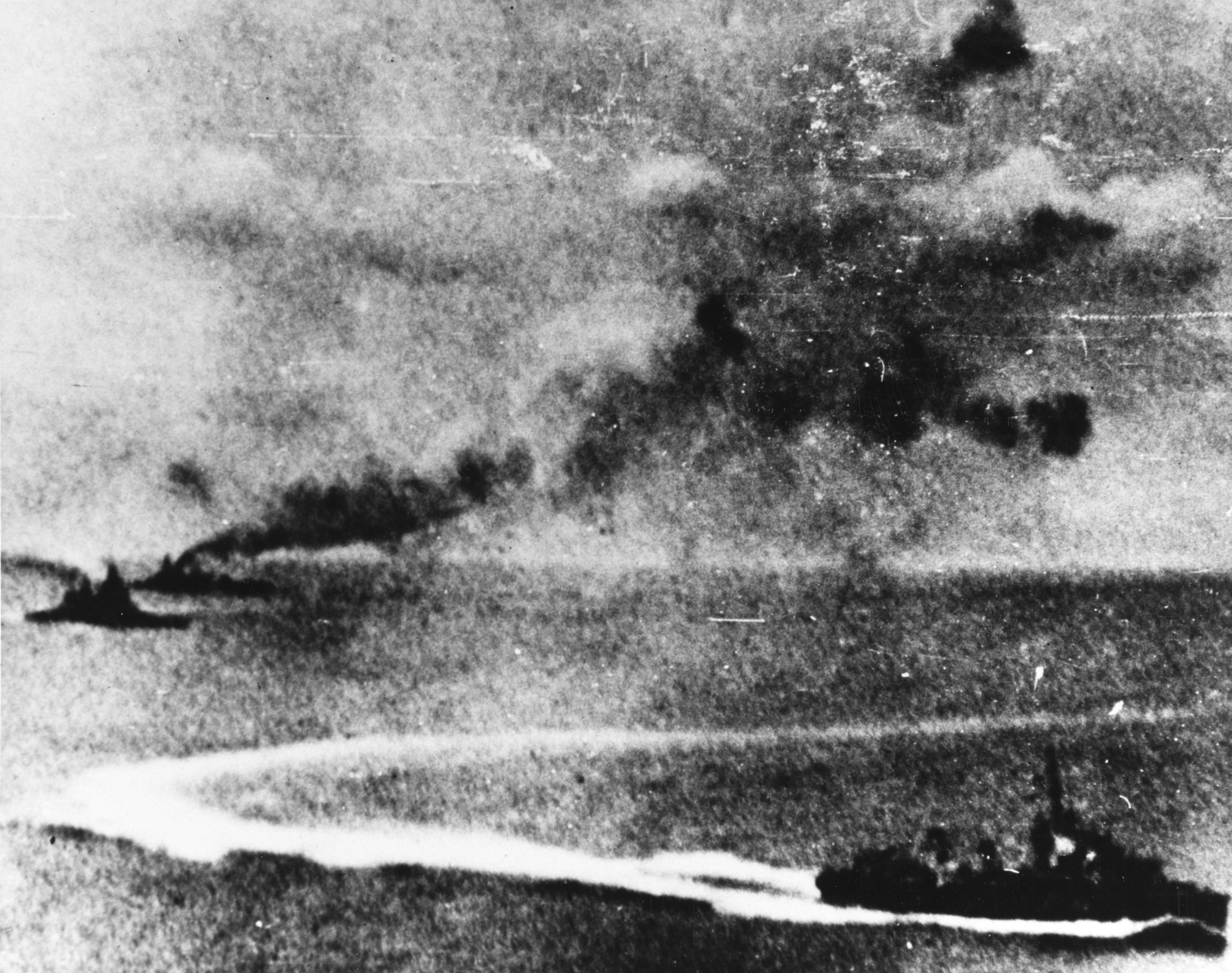
In just under two hours off the eastern coast of Malaya, two of Britain's most powerful warships, HMS Prince of Wales and HMS Repulse, were sent to the bottom of the South China Sea by Japanese aircraft. Around 840 sailors died. It was the Royal Navy's worst single naval disaster of the Far East war.
Winston Churchill received the news by telephone that morning. He later wrote that in all the war, he never received a more direct shock. It is easy to understand why. What happened on that Tuesday morning did not merely destroy two ships — it ended an era.
For the first time in history, capital ships had been sunk by air power alone while at sea and under way. The age of the battleship, which had dominated naval thinking for over a century, was over. The aircraft carrier was now queen of the seas. Survivors were pulled from the water by the destroyers HMS Electra, HMS Express, and HMAS Vampire — but the strategic damage could never be undone.
Why Force Z Was Sent to Singapore: Churchill's Gamble
By the autumn of 1941, Japan's intentions in South-East Asia were becoming impossible to ignore. Britain desperately needed to signal its resolve — and Singapore, the great naval base at the tip of the Malay Peninsula, was the keystone of the entire empire east of Suez.
Churchill championed the idea of a 'deterrent fleet': the theory that the sheer presence of powerful warships would make Tokyo think twice before striking southward. It was a political strategy dressed in naval clothing, and it would prove dangerously optimistic.
HMS Prince of Wales was the centrepiece of the plan. A brand-new King George V-class battleship, she had only recently distinguished herself in May 1941 during the hunt for the German battleship Bismarck. She was modern, powerful, and her arrival in Singapore made headlines around the world.
Alongside her sailed HMS Repulse — a First World War-era battlecruiser that, despite her refit, was significantly older, faster, and far less armoured than her companion. The pairing was an uncomfortable mismatch that few in the Admiralty were willing to acknowledge publicly.
There was meant to be a third major vessel. HMS Indomitable, a fleet carrier, was assigned to accompany Force Z and provide the fighter cover the squadron would so desperately need. But in November 1941, Indomitable ran aground off Jamaica during working-up trials. She never made it to Singapore. Force Z sailed without any aircraft carrier — a decision that would prove fatal.
Admiral Tom Phillips: The Man in Command
Vice Admiral Sir Tom Spencer Vaughan Phillips was not a man easily dissuaded. Known in Royal Navy circles as 'Tom Thumb' — a reference to his slight build rather than his confidence, which was formidable — Phillips had risen to the upper echelons of the Admiralty through sharp intellect and forceful personality.
He had argued, in internal Admiralty debates, that properly handled warships could defend themselves against air attack. It was a view shared by many senior naval officers of his generation, shaped by an era when the battleship was the supreme expression of national power. But it was a view increasingly at odds with the evidence emerging from the war in Europe and the Mediterranean.
Phillips flew his flag aboard HMS Prince of Wales and sailed from Singapore on 8 December 1941, the day after Pearl Harbor. His mission was to intercept Japanese troop convoys landing along the Malayan coast at Singora and Kota Bharu — to strike before the enemy could consolidate their beachheads.
He chose not to request RAF fighter cover. Partly this was about maintaining radio silence to preserve the element of surprise. Partly, it reflected his own convictions about what his ships could handle. It was a fateful decision — arguably the most consequential of his career.
Into Danger: The Voyage North and the Decision to Turn Back
Force Z — HMS Prince of Wales, HMS Repulse, and the destroyers HMS Electra, HMS Express, HMS Tenedos, and HMAS Vampire — headed north up the eastern coast of Malaya on the evening of 8 December. The plan was aggressive and bold, exactly the kind of operation Phillips relished.
But on the evening of 9 December, Japanese reconnaissance aircraft spotted the squadron. The element of surprise was gone. Phillips made the rational decision to reverse course and return to Singapore, abandoning the strike on the landing beaches.
Then came the detour that sealed the squadron's fate. A signal reached Phillips reporting Japanese landings near Kuantan on the Malayan coast. He altered course to investigate — placing his ships in open water at dawn on 10 December, far from Singapore and far from any hope of air cover.
The report turned out to be false. There were no landings at Kuantan. But by the time that became clear, Japanese aircraft had already found the fleet. Critically, Phillips had not informed RAF Singapore command of his changed position. No one on shore knew exactly where Force Z was — and no fighters were scrambled in time.
The Attack: 85 Japanese Aircraft Against Two Ships
At approximately 11:00 on the morning of 10 December 1941, the first Japanese aircraft appeared over the horizon. They came from the 22nd Air Flotilla, based in southern Indochina — a force of Mitsubishi G3M 'Nell' and G4M 'Betty' bombers whose crews had trained intensively for exactly this kind of attack.
Eighty-five aircraft in total were committed to the assault — a mix of high-level bombers and torpedo bombers operating in coordinated waves. The torpedo crews, in particular, were regarded as among the most skilled naval aviators in the world at that point in the war.
HMS Repulse was hit first and hit hard. She absorbed at least five torpedo strikes before capsizing and sinking at 12:33. Her captain, William Tennant, gave the order to abandon ship early enough that the majority of her crew were able to get off — a decision that saved hundreds of lives. Around 327 men died with her.
HMS Prince of Wales fared even worse. An early torpedo strike disabled her steering and flooded her engine rooms, leaving her wallowing and unable to manoeuvre. Her anti-aircraft defences — modern by the standards of the day — were critically hampered when the power to many of her gun mountings was knocked out by the damage below the waterline. Four more torpedoes finished her. She sank at 13:20.
Admiral Phillips and Captain John Leach both went down with Prince of Wales. Phillips never broadcast a distress signal. Rescue ships arrived only after both vessels had already sunk, racing against time — and against the sharks.
Survivors and the Human Cost: 840 Men Lost
Of the 2,921 men aboard both ships, approximately 2,081 survived — an extraordinary figure given the ferocity of the attack, testament to the courage of the destroyers' crews who pulled men from the oil-slicked sea for hours.
But 840 did not come home. Around 513 died aboard HMS Prince of Wales; approximately 327 aboard HMS Repulse. Survivors described scenes that stayed with them for the rest of their lives: the hiss of escaping steam, the smell of oil, men struggling to stay afloat in shark-infested water, the terrifying speed with which both great ships disappeared beneath the surface.
RAF Brewster Buffalo fighters finally reached the scene — but arrived some 90 minutes after the last ship had sunk. Their pilots looked down on a sea strewn with debris, lifejackets, and the heads of men still struggling in the water. It was an image that none of them forgot.
For many survivors, the ordeal was far from over. Singapore fell to Japanese forces on 15 February 1942, just ten weeks later. Large numbers of those rescued from the South China Sea found themselves as prisoners of war, enduring years of captivity in brutal conditions across South-East Asia.
Churchill's Shock and the Strategic Consequences
When First Sea Lord Dudley Pound telephoned Churchill with the news on the morning of 10 December, the Prime Minister was still in bed. He later described lying there, stunned, unable to sleep. The loss was not just material — it was psychological.
At a single stroke, the Royal Navy had been effectively eliminated from the Far East. The Indian Ocean and the South China Sea were now open water, with no British capital ship presence to contest them. Combined with the destruction wrought at Pearl Harbor three days earlier, the Allies had simultaneously lost naval dominance across the entire Pacific and Indian Ocean region.
Singapore — already under threat from Japanese forces pushing down the Malay Peninsula — now lay almost defenceless from the sea. The great fortress, the 'Gibraltar of the East,' fell on 15 February 1942 in what Churchill called Britain's greatest military defeat. Over 80,000 Allied troops surrendered to a Japanese force that had advanced 1,100 kilometres down the peninsula in just 70 days.
The disaster forced a fundamental rethink of British naval strategy. Battleships operating without air cover were no longer viable offensive weapons — a lesson that the loss of HMS Courageous in 1939 and the struggles of surface fleets in the Mediterranean had hinted at, but which Force Z finally made undeniable.
What Went Wrong: Command, Air Power, and Hubris
The grounding of HMS Indomitable off Jamaica was, in one sense, simply bad luck. But the decision to send Force Z to Singapore without alternative arrangements for air cover was a choice — and it was the wrong one.
Admiral Phillips's conviction that surface warships could handle air attack was not unique to him. It was embedded in the culture of a naval establishment that had spent decades elevating the battleship above all other considerations. But the evidence by December 1941 — from Taranto, from Crete, from the Atlantic — was already pointing clearly in the opposite direction.
The communication breakdown between Force Z, RAF Singapore command, and the Admiralty was equally damning. No coherent joint operations plan existed. When Phillips changed course on the night of 9 December, no one ashore knew where he was going. When the attack came, there was no system in place to get fighters overhead in time.
Post-war analysis confirmed what survivors suspected: Prince of Wales's anti-aircraft defences, though relatively modern, were rendered almost useless by the early torpedo damage that cut power to her gun mountings. She was essentially defenceless at the moment she needed her weapons most.
The Japanese 22nd Air Flotilla, meanwhile, had done exactly what it trained to do. Their torpedo attack profiles were precise, their coordination between waves was disciplined, and their pilots had practised for open-sea attacks against manoeuvring targets. In terms of naval air power, they were formidable opponents — and Force Z never stood a realistic chance against them.
The Legacy of Force Z: A Moment That Changed Naval History Forever
The sinking of HMS Prince of Wales and HMS Repulse is recognised by naval historians as the moment that conclusively ended the age of the battleship and confirmed the aircraft carrier as the dominant capital ship. It is studied at naval academies around the world as a definitive case study in the relationship between air power, sea power, and command decision-making.
Both wrecks lie in approximately 60 metres of water off the coast of Malaysia and are protected as war graves under Malaysian law. Divers visit the sites, which are clearly identifiable by the vast silhouettes of the hulls on the seabed, to pay their respects to the 840 men who remain there.
HMS Prince of Wales's ship's bell was recovered and is displayed at the National Museum of the Royal Navy in Portsmouth — a tangible, sobering link to the men who served and died aboard her. Each year, memorial services are held in Malaysia and the United Kingdom, attended by the families of those lost, ensuring that the human cost of that December morning is never reduced to mere statistics.
Force Z's fate delivered a lesson in the hardest possible currency: no warship, however modern or powerful, can survive in a contested theatre without air superiority. It is a principle that has shaped naval doctrine ever since — and one that the men of Prince of Wales and Repulse paid for with their lives.
If this piece resonated with you, we'd love to hear your thoughts in the comments below. Did you have a relative who served in the Far East in 1941 or 1942? Share this article with someone who loves military history — these stories deserve to be remembered.
Further Reading
- Imperial War Museum — collections and oral histories relating to the loss of Force Z and the Fall of Singapore
- The National Archives (United Kingdom) — Admiralty records and operational reports from the Far East Fleet, 1941–1942
- National Museum of the Royal Navy, Portsmouth — artefacts and documentation relating to HMS Prince of Wales
- Australian War Memorial — records relating to HMAS Vampire and Australian personnel who served with Force Z
- National Army Museum — broader context of the Malayan Campaign and the strategic collapse of British power in South-East Asia