The Quiz Question
The largest amphibious assault in U.S. military history before World War II landed 12,000 troops near which Mexican port city in March 1847 under General Winfield Scott?
- A. Veracruz
- B. Tampico
- C. Matamoros
- D. Monterrey
The answer is A. Veracruz. Here is the full story.
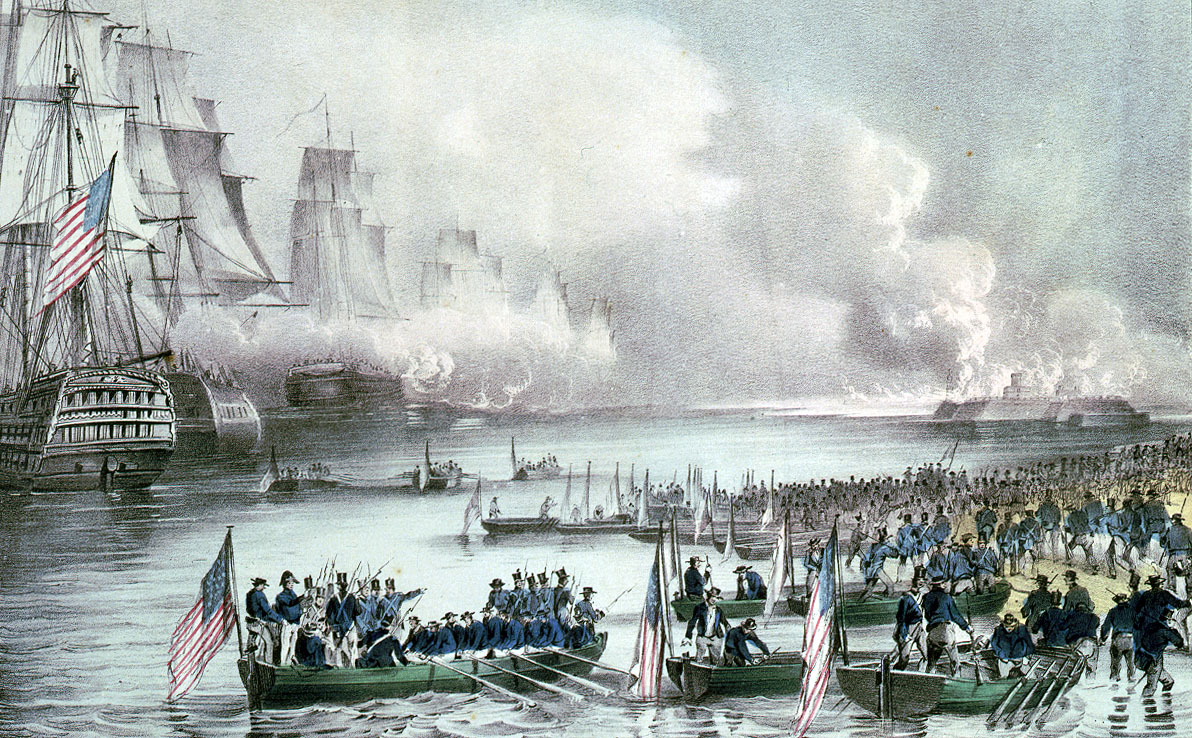
On the evening of March 9, 1847, something remarkable happened on a stretch of beach south of Veracruz, Mexico. In the space of four and a half hours, 12,000 American soldiers waded ashore through the Gulf surf without losing a single man to enemy fire. Nearly a century before the beaches of Normandy, the United States had pulled off its first great amphibious assault — and almost nobody outside military history circles knows it happened.
A Dress Rehearsal for D-Day: Why Veracruz Still Matters
The landing at Collado Beach was not a lucky improvisation. It was a meticulously planned joint army-navy operation that stunned military observers on both sides of the Atlantic. The operation was so well-executed that American and Allied planners studied it for decades, and its influence quietly shaped the amphibious doctrine that would win the Pacific War and storm the coast of France.
Among the junior officers standing on that beach in March 1847 were men whose names would later be carved into the granite of American memory: Robert E. Lee, Ulysses S. Grant, George McClellan, and Thomas "Stonewall" Jackson. They were young, ambitious, and watching a master at work. What they learned at Veracruz, they would apply — on opposite sides — fourteen years later in the bloodiest war America has ever fought.
The fall of Veracruz on March 29, 1847 opened the road to Mexico City and ended a war that reshaped the map of North America. To understand modern amphibious warfare, you have to start here — not in the English Channel, but on the Gulf Coast of Mexico.
The Road to War: Why America Invaded Mexico in 1847
The Mexican-American War had its immediate trigger in April 1846, when a skirmish along the disputed Rio Grande border provided President James K. Polk with the justification he needed to ask Congress for a declaration of war. Behind that skirmish lay the bigger ambition of Manifest Destiny — the conviction, widespread in American political life, that the United States was destined to stretch from the Atlantic to the Pacific.
The U.S. annexation of Texas in 1845 had already inflamed relations with Mexico, which refused to recognize the Rio Grande as the international boundary. General Zachary Taylor had won early victories at Palo Alto and Monterrey in northern Mexico, but the Mexican government showed no willingness to negotiate. Washington concluded that the war would only end if the Americans captured the enemy's capital.
To reach Mexico City, the U.S. needed a southern invasion route. That meant Veracruz — Mexico's most important port, its commercial lifeline, and the eastern terminus of the National Road (El Camino Real) that ran 250 miles west to the capital. Seize Veracruz, and you held the key to the entire country.
General Winfield Scott: The Man Behind the Plan
Commanding the invasion was General Winfield Scott, aged 60 in 1847 and the most experienced soldier in the United States Army. A veteran of the War of 1812 and standing 6 feet 5 inches tall, Scott was a physically imposing figure who dominated any room he entered. His nickname, "Old Fuss and Feathers," reflected his love of ceremonial uniform and rigid military discipline — but it obscured a genuinely brilliant operational mind.
Scott had studied British amphibious operations during the Napoleonic Wars, particularly the 1801 landing at Aboukir Bay in Egypt, and he drew on those models when planning the Veracruz campaign. He understood that a landing against a fortified coastal city required specialized equipment that simply didn't exist in the U.S. inventory — so he had it built. Scott commissioned 141 purpose-built flat-bottomed surf boats, each capable of carrying 40 fully equipped soldiers through the Gulf's unpredictable surf.
He assembled his invasion force at the island of Lobos, roughly 80 miles south of Tampico, coordinating army regiments, U.S. Navy warships, and a Marine contingent in what was, for its time, an extraordinarily complex joint operation. The logistical planning alone was a feat that military historians have consistently praised as ahead of its era.
The Landing at Collado Beach: March 9, 1847
Scott's staff selected Collado Beach as the landing site — roughly three miles south of Veracruz — because it lay just beyond the effective range of the city's most formidable defensive installation, the fortress of San Juan de Ulúa. The fortress mounted over 100 heavy cannons and had successfully repelled French naval bombardment as recently as 1838. Scott had no intention of sailing his troops directly under those guns.
At 5:30 p.m. on March 9, the first wave of surf boats pushed off from the fleet and headed for the beach. The U.S. Navy, under Commodore David Conner, positioned warships offshore to provide covering fire. Mexican forces, though they observed the landing, offered almost no organized resistance. By 10:00 p.m., all 12,000 soldiers were ashore — an entire army delivered to a hostile coast in four and a half hours without a single combat fatality.
As the first troops hit the sand, they planted the American flag on the beach to thunderous cheering from sailors watching off the ships. Scott understood the theatre of warfare as well as its mechanics. The moment was carefully choreographed to project confidence — and it worked.
The Siege of Veracruz: Guns, Disease, and a City Under Fire
Veracruz was not going to fall to a frontal assault without catastrophic American casualties. The city's stone walls were thick, the garrison was armed, and San Juan de Ulúa remained a potent threat. Scott, characteristically, chose the slower but surer path: encirclement and bombardment.
By March 13, American forces had completely surrounded the city, cutting off supply routes. The artillery bombardment began on March 22, with American guns — including heavy naval cannon dragged ashore by sailors and Marines — firing approximately 6,700 rounds over five days. The effect on the city was devastating, and Mexican civilians paid a terrible price. Estimates suggest more than 500 civilian deaths during the bombardment, a toll that deeply troubled several American officers.
Captain Robert E. Lee, serving as Scott's chief engineering officer, personally scouted forward artillery positions under enemy fire to identify the most effective gun placements. Lee was moved by the suffering of Veracruz's civilian population, writing home about the moral weight of what he was witnessing. It was an early glimpse of the conscience that would make him such a complicated figure in the war to come.
Scott had another enemy pressing on him: yellow fever. Known locally as vómito negro — black vomit — the disease devastated armies that lingered in the lowland coastal heat. The deadly season typically peaked in April. Scott knew that every day he spent at Veracruz was a day closer to catastrophe from disease rather than Mexican guns. Speed was not just a tactical preference; it was a medical necessity.
Surrender and Victory: March 29, 1847
On March 26, Mexican commander General Juan Morales requested terms. Negotiations moved quickly, and on March 29, 1847 — just 20 days after the landing — Veracruz formally surrendered. The Mexican garrison of roughly 3,360 men marched out and were paroled, meaning they were released on the condition they would not take up arms again during the war.
American casualties for the entire Veracruz campaign totaled approximately 80 killed and wounded — an astonishingly light butcher's bill for a siege of this scale and ambition. Scott's insistence on encirclement rather than frontal assault had saved hundreds of American lives. His army was also clear of the city before the worst of the yellow fever season struck, vindicating his timetable completely.
With Veracruz secured, Scott held not just a port but a highway. The National Road west toward Mexico City now lay open, and the army that would travel it was intact, supplied, and battle-hardened.
The Faces of the Future: Young Officers at Veracruz
Scott later described Captain Robert E. Lee as "the greatest military genius in America" — high praise from a man who did not distribute compliments carelessly. Lee's work at Veracruz, scouting terrain and positioning artillery under fire, demonstrated the combination of physical courage and engineering precision that would define his generalship in the Civil War.
Lieutenant Ulysses S. Grant served as a regimental quartermaster during the campaign — a logistical role that gave him an education in the grinding practical realities of moving an army. Grant later wrote in his memoirs that he believed the Mexican-American War was an unjust conflict, but acknowledged it taught him nearly everything he came to know about commanding forces in the field.
Lieutenant P.G.T. Beauregard served as an engineer under Scott and absorbed the same lessons about joint planning and siege operations. Fourteen years later, Beauregard would order the guns that fired on Fort Sumter, opening the Civil War. Lieutenant George McClellan, future commander of the Union Army of the Potomac, closely studied Scott's methodical planning approach — though history suggests he absorbed its caution more thoroughly than its decisiveness.
The Mexican-American War was a shared crucible. Men who fought side by side at Veracruz and Chapultepec would face each other across the bloodiest battlefields in American history — at Antietam, Gettysburg, and the Wilderness. The professional bonds formed in Mexico made the later personal betrayals of the Civil War all the more searing.
Mexico City and the End of the War
From Veracruz, Scott's army marched inland. It defeated Mexican forces at Cerro Gordo on April 18, then fought its way through Contreras and Churubusco in August before storming the fortress of Chapultepec on September 13, 1847. Mexico City fell the following day, September 14.
The image of U.S. Marines raising the American flag over Mexico's National Palace gave birth to the famous opening line of the Marine Corps Hymn: "From the Halls of Montezuma." It was a moment of American triumphalism that the Mexican people have never entirely forgiven or forgotten.
The Treaty of Guadalupe Hidalgo, signed on February 2, 1848, formally ended the war. Mexico ceded 525,000 square miles of territory — the land that became California, Nevada, Utah, Arizona, New Mexico, and parts of Colorado and Wyoming. The United States paid Mexico $15 million in compensation, a sum that did little to soften the blow of losing over half the country's national territory. The war's outcome immediately reignited the explosive debate over slavery in the new western territories, accelerating the political fractures that would culminate in Civil War thirteen years later.
Legacy: How Veracruz Shaped Modern Amphibious Warfare
The Veracruz landing was the first large-scale, jointly planned army-navy amphibious operation in U.S. history. Everything about it — the purpose-built landing craft, the offshore naval fire support, the carefully chosen beach away from enemy fortifications — established a template that American planners would return to again and again.
The flat-bottomed surf boats Scott commissioned were direct conceptual ancestors of the Higgins boats, the landing craft vehicle personnel (LCVPs) that carried American troops ashore at Guadalcanal, Tarawa, and Normandy. U.S. Marine Corps planners in the 1920s and 1930s studied the Veracruz operation extensively when developing the amphibious doctrine that would win the Pacific War. The intellectual line from Collado Beach to Omaha Beach is shorter than most people realize.
Veracruz also appeared in American military history a second time. In April 1914, President Woodrow Wilson ordered U.S. Marines ashore at Veracruz to prevent a German arms shipment from reaching the Mexican government — another amphibious operation at the same city, echoing the events of 1847. Scott's campaign remains a case study at West Point and military staff colleges around the world, studied not as a relic of the past but as a living example of what meticulous planning, genuine joint-service cooperation, and disciplined execution can achieve.
Twelve thousand men. Four and a half hours. Zero combat casualties on the beach. Winfield Scott accomplished in one March evening what many thought impossible — and in doing so, he wrote the first chapter of modern amphibious warfare.
If the story of Veracruz surprised you, or if you have a connection to the Mexican-American War through family history or military service, we'd love to hear from you in the comments below. Share this article with a fellow history lover who deserves to know the full story of America's forgotten amphibious masterpiece.
Further Reading
- U.S. National Archives and Records Administration — holds primary military records, muster rolls, and official correspondence from the Mexican-American War
- Smithsonian National Museum of American History — collections covering 19th-century American military history and the Mexican-American War era
- U.S. Army Center of Military History — publishes official historical studies of American campaigns including the Veracruz operation
- U.S. Naval Institute — extensive holdings on the history of American naval operations and amphibious warfare doctrine
- Library of Congress — primary sources, maps, and photographs documenting the Mexican-American War and Winfield Scott's campaigns