Disaster at Isandlwana
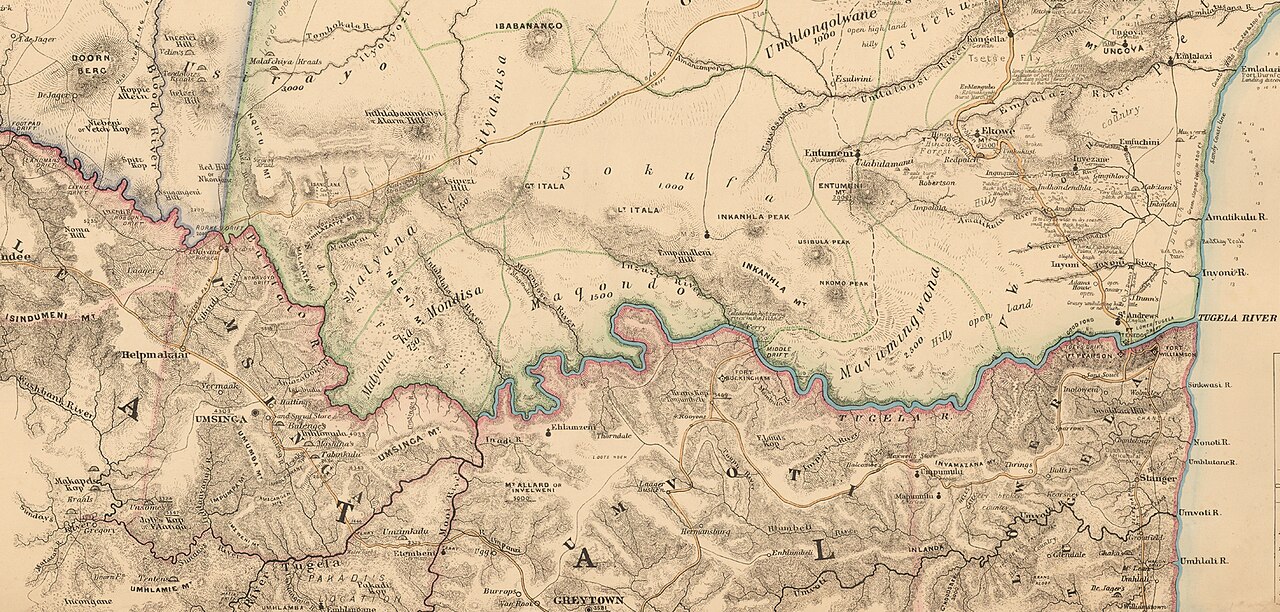
On the morning of 22 January 1879, a Zulu army of approximately 20,000 warriors overran the British camp at Isandlwana in what is now KwaZulu-Natal, South Africa. It was the worst defeat the British Army had suffered at the hands of an indigenous force. Over 1,300 British and allied troops were killed in a battle that lasted barely two hours.
Ten miles away, at a small mission station called Rorke's Drift on the Buffalo River, a garrison of around 150 British soldiers was about to receive the most terrifying news imaginable. A Zulu force of between 3,000 and 4,000 warriors was heading straight for them.
No Time to Run
The garrison was commanded by two junior officers: Lieutenant John Chard of the Royal Engineers and Lieutenant Gonville Bromhead of the 24th Regiment. They had roughly 140 fit men, plus thirty-five patients lying sick and wounded in the mission hospital. Running was not an option. The Zulus would catch any retreating column in open ground.
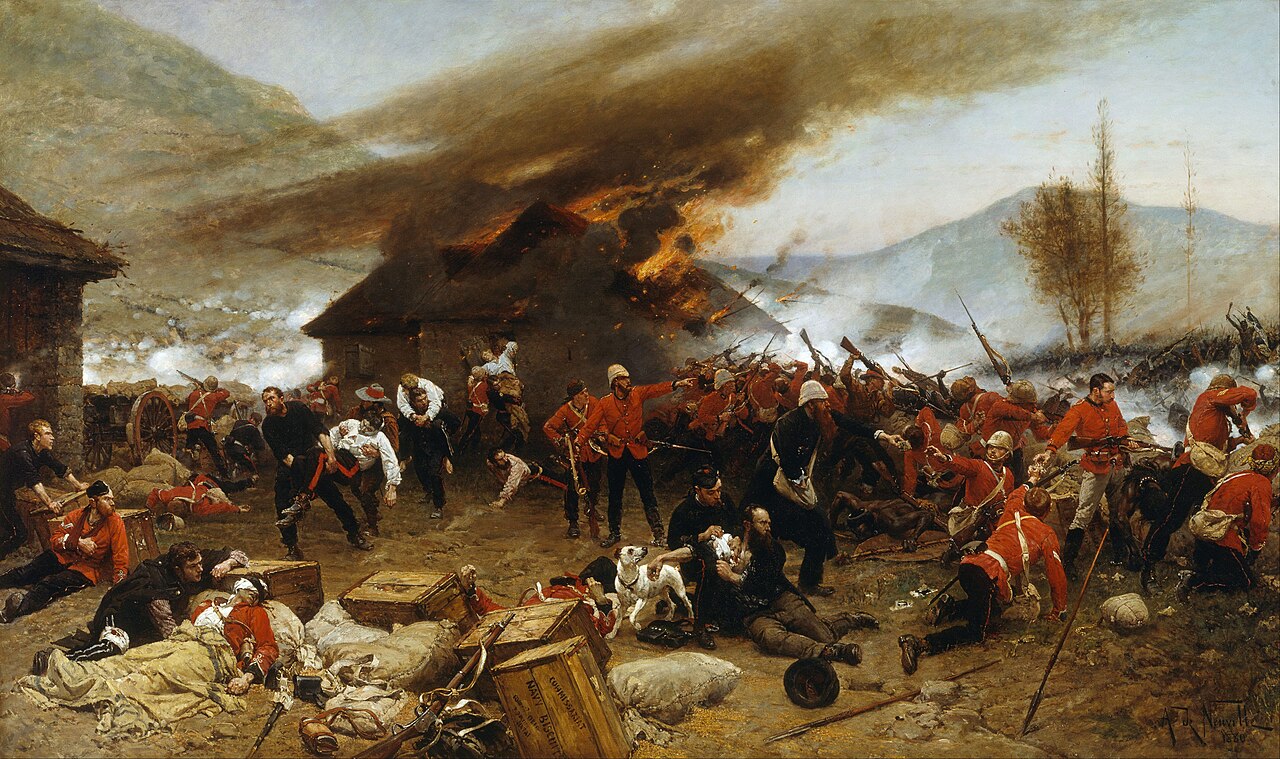
With barely an hour's warning, Chard and Bromhead made the decision to stand and fight. They ordered every available man to build barricades from mealie bags (heavy sacks of corn) and biscuit boxes, connecting the two main buildings, the storehouse and the hospital, into a makeshift fort.
The Attack Begins
The Zulu force appeared at around 4:30 in the afternoon, advancing at speed in their classic chest-and-horns formation. They hit the south wall first, a human wave crashing against the barricades of grain sacks. The defenders fired in disciplined volleys, each bullet punching through the ranks at close range.
The Zulus fell back, regrouped, and attacked again. And again. They probed every section of the perimeter, looking for a weakness. The fighting was intense, hand-to-hand in places, with bayonets against stabbing spears across the barricades.
The Hospital Burns
The most desperate fighting took place at the hospital. The Zulus set fire to the thatched roof, and the defenders inside had to fight from room to room, hacking through partition walls to evacuate patients while the building burned around them. Privates Henry Hook, John Williams, and others performed extraordinary feats of bravery, dragging wounded men through holes in the walls under constant attack.
As the hospital was lost, Chard pulled his perimeter back to a tighter defensive position around the storehouse, using a wall of biscuit boxes as a final redoubt. The smaller area was easier to defend, but the garrison was shrinking with every hour.
Through the Night
The battle raged through the darkness. The Zulus attacked in waves, sometimes pausing for an hour before surging forward again. The defenders fired until their rifles were too hot to hold, then fought with bayonets. Ammunition was distributed from the storehouse by men crawling under fire across the yard.
By the early hours of 23 January, the attacks began to weaken. At dawn, the surviving defenders looked out over a landscape of fallen warriors. The Zulus had withdrawn, exhausted and having suffered heavy casualties of their own.
The Aftermath
The garrison had held. Seventeen British soldiers were killed and fifteen were seriously wounded. Zulu casualties are estimated at around 350 killed and over 500 wounded, though exact figures remain uncertain.
Eleven Victoria Crosses were awarded for the defence of Rorke's Drift, more than for any single action before or since in British military history. Chard and Bromhead both received the decoration, as did several privates whose individual acts of bravery under fire were remarkable.
Courage on Both Sides
The defence of Rorke's Drift was an extraordinary feat of arms. But it is important to remember the courage shown on both sides. The Zulu warriors who attacked into massed rifle fire with nothing but shields and spears displayed bravery that was every bit as extraordinary as that of the defenders.
The battle took place within a colonial war that brought immense suffering to the Zulu nation. Remembering the courage shown at Rorke's Drift means remembering all of it, the valour, the tragedy, and the human cost on every side.
What do you think of the stand at Rorke's Drift?