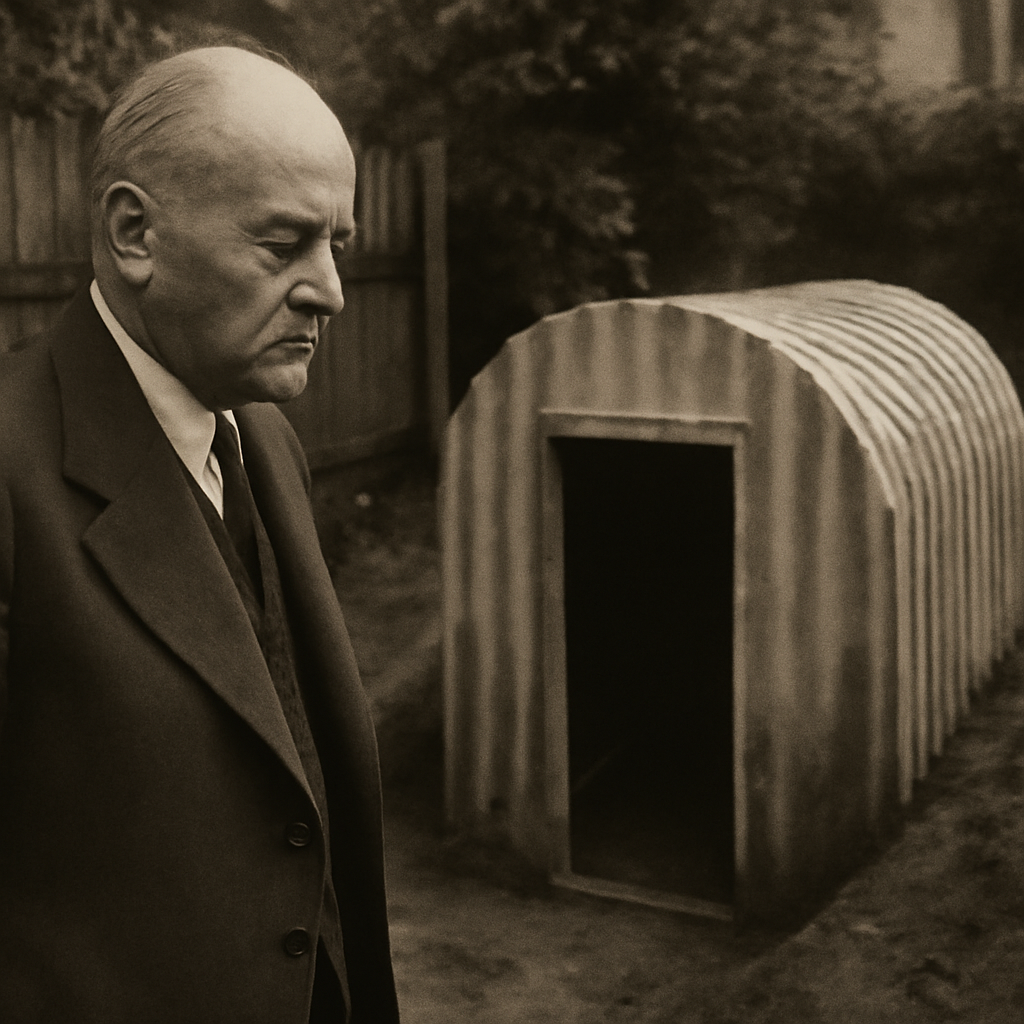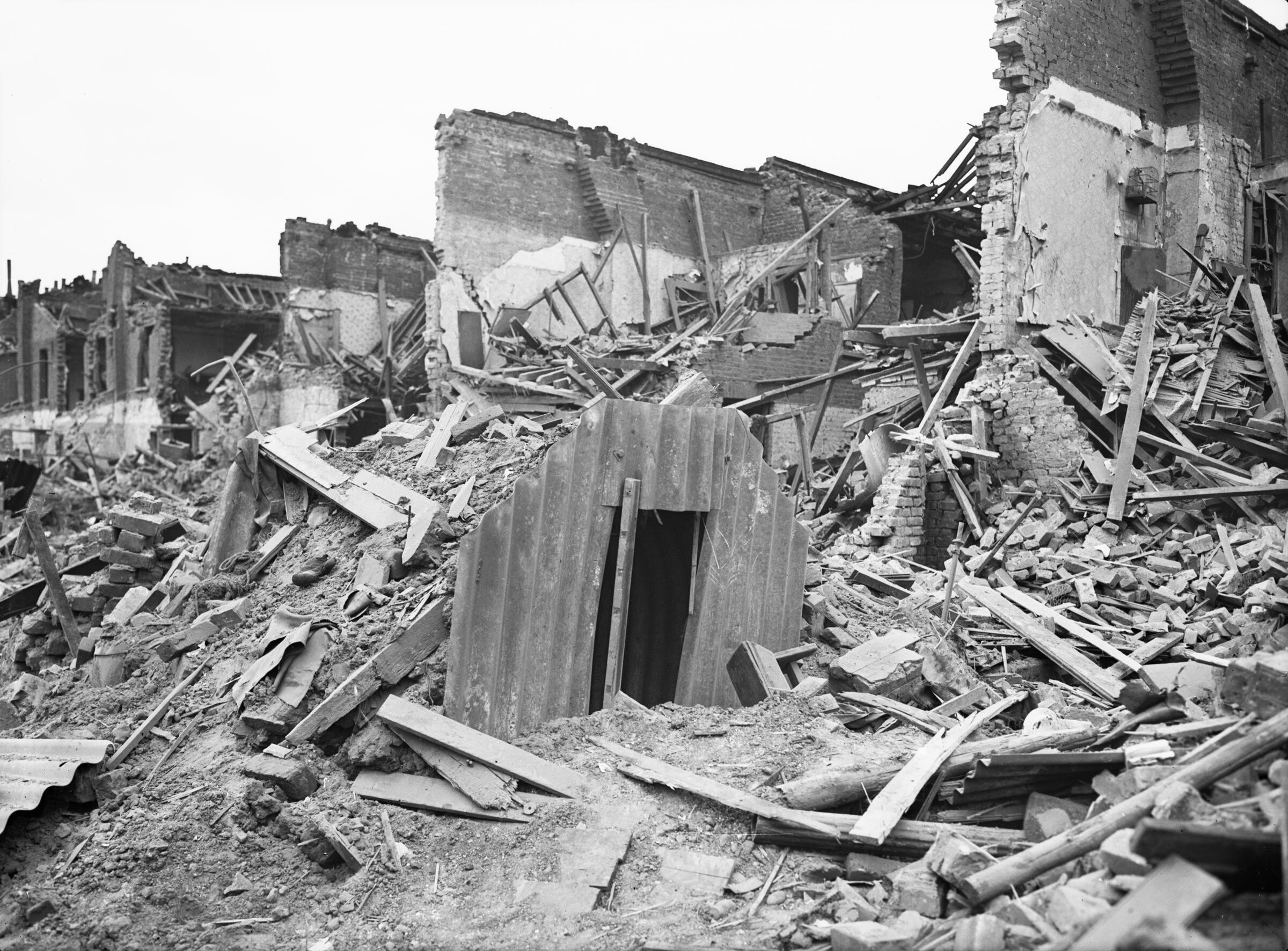
My grandmother spent the war cramped in a damp hole in her Coventry garden, listening to the Luftwaffe overhead while clutching my infant mother. That corrugated iron tomb saved their lives, and here's what pisses me off: when we celebrate Britain's finest hour, we remember the Spitfires and Churchill's speeches, but we've forgotten the unglamorous garden sheds that actually kept families breathing.

When the Blitz Gets All the Glory, Who Remembers the Garden Sheds That Saved Us?

We all know the iconic image - St Paul's Cathedral standing defiantly amid the flames of burning London. It's a powerful symbol, but what about the two and a quarter million families huddled in backyard bunkers across Britain? While the cathedral survived as a monument to British resilience, it was the Anderson shelters that saved actual lives.

These corrugated iron lifesavers were unglamorous, uncomfortable, and absolutely essential. Without them, Britain's civilian death toll during the Blitz would have been catastrophic. They deserve recognition alongside the Spitfires and Churchill's speeches - because while those symbols inspired us, Anderson shelters kept us alive.

The harsh reality? More British civilians survived because of these basic backyard bunkers than were saved by any other single piece of wartime technology. That's not poetry - that's mathematics written in blood and corrugated steel.

B-17 bomber aircraft display representing World War 2 aerial bombing threat to Britain during the Blitz campaign

Sir John Anderson Was Brilliant - But His Shelter Design Was Brutally Basic

Sir John Anderson became an unlikely wartime hero - not through military genius, but through civil service pragmatism. Faced with the impossible challenge of protecting millions of civilians with limited resources and precious little time, he chose function over form.

Anderson's decision to use corrugated steel over concrete wasn't about engineering elegance - it was about economics and speed. Concrete took time and skilled labor Britain didn't have. Steel could be mass-produced and assembled by anyone with a spade and determination.

The genius lay in brutal simplicity: six curved sheets, fourteen straight ones, and a prayer. No fancy engineering, no complex instructions - just enough metal to deflect blast and shrapnel, buried deep enough to absorb the shock. It wasn't sophisticated, but sophistication kills people when you're racing against time.

WWII Anderson shelter interior showing basic corrugated steel construction and cramped conditions during Battle of Britain er

Free for the Poor, £7 for Everyone Else - Class Warfare in Wartime

The government's means test revealed wartime Britain's uncomfortable truth about class. Families earning under £250 annually got their shelters free - everyone else paid £7, equivalent to roughly £400 today. Was this fair when German bombs didn't discriminate by income?

The bitter irony cut deep. Wealthier families could afford professionally-built brick shelters or simply evacuate to the countryside. Meanwhile, working-class families who couldn't pay faced a grim choice: dig deep into savings for protection, or trust to luck and flimsy roofs.

By September 1939, 2.25 million shelters had been distributed. The speed of deployment was remarkable, but the class divisions remained. Death might be the great equalizer, but survival apparently came with a price tag attached.

WWII era memorial clothing displayed as wartime historical artifact from British home defense period

Digging for Your Life: The Anderson Shelter Assembly Challenge

The instruction manual promised "simple assembly" - a lie that defeated many a determined father. Picture this: you've just received twenty curved and straight sheets of corrugated steel, and your family's survival depends on your DIY skills.

First came the back-breaking work - digging a pit four feet deep with nothing but a spade. Your neighbors watched and judged as you wrestled with British clay or sandy soil, knowing their lives might depend on your handiwork too.

Then the real fun began: bolting together curved sheets while fighting British weather and your own mechanical incompetence. The finishing touch involved piling three feet of earth on top, permanently scarring your garden but potentially saving your family's lives.

American soldiers wade through cold water during D-Day landing at Omaha Beach, Normandy, June 1944

Cold, Damp, and Crawling with Spiders - But Alive

Anderson shelters were absolutely miserable places to spend the night. Water seeped through joints, condensation dripped constantly, and the underground chill penetrated every bone. Families of six crammed into spaces smaller than a modern bathroom, sharing the accommodation with spiders, beetles, and whatever else called British soil home.

The psychological toll was enormous. Children cried, adults snapped, and everyone questioned whether this damp tomb was better than taking chances upstairs. Comfort was a luxury no one could afford when the air raid sirens wailed.

But when the bombs fell and houses disintegrated around them, these uncomfortable refuges became the most important places on earth. Misery was temporary - death was permanent.

German soldiers in World War II uniform during wartime operations, historical military photograph from 1939-1945 period

The Statistics That Matter: Lives Saved vs Comfort Lost

The numbers tell the real story. Anderson shelters showed surprisingly high survival rates against everything except direct hits - and even then, some families walked away from obliterated gardens while their neighbors' houses lay in ruins.

More importantly, having somewhere to go reduced panic and improved civilian morale. ARP wardens reported fewer incidents of hysteria in areas with high shelter coverage. People fought better when they had somewhere to retreat.

Post-war analysis revealed thousands of families owed their survival entirely to corrugated iron and earth. Not to mention the countless others whose lives were saved because rescue workers didn't have to dig them out of collapsed buildings.

Were Anderson Shelters Britain's Greatest Wartime Innovation?

Compare Britain's approach to Germany's more sophisticated air raid shelter systems. The Germans built impressive concrete bunkers - for those who could reach them in time. British families had protection literally in their backyards, available within seconds of the first siren.

Sometimes the best protection is simply the protection you actually have. Chain Home radar might have given early warning, but Anderson shelters gave immediate sanctuary.

The enduring lesson remains profound: faced with existential threat, simple solutions that work beat sophisticated systems that don't arrive in time. Anderson shelters embodied British pragmatism at its finest - unglamorous, uncomfortable, but undeniably effective.

My grandmother's Anderson shelter is long gone, but her stories remain vivid. Those corrugated iron refuges deserve remembrance alongside Britain's more glamorous wartime achievements. What family stories do you have about life in the shelters? Share your memories of Britain's backyard bunkers in the comments below.