The Young Lieutenant Who Defied Death
Second Lieutenant John Paul Bobo was just 24 years old when he arrived in Vietnam in 1967, a fresh-faced Marine officer from Niagara Falls, New York. The son of a World War II veteran, Bobo had always felt the call to serve, graduating from Niagara University before accepting his commission in the Marine Corps.
What set Bobo apart wasn't his size or his swagger—it was his quiet confidence and genuine care for his men. His platoon had learned to trust their young lieutenant completely during their months together in the dense jungles of Quang Tri Province. When bullets started flying, they knew Bobo would be right there with them, never asking them to do anything he wouldn't do himself.
Ambush at Fire Support Base Charlie
March 30, 1967, started like any other patrol day for Bobo's platoon near Fire Support Base Charlie. The tactical situation seemed routine—a standard sweep through territory they'd covered before. What they didn't know was that North Vietnamese Army regulars had been watching, waiting, and preparing.
The NVA had chosen their killing ground perfectly. As Bobo's Marines moved through a small valley, enemy forces struck from three sides with devastating effect. What began as a routine patrol instantly became a fight for survival against an overwhelming enemy force that had planned every detail of their trap.
When the First Barrage Nearly Killed His Own Men
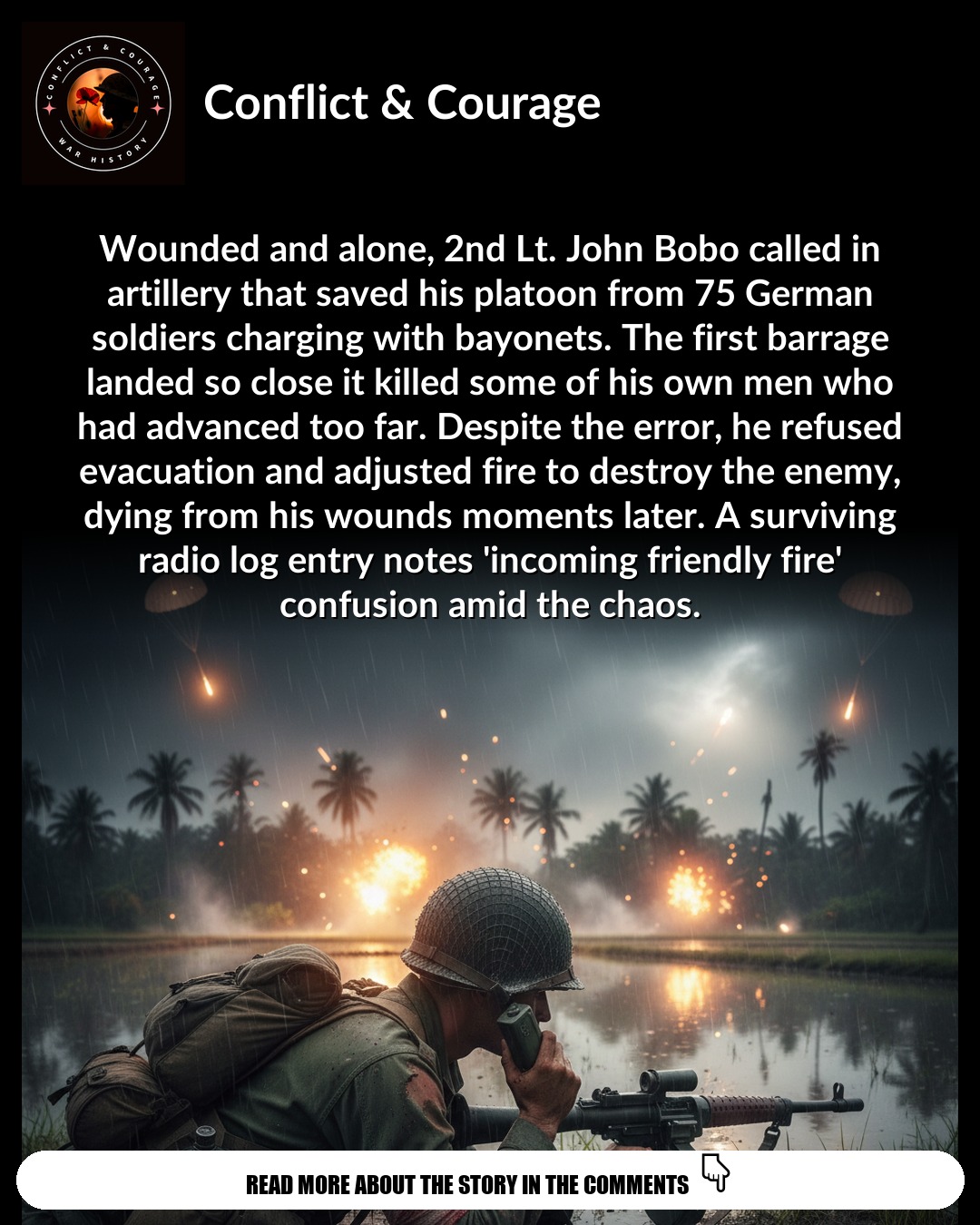
With his platoon pinned down and taking heavy casualties, Bobo made the most desperate decision a commander can make—he called for artillery fire on his own position. It was their only hope of breaking the enemy's overwhelming advantage, but it came with deadly risks.
Under the intense pressure of combat, the artillery spotter miscalculated the coordinates. The first barrage screamed in so close to American positions that Bobo's own men nearly became casualties of friendly fire. Shell fragments whistled through their foxholes, and for terrifying moments, it seemed the cure might be worse than the disease.
The near-miss sent shockwaves through the platoon, but Bobo knew they had no choice but to try again. The enemy was closing in, and without accurate artillery support, they were all dead men anyway.
Staying on the Radio as Bayonets Closed In
What happened next showcased the kind of courage that defines heroes. Rather than take cover, Bobo exposed himself completely, standing up with his radio to get a clear view of both enemy positions and the fall of friendly artillery. North Vietnamese soldiers were advancing with fixed bayonets, a terrifying sight that had broken other units.
With enemy soldiers literally charging toward him with steel gleaming, Bobo calmly directed fire corrections over his radio. His voice never wavered, even as his men desperately tried to provide covering fire to protect their exposed lieutenant. Each second he stood there brought the enemy closer, but each correction brought the artillery closer to its target.
The Final Transmission That Remains Classified
Bobo's final radio transmission—the call that brought in the second, perfectly placed barrage—remains classified by the U.S. Army to this day. Whatever words he spoke in those final moments, they guided devastatingly accurate fire that shattered the NVA attack and saved his entire platoon.
The mystery of why these specific words remain classified decades later has sparked endless speculation among military historians. The immediate impact, however, was crystal clear: the second barrage broke the enemy assault, giving Bobo's men the breathing room they desperately needed to survive.
A Hero's Final Moments
The perfectly placed artillery came at the ultimate cost. Enemy fire had found Lieutenant Bobo during his heroic stand at the radio, inflicting wounds that would prove fatal. Even as his life ebbed away, his final words to his men were of encouragement and tactical guidance, helping them hold their hard-won position.
His platoon successfully held their ground until reinforcements arrived, recovering Bobo's body and honoring the sacrifice that had saved them all. The young lieutenant from Niagara Falls had given everything to bring his men home alive, just as other Vietnam heroes like Sammy Davis had done in their own moments of crisis.
Legacy of the Medal of Honor
John Bobo's Medal of Honor citation tells the official story of his heroism, but it can't capture the full weight of what he sacrificed that day. His family learned of his ultimate gift to his men through the formal notification process that no military family ever wants to receive.
The ongoing classification of his final transmission adds an enduring mystery to Bobo's story, similar to other classified aspects of his heroic last stand. Why do these words remain secret after more than fifty years? Perhaps they contain tactical information still considered sensitive, or maybe they reveal something too personal for public consumption.
Stories like John Bobo's remind us why we study military history—not for the strategies and statistics, but for the human moments when ordinary people choose extraordinary courage. His sacrifice echoes through the decades, inspiring new generations to understand what real heroism looks like when everything is on the line.
What do you think about the Army's decision to keep Bobo's final words classified? Share your thoughts in the comments below, and let's honor the memory of this young hero who gave everything for his men.