The Quiz Question
Which July 1863 assault on a South Carolina fort saw the African American 54th Massachusetts Infantry, led by Colonel Robert Gould Shaw, mount a famous but costly charge later depicted in the film Glory?
- A. Battle of Fort Wagner
- B. Battle of Fort Pulaski
- C. Battle of Fort Fisher
- D. Battle of Honey Hill
The answer is A. Battle of Fort Wagner. Here is the full story.
A Charge That Changed How America Saw Its Black Soldiers
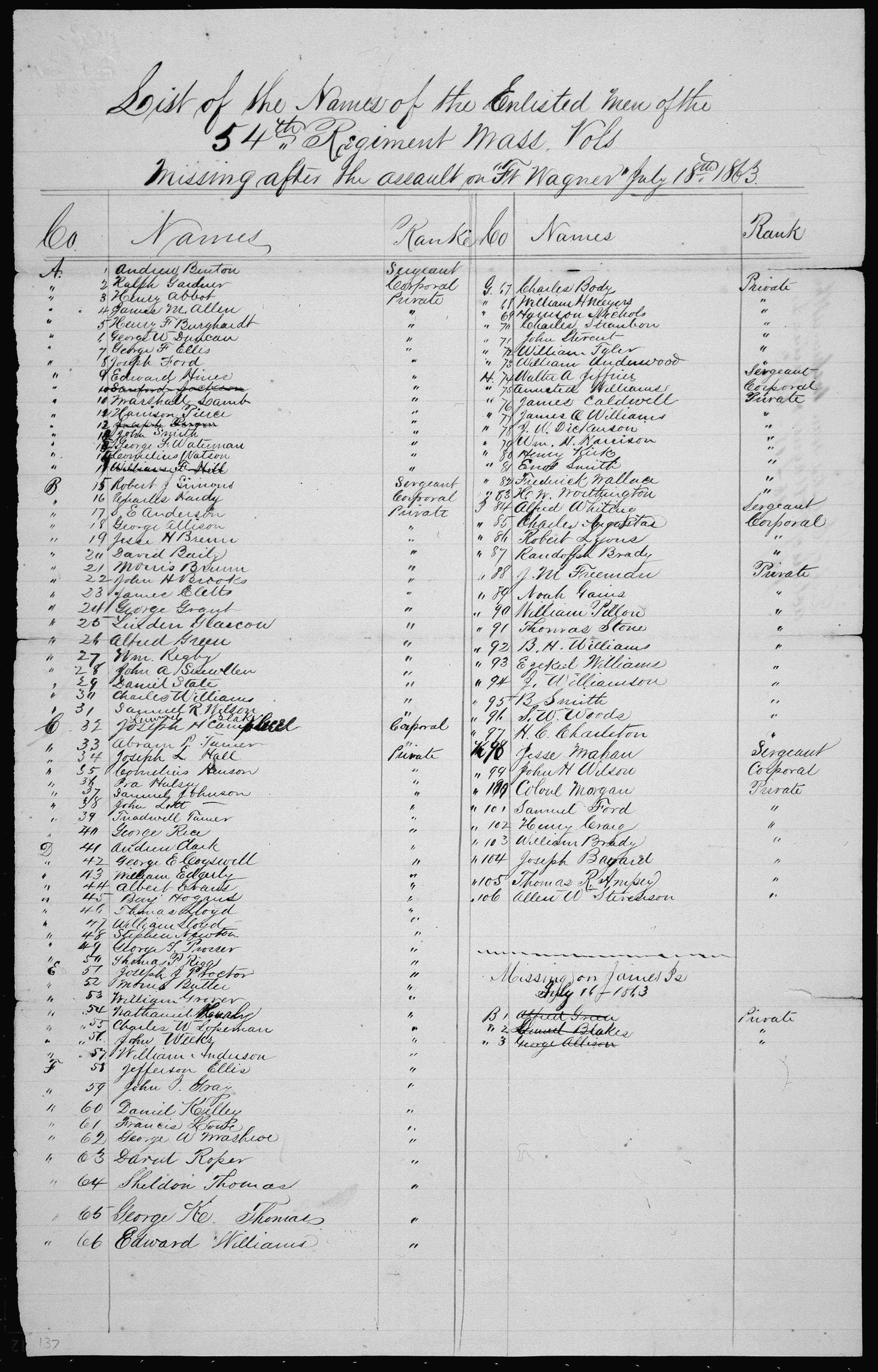
On the evening of 18 July 1863, roughly 600 men of the 54th Massachusetts Infantry fixed bayonets and began running toward a heavily fortified Confederate earthwork on Morris Island, South Carolina. The assault on Fort Wagner lasted less than an hour. It cost the regiment around 272 casualties — nearly 45% of the men engaged — including their commanding officer, Colonel Robert Gould Shaw, killed at the parapet with his sword raised.
That charge became one of the defining moments of the entire Civil War. It challenged widespread Northern doubt about whether Black men would fight, and it forced a painful national reckoning about race, citizenship, and sacrifice. The 1989 film Glory, starring Denzel Washington and Matthew Broderick, brought the story to a global audience a century later. But the real history is even more remarkable than the film conveyed.
The Road to War: Why the 54th Massachusetts Mattered
When the Civil War began in April 1861, the Union Army flatly refused to enlist Black men as soldiers. The policy was rooted in racial prejudice that ran through both North and South, and many white Union officers openly doubted whether Black men would stand and fight under fire.
President Lincoln's Emancipation Proclamation of 1 January 1863 changed the political landscape dramatically. It explicitly authorised the recruitment of Black soldiers into Union forces, transforming the war's moral character and opening a debate about Black military service that would echo for decades.
Massachusetts Governor John A. Andrew was among the first to act. Granted permission in January 1863 to raise a Black regiment in the North, he launched recruitment across the entire free Northern states — drawing men from Ohio, Indiana, New York, and even Canada, because Massachusetts's Black population alone was too small to fill the ranks. The regiment's formation was a political experiment as much as a military one. Abolitionists, politicians, and ordinary citizens all watched closely to see whether Black soldiers would prove themselves under fire.
Colonel Robert Gould Shaw: The Man Chosen to Lead Them
Robert Gould Shaw was born on 10 October 1837 into a wealthy Boston abolitionist family. His parents, Francis and Sarah Shaw, were prominent figures in the anti-slavery movement, and Shaw grew up surrounded by some of the most important reform thinkers of the age.
He was already a combat veteran when Governor Andrew selected him for the command. Shaw had served with the 2nd Massachusetts Infantry and seen brutal fighting at the Battle of Antietam in September 1862, so he carried no illusions about what war actually looked like. He accepted the commission reluctantly at first — his private letters reveal genuine ambivalence about leaving his old regiment — but quickly became deeply committed to his men and to proving their worth.
At just 25 years old on the night of the Fort Wagner assault, Shaw was regarded by contemporaries as disciplined, fair, and genuinely invested in the regiment's success. His choice to lead from the front on 18 July was both an act of duty and an unmistakable statement of solidarity.
Morris Island and the Strategic Stakes Around Charleston
Charleston, South Carolina, was the symbolic heart of the Confederacy. It was the city where secession had crystallised and where the war's first shots were fired at Fort Sumter in April 1861. For the Union, capturing Charleston was not just a military objective — it was a propaganda prize of enormous value.
Morris Island sits at the southern entrance to Charleston Harbour. Seizing it, and the forts guarding it, would allow Union artillery to bombard the city directly. Fort Wagner — also called Battery Wagner — was a formidable earthwork of sand and timber stretched across the narrow northern tip of the island, protected by a water-filled ditch, mines, and heavy cannon pointing directly down the only viable approach: a strip of beach barely 60 yards wide between the Atlantic Ocean and a marsh.
Union General Quincy Gillmore devised a plan to land troops to the south of Morris Island and push northward to take Fort Wagner. It was a logical strategy on paper, but it fatally underestimated the strength of the fort's defences and the resilience of its 1,700-man Confederate garrison.
18 July 1863: The Assault on Fort Wagner
Union naval and artillery forces hammered Fort Wagner throughout the day of 18 July in a bombardment intended to shatter its defences before the infantry went in. But Fort Wagner's thick sand walls simply absorbed the blows. The Confederate garrison sheltered in bombproof bunkers and emerged largely unscathed when the guns fell silent.
General George Strong selected the 54th Massachusetts to lead the evening assault — a deliberate gesture meant to settle the debate about Black soldiering once and for all. Colonel Shaw formed his men into a column and led them across that lethal strip of beach at dusk, into the last light of the day.
Confederate defenders poured artillery and rifle fire into the advancing column. Shaw was shot through the heart and killed as he crested the parapet, sword raised, urging his men forward. Some of the 54th actually reached the fort's ramparts and briefly fought inside the fortification before being driven back.
Sergeant William Harvey Carney, though severely wounded multiple times, seized the regimental colours and carried them to the fort's walls and back without letting the flag touch the ground. When he finally staggered to safety, he reportedly said: "Boys, I only did my duty; the old flag never touched the ground." His act of extraordinary courage later earned him the Medal of Honor. The 54th suffered 272 casualties from approximately 600 men engaged. The overall Union assault on Fort Wagner that evening cost roughly 1,515 men killed, wounded, or missing — a catastrophic repulse.
The Men of the 54th: Faces Behind the Charge
Sergeant Major Lewis Douglass — son of the great abolitionist Frederick Douglass — served with the 54th and survived Fort Wagner. His letter home described the carnage in raw, personal terms, and it was widely reprinted in the Northern press, giving the assault a human face that dry military dispatches could never provide.
Sergeant William Harvey Carney had been born into slavery in Norfolk, Virginia, and escaped North before the war. His Medal of Honor, though earned at Fort Wagner, was not officially confirmed until 1900 — a delay that reflects the broader injustices Black veterans faced in having their service recognised. He is widely credited as the first Black American to earn the Medal of Honor, though the chronology of confirmations means others received theirs earlier.
Captain Luis Emilio, one of the regiment's surviving junior officers, later wrote a detailed regimental history, A Brave Black Regiment, published in 1891. His meticulous account preserved names, dates, and personal stories that might otherwise have been lost entirely. Many of the enlisted men had escaped slavery or were the children of the formerly enslaved. They understood, more viscerally than any white comrade could, exactly what was at stake in every step of that charge.
Aftermath: What the Battle Cost and What It Changed
Confederate commanders buried Colonel Shaw in a mass grave with his enlisted men — intended as a deliberate insult to a white officer who had led Black soldiers. Shaw's abolitionist family responded with quiet dignity, publicly declaring they were proud he lay with his men.
Fort Wagner itself was never taken by direct assault. Union forces gradually besieged the position and the Confederates abandoned it on 6 September 1863 after weeks of relentless bombardment and approach trenches. The battle had been costly and ultimately inconclusive in the narrow military sense. But its wider impact was transformative.
The bravery demonstrated by the 54th Massachusetts triggered a surge in Black enlistment across the North. By the war's end, approximately 180,000 Black men had served in the United States Colored Troops — a force whose contribution to Union victory President Lincoln himself publicly acknowledged. Lincoln cited the performance of Black soldiers, including at Fort Wagner, in correspondence defending his enlistment policy against political critics.
The unequal pay dispute added another layer of injustice to the regiment's sacrifice. Black soldiers initially earned $10 per month against $13 for white soldiers. After Fort Wagner brought national attention to the 54th's service, the regiment famously refused all pay for 18 months rather than accept unequal wages. Congress corrected the injustice in June 1864 — a direct consequence of the public pressure the regiment's stand had generated.
The Memorial, the Film, and the Memory
The Memorial to Robert Gould Shaw and the Massachusetts Fifty-Fourth Regiment, sculpted by Augustus Saint-Gaudens, was unveiled on Boston Common on 31 May 1897. It is widely regarded as one of the finest public sculptures in American history — and significantly, it honours both the colonel and his enlisted men with equal prominence, their faces rendered with individual dignity rather than anonymous uniformity.
The dedication ceremony was attended by survivors of the 54th and by the philosopher and Harvard professor William James, whose address that day helped restore the regiment's story to public consciousness after decades of neglect. The regiment had done extraordinary things, and they deserved to be remembered.
The 1989 film Glory, directed by Edward Zwick, won three Academy Awards, including Best Supporting Actor for Denzel Washington. It drew on Shaw's letters and Emilio's regimental history, though it invented and composited characters to tell a broader story. For many people in their fifties and sixties today, Glory was their first encounter with the 54th Massachusetts. The real history rewards deeper exploration.
Fort Wagner itself is now submerged beneath the shifting sands of Morris Island — the shoreline has changed dramatically since 1863 — but the site is recognised and commemorated as a place of profound historical significance by the National Park Service and preservation organisations.
Why Fort Wagner Still Resonates 160 Years On
The assault on Fort Wagner was one of the first major actions in American military history where Black soldiers fought and died prominently and publicly. Photographs, newspaper accounts, and personal letters spread the story across the North within days. The 54th's charge forced a reckoning that could not be quietly set aside.
If Black men could die for the Union, the argument that they were unfit for citizenship became impossible to sustain without breathtaking hypocrisy. The charge did not end racism — the decades of discrimination that followed proved that bitterly — but it irrevocably shifted the terms of the argument.
Sergeant Carney's Medal of Honor, the Saint-Gaudens memorial on Boston Common, and the film Glory together form a chain of commemoration that has kept the 54th's story alive across generations. Each link was forged because ordinary people refused to let the sacrifice be forgotten.
Fort Wagner stands as a reminder that courage in wartime has never belonged to one race, one nation, or one generation — and that the fight for the right to serve, to be seen, and to be recognised as fully human is itself a profound form of heroism.
Further Reading
- National Museum of African American History and Culture, Smithsonian Institution
- National Park Service — Fort Sumter and Fort Moultrie National Historical Park
- American Battlefield Trust
- Massachusetts Historical Society
- Medal of Honor Society and the Congressional Medal of Honor Society archives