The Quiz Question
The Anglo-Zulu War of 1879 was fought against the Zulu Kingdom ruled by which king?
- A. Shaka
- B. Cetshwayo
- C. Dingane
- D. Mpande
The answer is B. Cetshwayo. Here is the full story.
In January 1879, the British Empire invaded a sovereign African kingdom expecting a quick, tidy victory. What it got instead was one of the most shocking military disasters in its history — and a reckoning with a king whose dignity, intelligence, and determination would eventually win over even his captors. This is the story of Cetshwayo kaMpande and the Anglo-Zulu War of 1879.
A Kingdom That Refused to Bow
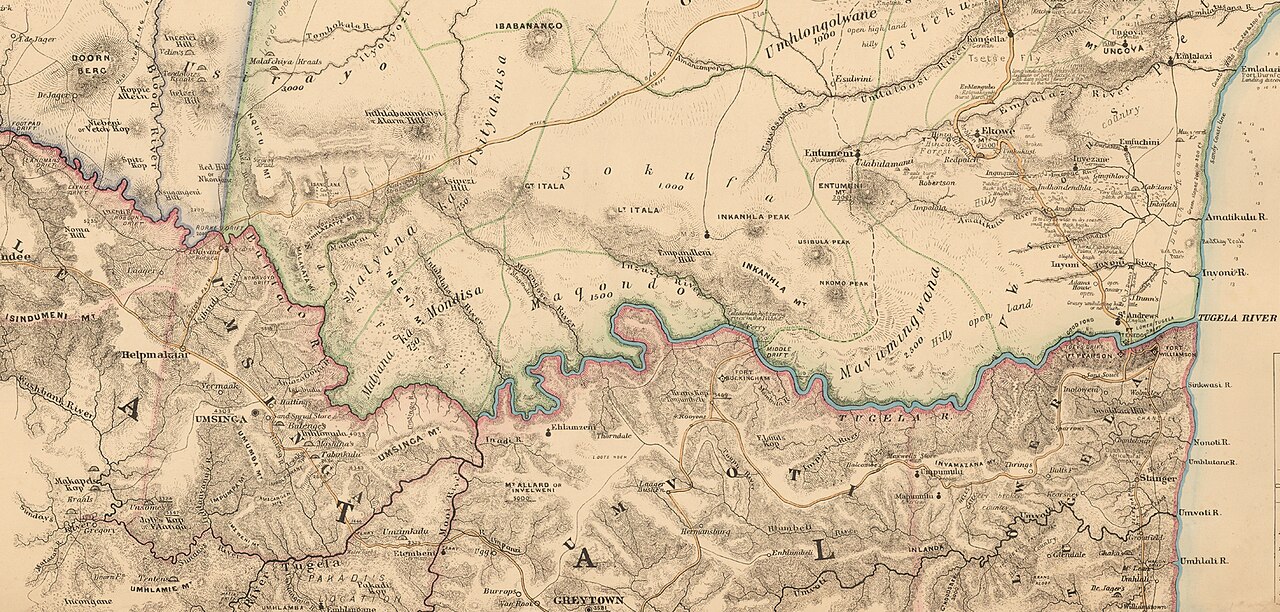
When three British columns crossed the Buffalo River into Zululand on 11 January 1879, they were invading a nation that had not attacked them, broken any treaty, or threatened British territory. The Zulu Kingdom, forged into a formidable state under the legendary Shaka kaSenzangakhona in the early 19th century, fielded an army of around 35,000 warriors — disciplined, tactically sophisticated, and ferociously motivated to defend their homeland.
Eleven days into the campaign, on 22 January 1879, the Battle of Isandlwana shattered British confidence completely. Over 1,300 soldiers were killed in a single afternoon — the worst defeat the British Army would suffer at the hands of an indigenous force during the entire Victorian era. At the centre of the storm stood one man: King Cetshwayo kaMpande, whose name the British struggled to pronounce but would never, ever forget.
Who Was Cetshwayo kaMpande? The Making of a Zulu King
Born around 1826, Cetshwayo was the son of King Mpande and the grandson of Shaka himself — royalty in every sense, shaped by a political world where survival required both courage and cunning. He grew up in a kingdom that was simultaneously proud of its military traditions and deeply aware of the growing European presence on its borders.
Cetshwayo's path to the throne was not without bloodshed. In 1856 he defeated his brother Mbuyazi at the Battle of Ndondakusuka, a brutal succession struggle that left thousands dead and eliminated a major rival faction. It was a hard lesson in Zulu realpolitik, and Cetshwayo learned it well.
He was formally crowned king in 1873, with British representative Theophilus Shepstone attending the ceremony — a moment of apparent diplomatic goodwill between the Zulu Kingdom and the Natal Colony. Cetshwayo proved a capable and thoughtful ruler: he modernised and maintained the amabutho military system, sustained trade relationships, and repeatedly sought peaceful relations with his neighbours. Early British accounts described him as intelligent, dignified, and measured — assessments that would harden into hostility as imperial ambitions sharpened.
The Road to War: British Ambition and the Ultimatum of 1878
The man most responsible for provoking the war was Sir Henry Bartle Frere, British High Commissioner for Southern Africa. Frere was determined to forge a British-controlled South African confederation, and the independent Zulu Kingdom — powerful, armed, and unwilling to subordinate itself — was a direct obstacle to that vision.
On 11 December 1878, Frere delivered an ultimatum to Cetshwayo's envoys at the Lower Thukela Drift. The terms were extraordinary: the Zulu military system was to be disbanded within 30 days, and the king was to accept a British resident with sweeping powers. These were conditions designed to be rejected. The amabutho was not simply an army — it was the backbone of Zulu social organisation, identity, and governance. Dismantling it was culturally and politically impossible.
Crucially, the British government under Prime Minister Disraeli had not authorised an invasion. Frere had acted with alarming independence, and London was furious when war broke out. But by then, three columns were already crossing into Zululand, and there was no turning back.
Isandlwana: The Day the Zulus Humbled an Empire
Lord Chelmsford, commanding the British forces, fatally underestimated his opponent. On the morning of 22 January 1879, he split his force and rode out from the camp at Isandlwana to pursue what he believed was the main Zulu army — leaving approximately 1,800 men, including the 1st Battalion, 24th Regiment of Foot, dangerously exposed.
A Zulu force of roughly 20,000 warriors had concealed itself in the ravines near the camp. When discovered, it deployed the classic impondo zankomo — the "bull horn" formation — with a central chest pinning the defenders and two flanking "horns" sweeping around to encircle them. Zulu commanders Ntshingwayo kaMahole and Mavumengwana directed the assault with tactical precision.
The battle lasted only a few hours. Approximately 1,329 British and allied troops were killed — their ammunition supply hampered by poor logistics and disputed command decisions at the critical moment. It remains, as recorded by the National Army Museum, the single greatest defeat inflicted on the British Army by an African force.
That same evening, a force of roughly 4,000 Zulus attacked the small mission station at Rorke's Drift, defended by just 150 men of B Company, 2nd Battalion, 24th Regiment of Foot. The defence held through the night. Eleven Victoria Crosses were awarded — the most for any single action in British military history — a measure of both the heroism of the defenders and the ferocity of the assault. If you've seen the 1964 film Zulu, you already know the broad outline of that night — though understanding Cetshwayo's perspective, as we'll come to, reframes the entire story.
Cetshwayo's Strategy: Fighting for Survival, Not Conquest
What is often overlooked in accounts of the Anglo-Zulu War is how consistently Cetshwayo sought a negotiated peace. He sent envoys to Chelmsford both before and during the campaign — all were dismissed or ignored. His strategic objective was not conquest; it was to make the war politically costly enough that Britain would agree to terms.
After Isandlwana, Cetshwayo reportedly wept at the scale of Zulu losses — his forces had suffered thousands of casualties too — and urged his commanders to show restraint. He explicitly forbade his army from crossing into Natal, a deliberate act designed to demonstrate that he sought only to defend Zulu sovereignty, not to threaten British territory.
Despite the stunning victory at Isandlwana, Cetshwayo was not deluded about the long-term strategic reality. Britain's industrial capacity, its ability to reinforce at will, and the sheer weight of its imperial machine made ultimate military defeat almost inevitable. He was fighting for time and for terms, not for total victory.
The Tide Turns: British Reinforcements and the Fall of Ulundi
Isandlwana sent shockwaves through London. Within weeks, 10,000 reinforcements were on their way to South Africa, and Sir Garnet Wolseley was dispatched to take overall command — effectively sidelining the disgraced Chelmsford, though the general would manage one last action before Wolseley arrived.
The Battle of Khambula on 29 March 1879 proved a turning point. Zulu forces launched a massive assault on the British fortified camp and were repulsed with devastating losses — over 2,000 Zulu casualties. The amabutho, which had held together through extraordinary discipline since January, never fully recovered its cohesion after Khambula.
On 4 July 1879, Chelmsford's reinvigorated force reached oNdini, the royal capital. At the Battle of Ulundi, his infantry formed a massive, disciplined square and repulsed wave after wave of Zulu charges with rifle fire and artillery. The royal homestead was burned to the ground. Cetshwayo fled into the Ngome forest, a king without a capital, hunted in his own kingdom.
He was captured on 28 August 1879 by a British patrol under Major Richard Marter. The Anglo-Zulu War was effectively over.
Prisoner and Diplomat: Cetshwayo's Extraordinary Journey to London
Cetshwayo was exiled to Cape Town and held at the Castle of Good Hope. But he was not simply a defeated enemy — he was a man of evident intelligence and composure, and British public opinion began to shift. Journalists and officials who met him found it increasingly difficult to portray him as the savage aggressor the war's architects had described.
In 1882, Cetshwayo lobbied successfully to visit London to plead his case in person. He met Queen Victoria at Osborne House on the Isle of Wight in August 1882. Victorian society was fascinated by him — newspapers depicted him sympathetically, and he became, improbably, something of a celebrity. Queen Victoria reportedly found him impressive and dignified.
Cetshwayo used every audience to make the same argument: Britain had broken its own treaty obligations, the ultimatum of 1878 had been deliberately unacceptable, and his kingdom had been invaded without justification. These arguments found a receptive audience among those who had questioned the war from the beginning, including Liberal politicians who had criticised Frere's adventurism in Parliament.
He was partially restored to his throne in January 1883 — but over a reduced territory. The British had divided Zululand into 13 chieftainships, deliberately fragmenting central authority. It was a settlement designed to prevent any revival of Zulu power, not to deliver justice.
The Aftermath: A Kingdom Divided and a Legacy Complicated
Civil war broke out almost immediately after Cetshwayo's restoration, as British-backed rival factions — including the Mandlakazi under Zibhebhu kaMaphitha — clashed with Cetshwayo's supporters. The Usuthu (royalist) faction suffered a catastrophic defeat at the Battle of oNdini in July 1883, and Cetshwayo was wounded and forced to flee again.
He died on 8 February 1884 at Eshowe, officially of heart failure. He was around 57 years old. Rumours of poisoning circulated at the time and have never been entirely dispelled, though no conclusive evidence has established foul play.
In 1887, Britain formally annexed Zululand as a Crown Colony. In 1897 it was incorporated into the Colony of Natal, extinguishing Zulu political independence entirely — the endgame of the process Bartle Frere had set in motion with his ultimatum nine years earlier.
The war had cost Britain over £5 million — hundreds of millions in today's money — triggered a political crisis for both Frere and Chelmsford, and produced 23 Victoria Crosses, more than any other single campaign in British military history. That extraordinary tally speaks not to easy glory, but to how brutal and costly the fighting truly was.
Why Cetshwayo and 1879 Still Matter Today
The Anglo-Zulu War remains a defining case study in how Victorian imperial ambition could override diplomacy, law, and basic justice. Cetshwayo had attacked no one. He had broken no treaty. He had repeatedly sought negotiation. The war was manufactured by a colonial official pursuing a political agenda his own government had not sanctioned.
Isandlwana also had lasting military consequences. The defeat fundamentally changed how the British Army approached colonial warfare, prompting reforms in field regulations, camp security protocols, and logistical procedures that shaped operations for years afterwards.
Today, Cetshwayo is celebrated as a national hero in South Africa. His image appeared on the South African R10 banknote issued in 2023, placing him alongside other founding figures of the nation's identity. In KwaZulu-Natal, he is remembered not as a defeated king but as a man who faced down the full weight of the British Empire with courage, intelligence, and restraint.
For those who grew up watching the 1964 film Zulu — starring Michael Caine and Stanley Baker — the story of Rorke's Drift is deeply familiar. But that film shows only one side of a far larger story. Understanding Cetshwayo's perspective, his diplomatic efforts, his strategic restraint, and the fundamental injustice of the war he was forced to fight, transforms the narrative entirely: from a tale of British heroism into the story of a king who was right, and who history has slowly come to acknowledge as such.
Zulu for the first time. History this rich deserves to be passed on.
Further Reading
- National Army Museum, London — holds significant collections relating to the Anglo-Zulu War, including personal accounts and regimental records from the 24th Regiment of Foot
- The National Archives, Kew — contains Colonial Office and War Office papers relating to the 1878 ultimatum, Bartle Frere's correspondence, and the political fallout from Isandlwana
- Imperial War Museum, London — resources on Victorian colonial warfare and the broader context of 19th-century British military campaigns in Africa
- KwaZulu-Natal Museum, Pietermaritzburg — specialises in the history of the Zulu Kingdom and holds collections directly related to Cetshwayo and the 1879 war
- Talana Museum, Dundee, KwaZulu-Natal — situated close to the battlefields, with dedicated exhibitions on the Anglo-Zulu War and its aftermath in the region