The Quiz Question
Which 1948-1949 operation saw American and British aircraft fly around-the-clock supply missions to keep West Berlin fed and fueled after the Soviet Union blockaded all ground access to the city?
- A. The Berlin Airlift
- B. The Marshall Plan
- C. The Berlin Wall
- D. Operation Chromite
The answer is A. The Berlin Airlift. Here is the full story.
On the morning of 24 June 1948, the people of West Berlin woke to a city under siege. Overnight, Soviet forces had closed every road, railway and canal route connecting the western sectors of Berlin to the outside world. Two point two million civilians — men, women and children living deep inside the Soviet occupation zone — were suddenly cut off from their food supply, their fuel and their future. It was one of the boldest gambits of the early Cold War, and it very nearly worked.
A City Held Hostage: The Night the Gates Slammed Shut
Stalin's calculation was brutally simple. West Berlin had fewer than 36 days of food reserves and roughly 45 days of coal when the blockade began — and winter was coming. If the Western Allies could be starved out of the city, it would prove that democracy was untenable inside the Soviet sphere, and the western powers would be forced to abandon their foothold in the heart of occupied Germany.
Western military commanders were acutely aware of the danger. A ground convoy to break the blockade risked open war with the Red Army. But there was one corridor the Soviets had no legal right to close: the sky. Three agreed air corridors — north, central and south — connected West Berlin to the British and American zones in West Germany. Within hours of the blockade, Allied planners began to ask the impossible question: could an entire city be kept alive from the air?
What followed was the largest humanitarian airlift in history — 318 days of continuous flying that would reshape the Cold War before the phrase had even fully entered the language.
How Europe Got Here: The Seeds of the Berlin Crisis
The roots of the crisis stretched back to the rubble of 1945. At the Potsdam Conference in July and August of that year, the four Allied powers — the United States, the United Kingdom, France and the Soviet Union — divided both Germany and Berlin into separate occupation zones. West Berlin sat roughly 100 miles inside the Soviet zone, accessible only via narrow corridors agreed between the powers.
Those arrangements held an inherent fragility. As East-West relations deteriorated through 1946 and 1947, Berlin became an increasingly dangerous flashpoint. The American Marshall Plan, launched in 1947, began pumping billions of dollars into Western European economies — a development that alarmed Moscow deeply, both economically and ideologically.
The immediate trigger for the blockade was currency reform. On 18 June 1948, the Western Allies introduced the Deutschmark — the Westmark — into their occupation zones, threatening Soviet economic dominance over eastern Germany. Stalin interpreted this as a deliberate provocation. His response, the blockade, was designed to be swift, decisive and final. He underestimated the resolve of the men and women who would fly the answer back at him.
Operation Vittles Takes Off: The American Response
General Lucius D. Clay, the US Military Governor in Germany, did not hesitate. Within 24 hours of the blockade beginning, on 25 June 1948, he ordered the first American airlift flights into Berlin. The operation was given the code name Operation Vittles — 'vittles' being American slang for food, a deliberately plain-spoken signal of the mission's purpose.
The US Air Force's Military Air Transport Service coordinated the American effort, flying primarily from Rhein-Main Air Base near Frankfurt and Wiesbaden Air Base. The early workhorses were Douglas C-47 Skytrains, the venerable twin-engine transports that had dropped paratroopers over Normandy. But a C-47 could carry only 3.5 tonnes per flight — far too little for a city of over two million people. The larger Douglas C-54 Skymaster was rapidly brought in; it could carry 10 tonnes per flight and would become the backbone of the American operation.
By July 1948, American aircraft were completing more than 1,000 flights per day. Planners quickly realised that even this extraordinary rate fell short of the minimum 4,500 tonnes per day Berlin required to survive. The scale of the challenge demanded not just more aircraft, but an entirely new approach to air logistics.
Operation Plainfare: Britain's Vital Role in the Airlift
The British contribution was equally significant, and it tends to be overshadowed in popular memory. Operation Plainfare launched almost simultaneously with the American effort in late June 1948, with RAF aircraft flying primarily from RAF Wunstorf in Lower Saxony. As the operation grew, additional bases at RAF Fassberg, Celle and Lübeck were brought into service.
British crews flew a remarkably varied fleet. Avro Yorks and Handley Page Hastings carried the bulk of the cargo, but one of the airlift's most distinctive images involved Short Sunderland flying boats touching down on the Havel River in Berlin. The Sunderlands were used specifically to carry salt — a cargo that would have corroded conventional aircraft holds — and their graceful water landings became one of the defining photographs of the crisis.
Britain also made critical contributions that rarely appear in the headlines. British-led teams played a key role in the construction logistics of Tegel airfield in the French sector of Berlin, which opened in December 1948 and dramatically increased the airlift's total capacity. Specially modified RAF tanker aircraft carried liquid fuel into the city, and over the course of the operation, the combined Allied effort delivered an estimated 65 million gallons of fuel to keep West Berlin's power stations and heating systems alive.
Civilian aviation also played its part. British European Airways and a number of private charter companies contributed aircraft and crews, flying under RAF operational control — an early example of the civil-military cooperation that would define postwar aviation.
The Logistics of a Miracle: How the Air Bridge Actually Worked
The sheer operational complexity of the Berlin Airlift is almost impossible to overstate. At its peak, air traffic controllers at Berlin's three airports — Tempelhof in the American sector, Gatow in the British sector and the newly built Tegel in the French sector — were handling one aircraft landing every 90 seconds. A single missed approach, a moment's hesitation, could cascade into catastrophe.
The man who brought disciplined order to this chaos was General William H. Tunner, appointed to command the Combined Airlift Task Force in October 1948. Tunner had previously directed the famous 'Hump' airlift over the Himalayas during the Second World War, supplying China from India across the world's most dangerous air route. He applied those hard-won lessons with ruthless efficiency in Berlin.
Tunner imposed what became known as the 'conveyor belt' system. Aircraft flew fixed routes at set altitudes and precise intervals — 1,000 feet vertically and three minutes apart — turning the three air corridors into a one-way aerial motorway. Pilots had one chance to land. If they missed their approach, they turned around and flew back to base with their cargo still aboard. There were no second attempts, no deviations, no exceptions. The system sounds inflexible; in practice, it was the only thing that made the operation survivable.
The showcase of the entire operation came on 16 April 1949 — an event the crews called 'Easter Parade'. In a single 24-hour period, the airlift delivered 12,940 tonnes of supplies using 1,398 flights. The event was deliberately staged at maximum effort to demonstrate to the Soviets just how capable the Allied operation had become. The message was unambiguous: this city will not fall.
On the ground, the operation depended equally on the men and women who turned the aircraft around. Ground crews at German bases worked in rotating shifts to unload, refuel and reload aircraft in under 30 minutes. In freezing temperatures, loaders often worked by hand without mechanical assistance, shifting tonnes of coal, flour and dried goods flight after flight, night after night.
The Human Cost: Pilots, Ground Crews and the People of Berlin
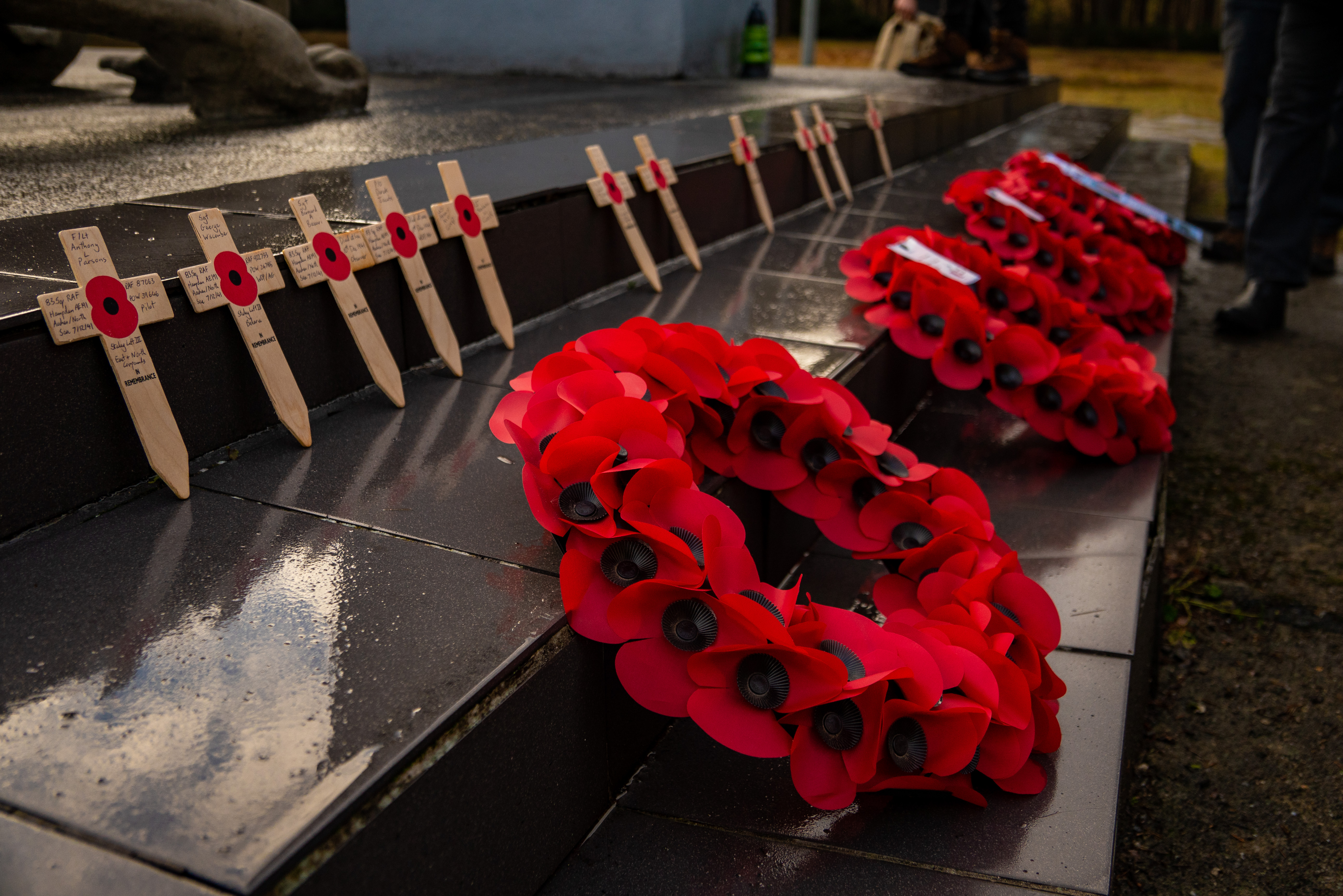
The Berlin Airlift was not a bloodless operation. Thirty-nine British and 31 American personnel died during the 318-day effort, in a total of 17 crashes and accidents. Almost all were caused by weather, mechanical failure and exhaustion rather than Soviet action. These men gave their lives to keep a city alive, and their names are inscribed on the Luftbrücke Memorial at Tempelhof to this day.
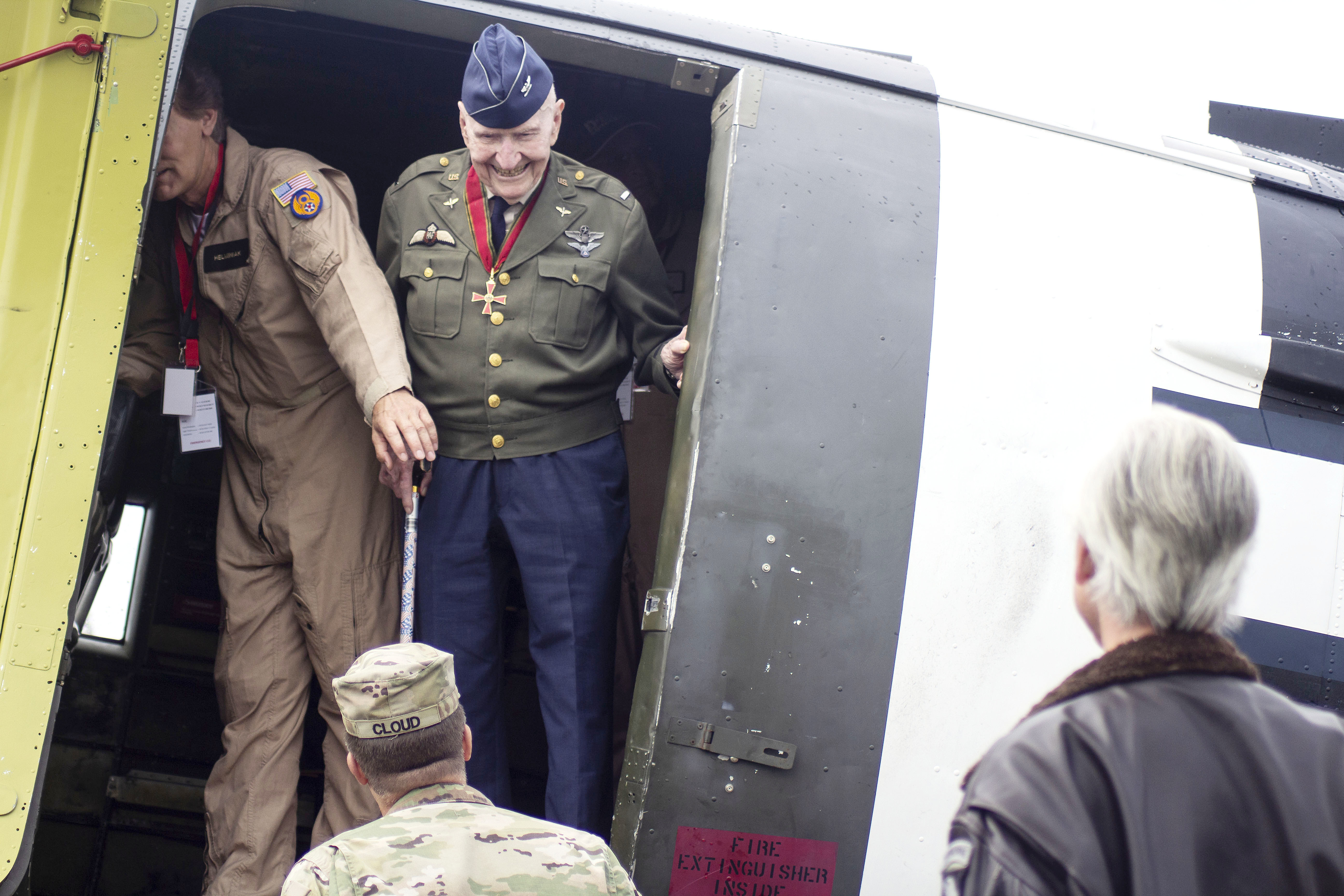
Among the living, one man became the human face of the airlift. USAF Lieutenant Gail Halvorsen, a young C-54 pilot from Utah, began dropping small packages of chocolate and chewing gum attached to handkerchief parachutes for the children he saw watching the aircraft from the perimeter fence at Tempelhof. He called it 'Operation Little Vittles'. When his superiors found out, instead of stopping him, they encouraged the idea.
The story went global. Candy manufacturers in the United States donated supplies. Volunteer pilots joined in. Over three tonnes of sweets were eventually dropped from aircraft over Berlin. Children wrote letters to 'Uncle Wiggly Wings' and 'The Chocolate Pilot', addressed simply to 'Tempelhof, Berlin' — and the letters arrived. In a conflict defined by ideology and geopolitics, Halvorsen had found something irreducibly human.
For the Berliners themselves, daily life during the blockade was a study in resilience. West Berliners accepted rationing of around 1,500 calories per day — below the level recommended for healthy adults. Power cuts lasted up to 19 hours daily. Around 24,000 German civilians worked at Tempelhof alone, unloading aircraft, maintaining runways and keeping the operation running. They understood better than anyone what was at stake.
Stalin Blinks: The End of the Blockade
By early 1949, the strategic picture had shifted decisively. The airlift was delivering more tonnage daily than the old ground routes had managed before the blockade — a fact that made the Soviet action not merely futile but actively counterproductive. Meanwhile, the Western Allies had launched a quiet counter-blockade, restricting trade into the Soviet zone and placing real strain on East German industry.
Secret negotiations began in February 1949 between US diplomat Philip Jessup and Soviet Ambassador Jacob Malik at the United Nations in New York. The tone quickly signalled that Moscow was looking for a way out. The Soviet blockade was officially lifted at one minute past midnight on 12 May 1949 — exactly 318 days after it had begun.
But the airlift did not stop. Allied commanders, wary of Soviet intentions and determined to build a strategic buffer, continued flying until 30 September 1949. By the time the last aircraft touched down, the combined Allied operation had delivered 2.3 million tonnes of supplies across 278,228 individual flights. It remains one of the greatest logistical achievements in the history of aviation.
What the Airlift Changed: Cold War Consequences
The political consequences of the Berlin Airlift reverberated for decades. The North Atlantic Treaty, signed on 4 April 1949 — just weeks before the blockade ended — created NATO, and the solidarity displayed during the Berlin crisis was a direct influence on its formation. The Western Allies had demonstrated that they would stand together under pressure.
West Germany — the Federal Republic of Germany — was formally established on 23 May 1949, just twelve days after the blockade lifted. Its creation was, in part, a direct political response to Soviet aggression; the crisis had accelerated a process of Western institution-building that would define European security for generations.
For the United States, the airlift accelerated military rearmament and confirmed the need for a permanent American military presence in Europe — a commitment that would endure throughout the Cold War. Stalin had intended the blockade to weaken the West's position; instead, it strengthened it at every level.
Legacy and Memory: Why the Berlin Airlift Still Matters
The Luftbrücke — Air Bridge — Memorial at Tempelhof Airport was erected in 1951. It lists the names of all 70 Allied personnel who died during the operation, and an identical monument stands at Frankfurt's Rhein-Main base. Together, they stand as quiet testaments to the men who flew an impossible mission in difficult conditions, day after day, for almost a year.
RAF Gatow, the British base in Berlin from which so many Plainfare sorties departed, is now home to the Luftwaffenmuseum — the German Air Force Museum — which preserves aircraft and artefacts from the airlift era in the very buildings from which the operation was run.
Gail Halvorsen, the Candy Bomber, continued making goodwill flights and visiting Germany well into his later years, welcomed every time as a living symbol of what the airlift had meant to ordinary Berliners. He passed away in February 2022 at the age of 101, mourned with genuine grief across Germany and the United States. His handkerchief parachutes had carried something more than chocolate.
The deeper lesson of the Berlin Airlift endures. It proved that a major geopolitical confrontation — one that could easily have triggered a third world war — could be resolved through determination, ingenuity and collective will, without a single shot being fired in anger. That template for crisis management, using capability and resolve as an alternative to combat, shaped Western strategy throughout the Cold War and beyond.
For the people of Berlin, the Luftbrücke was never just a logistical operation. It was proof that they had not been abandoned. When John F. Kennedy stood in West Berlin in June 1963 and declared Ich bin ein Berliner, the crowd that roared back at him remembered exactly what those words meant — and exactly who had earned the right to say them.
If this story moved you, share it with someone who loves history — and tell us in the comments: did you have a family member who served in postwar Germany or Berlin? We'd love to hear your stories.
Further Reading
- Imperial War Museum (IWM), London — holds extensive records, photographs and personal testimonies relating to Operation Plainfare and British involvement in the Berlin Airlift
- The National Archives, Kew — contains original RAF operational records, Air Ministry files and Cabinet papers from the Berlin crisis period
- United States Air Force Historical Research Agency (AFHRA) — the primary American archive for Operation Vittles operational records and unit histories
- Smithsonian National Air and Space Museum, Washington D.C. — holds airlift-era aircraft and artefacts including material related to Gail Halvorsen and the C-54 Skymaster
- Luftwaffenmuseum Berlin-Gatow — based at the former RAF Gatow, this German Air Force museum is the leading European institution dedicated to the airlift's physical and documentary heritage