For years, American bomber crews climbed into their B-17s knowing the odds were against them. Not just dangerous odds — mathematically catastrophic ones. And for a long time, nobody had an answer. Then a sleek, silver fighter with drop tanks and a borrowed British engine changed everything.
Before the Mustang, the Bombers Were Dying in Droves
By the autumn of 1943, the Eighth Air Force was bleeding out over the skies of Germany. The strategic bombing campaign — the grand Allied plan to smash German industry from the air — was failing in the most brutal way possible.
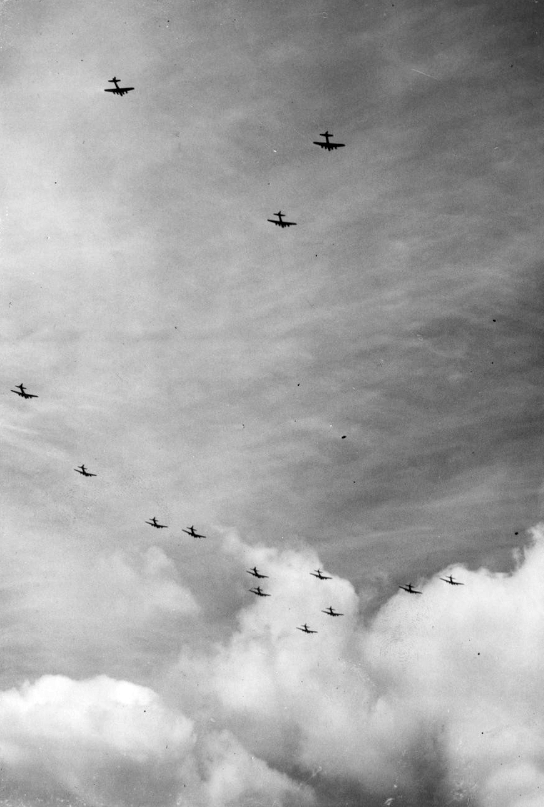
The Schweinfurt raids tell the story plainly. On 14 October 1943, 291 B-17s flew deep into Germany to hit ball-bearing factories. Sixty aircraft were shot down. Seventeen more were scrapped as beyond repair. Nearly 600 American airmen were killed, captured, or missing — in a single afternoon.
Fighter escorts like the P-47 Thunderbolt were fine machines, but they could only reach as far as the Dutch or Belgian coast before fuel forced them home. The moment B-17 crews crossed that invisible line in the sky, they called it the point of no return. Beyond it, the Luftwaffe was waiting. Experienced German pilots, flying in organised formations, picking off bombers with devastating efficiency.
Morale inside the Eighth Air Force was collapsing. Crews were being asked to fly 25 missions to complete a tour — but statistically, many wouldn't survive ten. The entire strategic bombing campaign stood on the edge of failure.
They Called It the 'Long-Legged Fighter' — Yet Nobody Believed It Would Work
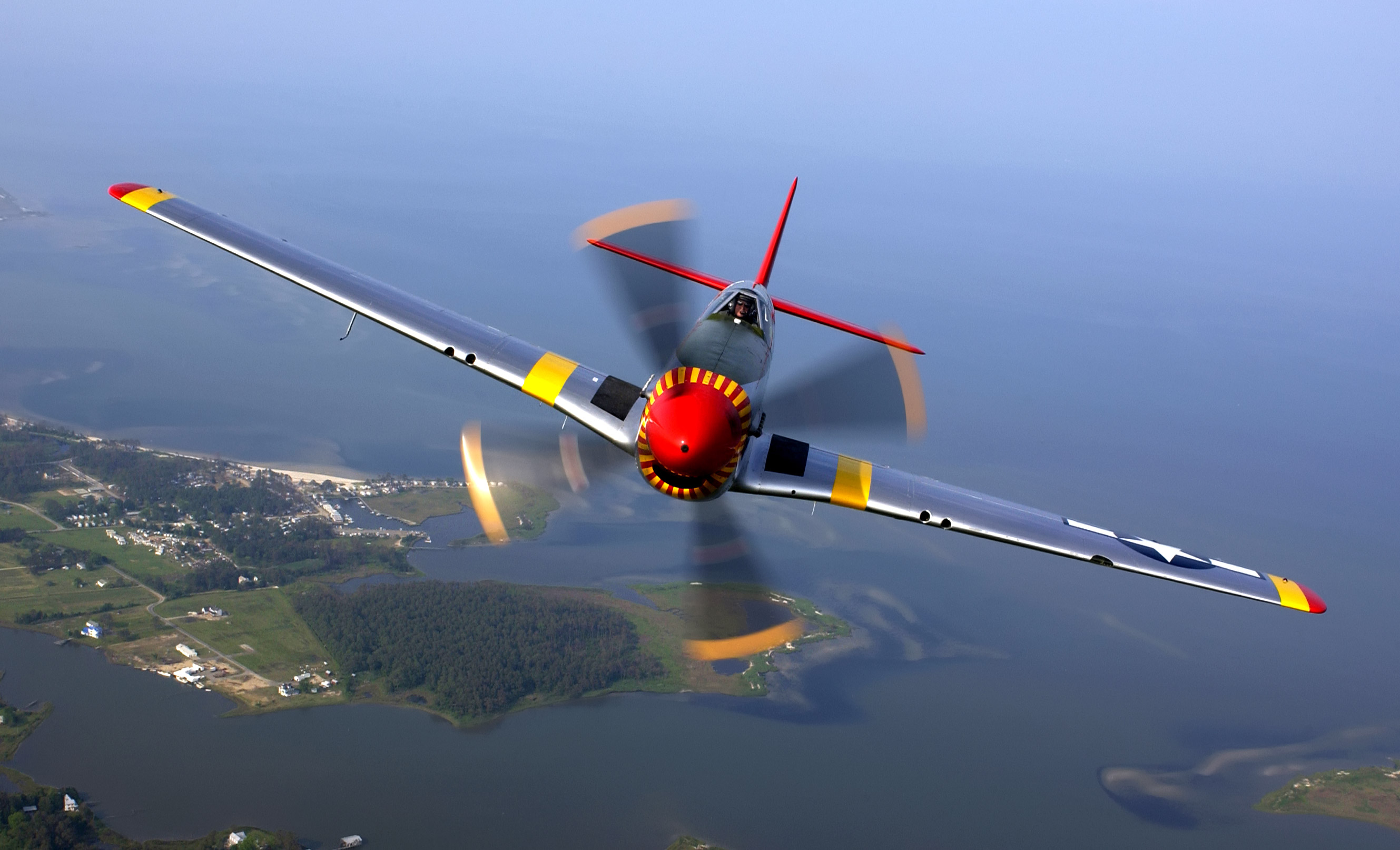
The P-51 Mustang had an unlikely birth. It was originally designed to a British specification, built by North American Aviation, and the prototype was completed in just 117 days. Impressive — but the early versions were distinctly underwhelming. Decent low-altitude performer. Nothing special up high where the air war was actually being fought.
Here's the contrarian take most people skip past: the aircraft that won the air war over Europe wasn't made by American engineering alone. It was a British suggestion — fitting the Rolls-Royce Merlin engine — that transformed the Mustang from a competent workhorse into something genuinely lethal. Most popular accounts celebrate American manufacturing genius. Unpopular opinion: without the Merlin, the Mustang is a footnote.
When test pilots first flew the Merlin-powered version, the reaction was immediate. At altitude — 25,000 feet and above — it was a different aircraft entirely. Fast, responsive, with a range that seemed almost impossible for a single-engine fighter.
Drop tanks did the rest. Unglamorous, disposable fuel tanks hung under the wings, jettisoned when combat began. They added nothing to the aircraft's prestige. They added everything to its reach. Berlin and back — roughly 1,500 miles — suddenly became possible.
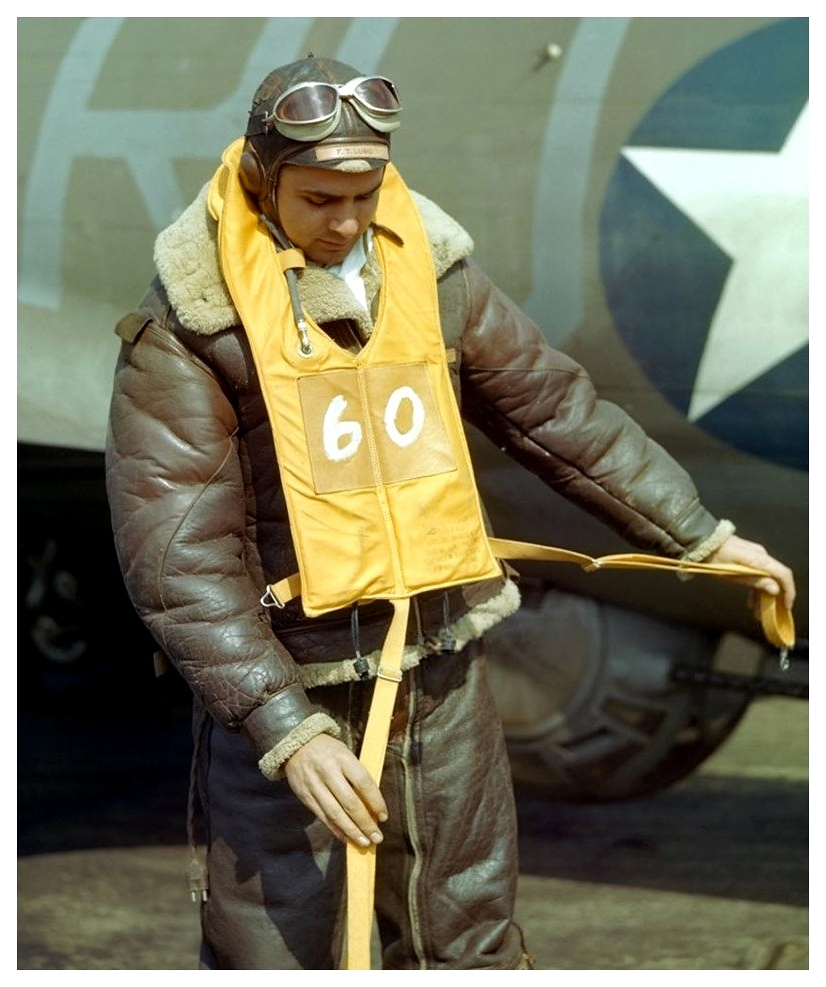
The Luftwaffe Had to Come Up and Fight — and That Was the Trap
General Jimmy Doolittle made a decision in early 1944 that bomber crews didn't universally welcome: P-51 escorts were no longer to fly tight formation with the bombers. They were to range ahead, hunt German fighters, and destroy the Luftwaffe wherever they found it.
Some bomber crews were furious. They wanted their escorts close, visible, reassuring. Doolittle's logic was colder than that — he wanted to kill the Luftwaffe as a fighting force, not just shepherd individual missions home.
The Mustang's performance edge over the Bf 109 and Fw 190 at high altitude gave American pilots a decisive advantage. German losses mounted rapidly. Experienced Luftwaffe aces — men who had been flying since the Battle of Britain — were being replaced by half-trained recruits with barely enough hours to take off safely, let alone dogfight over their own capital.
The debate still runs: was it the Mustang's extraordinary range that broke the Luftwaffe, or Doolittle's aggressive tactics? Most likely both. But they only worked together because the aircraft could actually go where Doolittle needed it to go.
The Pilots Who Flew Them: Skill, Fear, and Eight Hours Alone Over Enemy Territory
Consider what these men were actually doing. Eight hours. Single seat. No autopilot. Oxygen mask at altitude. Engine noise so constant it became a kind of silence. And below, a continent that wanted them dead.
Most P-51 pilots were 20 or 21 years old. Many had never left their home state before the war. Now they were flying alone over Frankfurt, Leipzig, Berlin.
One account that stays with you comes from a pilot who nursed a shot-up Mustang back across the Channel with his oil pressure failing and his fuel gauge reading empty before the English coast came into view. He landed on fumes and adrenaline, climbed out, and sat on the grass for a long time before he could speak. He was 22.
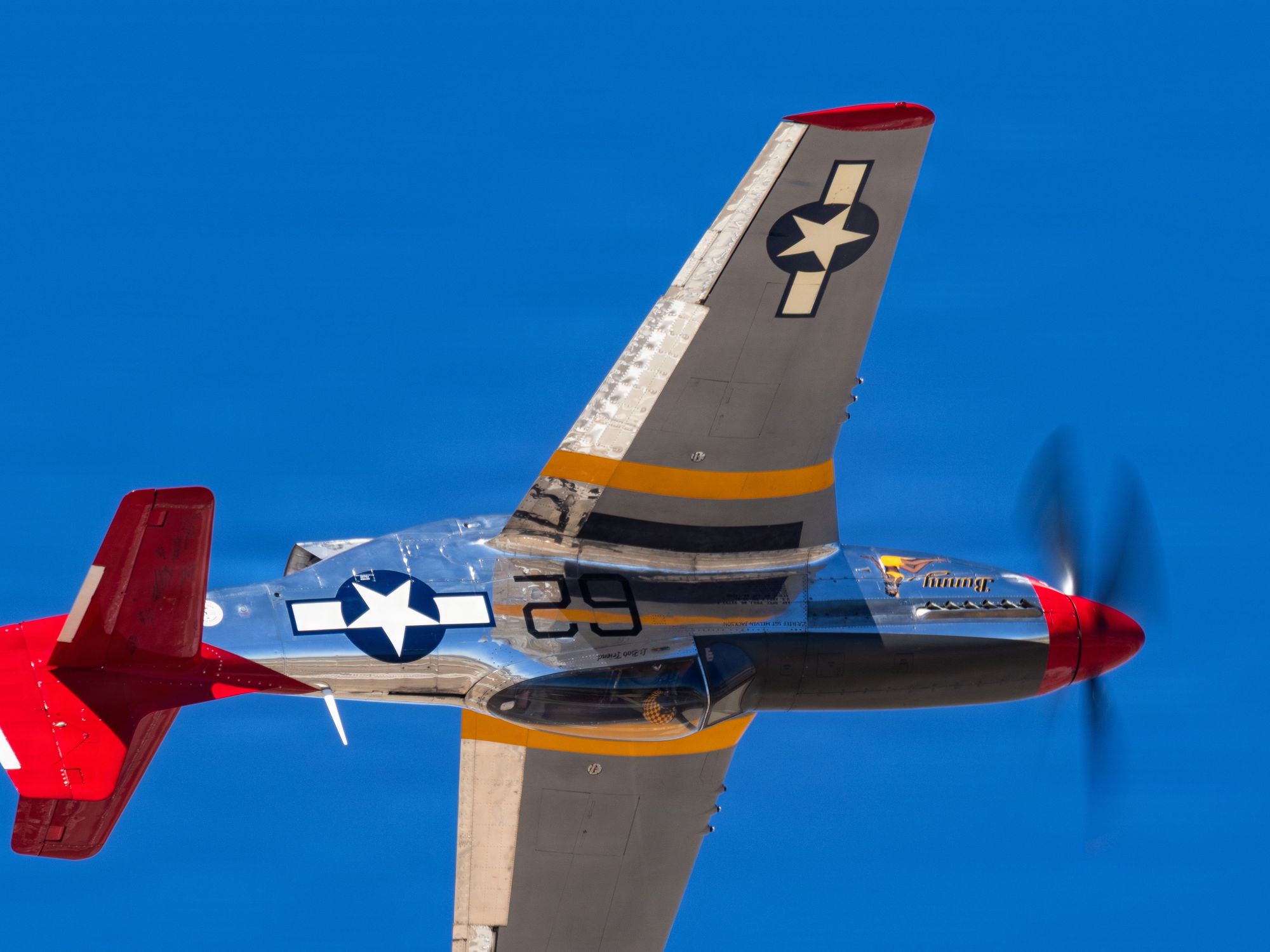
Then there were the Tuskegee Airmen — the Red Tails — flying Mustangs and building a record that became legendary: they never lost a bomber under their escort to enemy fighters. In a campaign defined by loss, that stands as something remarkable. When the history of the air war gets written, their contribution deserves far more space than it usually receives.
Some Say the Bombers Won the Air War. Others Say It Was Always the Mustang. Which Side Are You On?
The revisionist historians have a point worth taking seriously. Strategic bombing alone never broke German industrial output the way its planners promised. German war production actually increased in 1944, even under sustained bombing. The economic case for the bomber offensive is shakier than the victory narrative admits.
What the Mustang delivered was more concrete: air superiority over Normandy by 6 June 1944. When Eisenhower told Allied troops on the eve of D-Day that any aircraft they saw overhead would be Allied, that wasn't a boast. It was a promise — one that had been purchased by months of brutal attrition over Germany.
Without that air superiority, the beaches look very different. German armoured reserves moving freely in daylight. Luftwaffe aircraft hitting the fleet. The margin between D-Day succeeding and D-Day becoming a catastrophe narrows considerably.
The bombers get the glory in most popular histories. Who remembers that it was fighter pilots — young men in cramped cockpits on eight-hour missions — who made the beaches survivable?
The Mustang's Legacy: Brilliant Machine or Brilliantly Timed?
After the war, captured Luftwaffe commanders were asked when they knew Germany would lose the air war. Hermann Göring's answer became famous. When he saw P-51 Mustangs over Berlin — escorting bombers deep into the Reich — he knew. Not when the bombs fell. When the escorts arrived.
Historians still argue about whether the P-51 was uniquely decisive or simply the right aircraft at the right moment. The Spitfire was arguably a more elegant fighter. The Hawker Typhoon was devastating at low level. But neither had the range. Neither could do what the Mustang did. That specific capability — long-range escort at high altitude — was what the air war over Germany actually required.
The Mustang went on to serve in Korea, still competitive against early jets in certain roles. Its qualities were no fluke of timing.
But the question that lingers is this: if the Merlin engine had never been fitted — if the Mustang had remained the adequate but unremarkable aircraft it started as — does the air war over Germany end differently? Does D-Day happen on schedule? Does it succeed at all?
Some say the P-51 was the decisive weapon of the European air war. Others say it was simply a very good aircraft that arrived when the Allies could finally afford to use it properly. Which side are you on?